I was enthralled by reading the
latest post by Greg Kotkowski on the Amva4NewPhysics blog. He has something to teach us all about how we should be rational and use our knowledge to address everyday problems, rather than follow the groupthink and be driven to take irrational measures.
Have a look at it and let me know if you liked it!
My book "Anomaly! - Collider Physics and the Quest for New Phenomena at Fermilab" is in production at World Scientific, with an expected publication date somewhere in August or September. I have explained what this work is about in previous posts, but maybe what I can do here is to just paste here the few lines of description that have been put together for the back cover:
It's been a while since the last time I talked about myself in this column. I think that a blog must contain personal information to be interesting - otherwise why sticking around, when there's tons of good (yes, also bad) information in the web ? But here you can get some particle physics information mixed in with things that, although you need not know or care about, it's fun to share and comment on. Or at least I hope it's so, for the few of you who read this.
Long-time readers of this blog know that one of the recurrent topics has always been the precision measurement of the top quark mass. The reason for this is at least three-fold.
One, I started my career in experimental HEP with searches and measurements of the top quark properties, and the mass was one of the parameters I spent quite some time working on.
Technically it also creates a diboson final state - two photons - but no, here I am not going to talk about the tentative new particle of which ATLAS and CMS continue to see hints in their data, at a mass of 750 GeV and with characteristics that increasingly resemble those of a heavy higgs boson. Oh, see - I am doing precisely that. It is admittedly hard not to speak of that thing nowadays, but I will insist, as I think it is too good to be true, and so it must be false.
UPDATE: Tiziano tells me that he has been misquoted by the Guardian - he was quoting himself a colleague when he mentioned the 20:1 bet. Sorry to say this bet is not on, at least until the person who offered the bet in the first place will manifest him- or herself....
I bet most of you, who are interested in Physics, know what I mean when I talk about "the 750 GeV particle". Last December, the ATLAS and CMS experiments released information about a tantalizing hint of a new particle with a mass in the 750 GeV ballpark. The resonance was seen in the decay to pairs of energetic photons. Since both experiments see more or less the same thing, this may be a fluctuation, but if it is, it is a really rare one.


 Choosing Your Bets: The Selection Bias
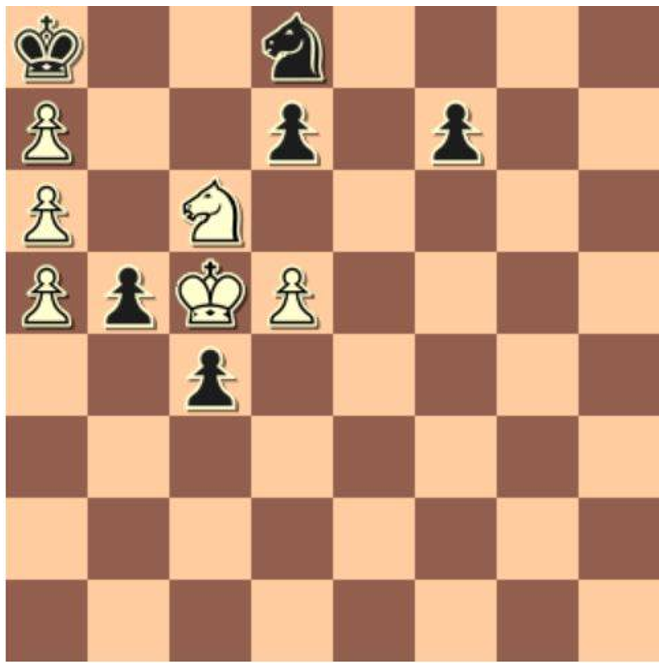 A Chess Study Requiring Backpropagation
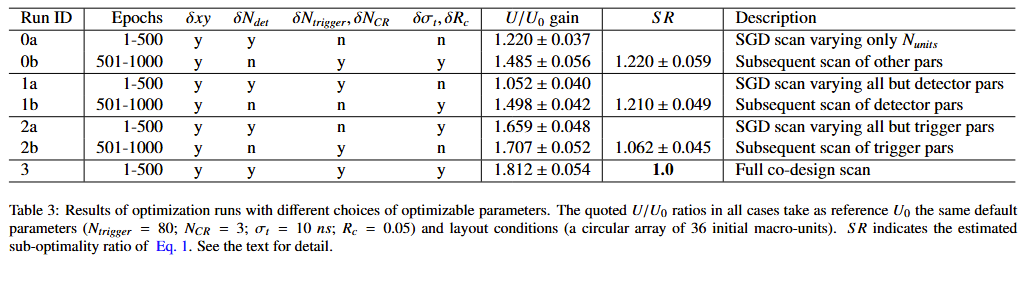 Co-Design Of Scientific Experiments