Fake Banner
Travel With Two Infants

The other day I traveled with Kalliopi and our two newborns to Padova from Lulea. After six full...

A Nice Little Combination

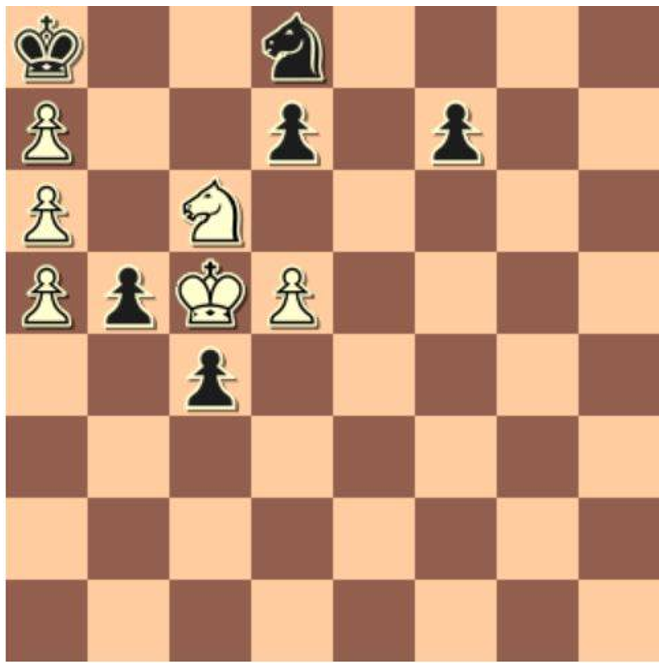
Although I have long retired from serious chess tournaments (they take too much time, a luxury...

The Strange Case Of The Monotonous Running Average

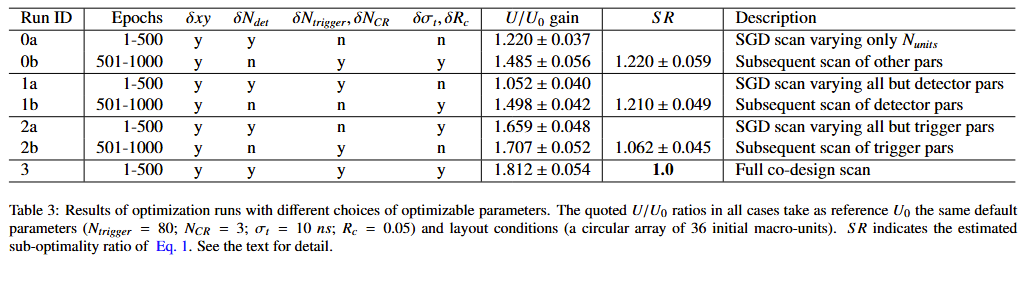
These days I am putting the finishing touches on a hybrid algorithm that optimizes a system (a...

Turning 60

Strange how time goes by. And strange I would say that, since I know time does not flow, it is...

User picture.
picture for Hank Campbellpicture for Patrick Lockerbypicture for Heidi Hendersonpicture for Bente Lilja Byepicture for Sascha Vongehrpicture for Johannes Koelman
Tommaso DorigoRSS Feed of this column.

Tommaso Dorigo is an experimental particle physicist, who works for the INFN at the University of Padova, and collaborates with the CMS and the SWGO experiments. He is the president of the Read More »

Blogroll
Hiatus

Hiatus

Jan 18 2016 | comment(s)

The few of you who regularly follow this blog may be rightly wondering why I have not published new posts in the last two weeks. The reason is overload. I have a few deadlines on January 31 that I need to meet, and several other errands to attend in the meantime. Hence I have decided to leave the blog behind until the end of this month.
As a follow-up of yesterday's post on the very opportune Pomeranchuk prize given to Stan Brodsky, I would like to report here on a funny anecdote Stan related to me today. The anecdote is interesting to all of us who believe the world of physics research is fully trans-national - well, it is, but there is apparently some more work to do to improve the situation further.
I was quite happy to hear today that Stan Brodsky, a professor of particle physics and astrophysics at Stanford University, has received together with Victor Fadin the 2015 Pomeranchuk Prize from the Russian Institute for Theoretical and Experimental Physics (ITEP) of Moscow. Stan is a great guy and his contributions to QCD  are of wide range. 

Two weeks have passed since the CERN Jamboree of December 15th, which will be always remembered for the spurious 750 GeV signal observed by ATLAS and CMS in their mass spectra of photon pairs. It is unfortunate, as dozens of very important new measurements and search results were shown by the experiments on that occasion, but they all got overshadowed by a fluctuation.

[The article below is courtesy  Eilam Gross. Eilam is a physicist from the ATLAS experiment and has been convener of the Higgs group there. I am very happy to host a guest post from him on the exciting topic below...]


Marumi Kado started his talk by saying he will only present new results based on the full 2015 13 TeV pp collision dataset.
For Run 2 there have been a large number of improvements to the detector.

Also the trigger has been improved, with a new central trigger processor. Reconstruction software also was improved significantly. 

Marumi spent a long time describing the retuning of the detector and the performance in reconstruction of impact parameters, physics objects, and the like. The physics modellinghas been verified in several control samples of dibosons, top pairs, etcetera.

Marumi shows that the Higgs signals in ATLAS are wanting. 0.7 sigma observed in 4-lepton mode, expected 2.8 sigma. Similar story in diphotons.