Fake Banner
Travel With Two Infants

The other day I traveled with Kalliopi and our two newborns to Padova from Lulea. After six full...

A Nice Little Combination

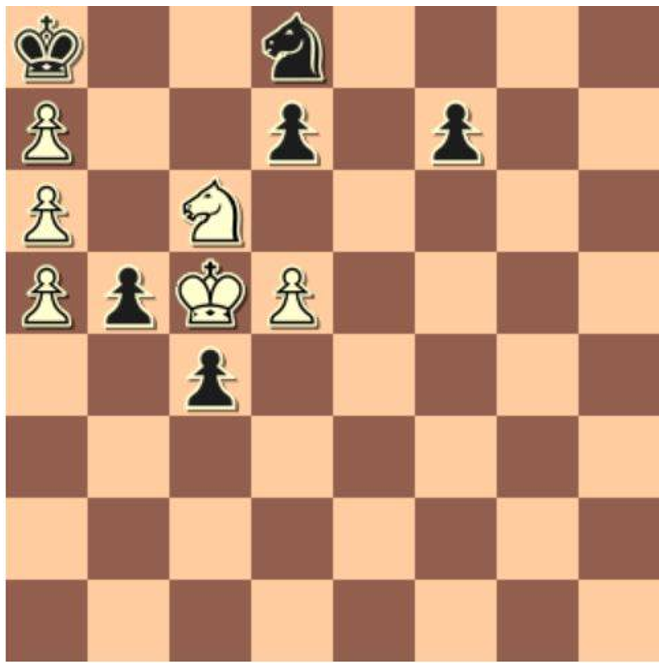
Although I have long retired from serious chess tournaments (they take too much time, a luxury...

The Strange Case Of The Monotonous Running Average

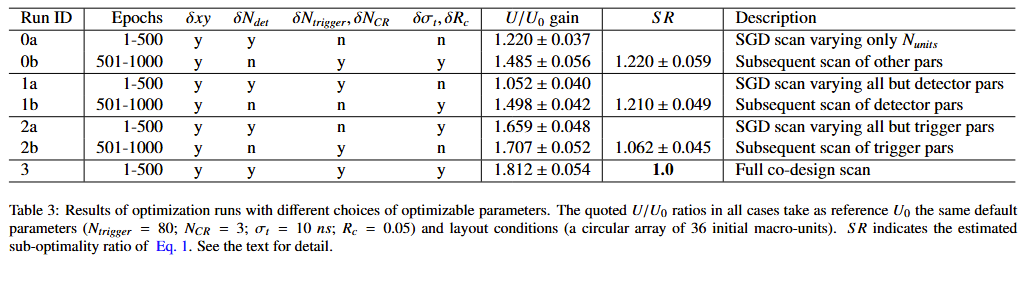
These days I am putting the finishing touches on a hybrid algorithm that optimizes a system (a...

Turning 60

Strange how time goes by. And strange I would say that, since I know time does not flow, it is...

User picture.
picture for Hank Campbellpicture for Patrick Lockerbypicture for Heidi Hendersonpicture for Bente Lilja Byepicture for Sascha Vongehrpicture for Johannes Koelman
Tommaso DorigoRSS Feed of this column.

Tommaso Dorigo is an experimental particle physicist, who works for the INFN at the University of Padova, and collaborates with the CMS and the SWGO experiments. He is the president of the Read More »

Blogroll
As an editor of the new Elsevier journal "Reviews in Physics" I am quite proud to see that the first submissions of review articles are reaching publication stage. Four such articles are going to be published in the course of the next couple of months, and more are due shortly thereafter. 
While in the process of fact-checking information that is contained in the book I am finalizing, I had the pleasure to have a short discussion with Gordon Kane during the weekend. A Victor Weisskopf distinguished professor at the University of Michigan as well as a director emeritus of the Michigan Center for Theoretical Physics, Gordon is one of the fathers of Supersymmetry, and has devoted the last three decades to its study.
I was very happy today to sign a contract with an international publisher that will publish a book I have written. The book, titled "Anomaly! - Scientific Discoveries and the Quest for the Unknown", focuses on the CDF experiment, a particle detector that operated at the Tevatron collider for 30 years. 
The Tevatron was the highest-energy collider until the turn-on of the LHC. The CDF and DZERO experiments there discovered the sixth quark, the top, and produced a large number of world-class results in particle physics. 

As I am revising the book I am writing on the history of the CDF experiment, I have bits and pieces of text that I decided to remove, but which retain some interest for some reason. Below I offer a clip which discusses the measurement of the natural width of the Z boson produced by CDF with Run 0 data in 1989. The natural width of a particle is a measurement of how undetermined is its rest mass, due to the very fast decay. The Z boson is in fact the shortest lived particle we know, and its width is of 2.5 GeV.

In a bit less than two days an orbiting object known with the peculiar name of WT1190F - but I'd like to rename it as WTF 1190 for obvious reasons - is expected to fall on Earth. The object was discovered by the Catalina Sky Survey in 2013 and little is known about its origin. It has a low density and makes a very eccentric revolution around us every three weeks. 
Below is a picture taken by the University of Hawaii 2.2 meter telescope in October. The object is observed as a bright spot that shows a relative motion with respect to fixed stars.


Top quarks, the heaviest known elementary particles, were discovered in 1995 by the CDF and DZERO collaborations, when the two Fermilab experiments spotted the decay of  top-antitop pairs produced by strong interactions in the proton-antiproton collisions provided by the Tevatron collider at 1.8 TeV center-of-mass energy.