Fake Banner
Travel With Two Infants

The other day I traveled with Kalliopi and our two newborns to Padova from Lulea. After six full...

A Nice Little Combination

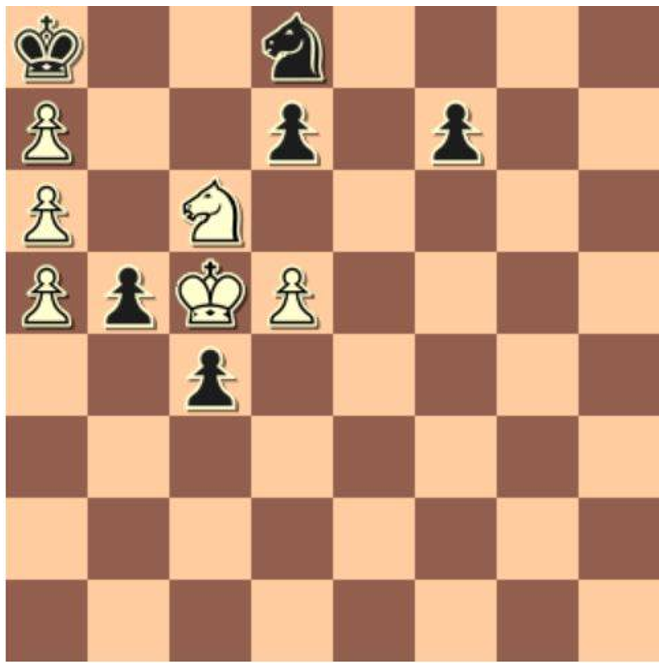
Although I have long retired from serious chess tournaments (they take too much time, a luxury...

The Strange Case Of The Monotonous Running Average

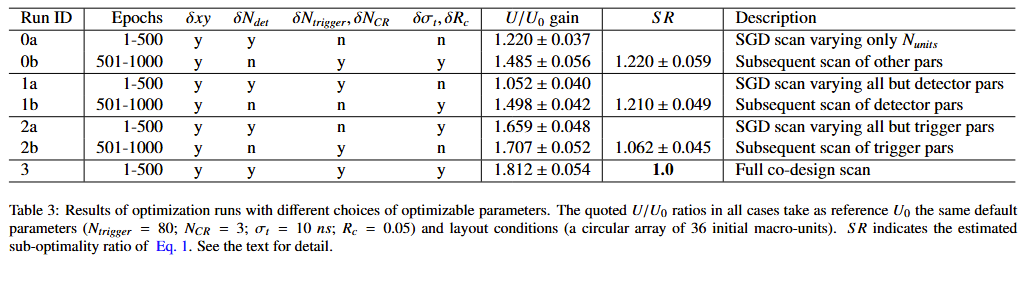
These days I am putting the finishing touches on a hybrid algorithm that optimizes a system (a...

Turning 60

Strange how time goes by. And strange I would say that, since I know time does not flow, it is...

User picture.
picture for Hank Campbellpicture for Patrick Lockerbypicture for Heidi Hendersonpicture for Bente Lilja Byepicture for Sascha Vongehrpicture for Johannes Koelman
Tommaso DorigoRSS Feed of this column.

Tommaso Dorigo is an experimental particle physicist, who works for the INFN at the University of Padova, and collaborates with the CMS and the SWGO experiments. He is the president of the Read More »

Blogroll
This week I am in Warsaw, where I attend the XI workshop on particle correlations and femtoscopy. I am actually here to give a seminar on statistical methods in particle physics next Thursday, but of course I am also going to try and deepen my understanding of the field of investigations of heavy ion collisions.

Jan Pluta, one of the old-schoolers of the field, gave an introductory talk this morning. It was titled "A brief history of femtoscopy and particle correlations - a personal view". I am reporting below some impressions from his presentation.

What is femtoscopy ? Jan started by warning that he would indeed only give a personal view of the history of the field, and that the view of others may be very different.
Recurrently, uninformed journalists re-discover the h-index and decide to create their own list of the "top scientists" in their country. The most zealous also draw some summary statistics from the list, and then venture to speculate wildly about it. Alas, it's a pattern I've seen a few times now.

The latest is an article which somebody posted on my Facebook column. It is uninteresting to see what conclusions are drawn from the graphs and lists published there, as the data are quite incomplete - in the h-index-ordered list of Italian researchers I do not appear, for one, but similarly do not dozens of top scientists who have even higher h-indices.

As I am spending my time these days selecting candidates for early-stage researcher positions in the EU network I am coordinating, I am reminded of my own experience as a participant to job interviews from the other side of the table. The text below tells the story of my interviews for a post-doctoral position in 1998. Enjoy! 

----

A longtime follower of this blog, Tony Smith, pointed out to me today this arxiv paper published three days ago. In it, CMS data from Run 1 of the LHC are used to speculate that there might be a second Higgs boson hiding in the data at a mass of about 145 GeV. Check out the two graphs that they produce.
The first one, shown below, is their own interpretation of the four-lepton invariant mass from CMS data and background in the H-->ZZ--> four lepton final state:


Yesterday my 16 year old son surprised me by explaining that he had been taught at school what alpha, beta, and gamma decays are. He had learned a lot, but I was able to add a little more background information to the picture as he asked me what was the neutrino, which his professor had correctly explained was one of the particles emitted in beta decay.

With hindsight, my surprise probably comes from keeping my brain inactive and sticking to a rather conservative idea of how sciences should be taught at school; that idea is that understanding physics requires you to have some solid basis in maths, and that the explanation of phenomena should proceed along with quantitative calculations. 
In Thessaloniki for a greek weekend and a wedding, I had a chance this morning to visit the city's archaeological museum. I was not expecting much, although I had a vague recollection that the area is rich with old archaeological sites and tombs, many of which were unearthed in pristine state. Hence I was extremely happy of the wealth of sculptures, jewelry, vases, and objects of all kinds, especially ones from the pre-Ellenistic period.
The collection of jewelry and gold and silver coins was impressive; by itself it was well worth the visit. But two things really made my day: some incredibly beautiful vases from Chios, and the Derveni papyrus.