One of the important things in life is to have a job you enjoy and which is a motivation for waking up in the morning. I can say I am lucky enough to be in that situation. Besides providing me with endless entertainment through the large dataset I enjoy analyzing, and the constant challenge to find new ways and ideas to extract more information from data, my job also gives me the opportunity to gamble - and win money, occasionally.
Nowadays Physics is a very big chunck of science, and although in our University courses we try to give our students a basic knowledge of all of it, it has become increasingly clear that it is very hard to keep up to date with the developments in such diverse sub-fields as quantum optics, material science, particle physics, astrophysics, quantum field theory, statistical physics, thermodynamics, etcetera.
Simply put, there is not enough time within the average life time of a human being to read and learn about everything that is being studied in dozens of different disciplines that form what one may generically call "Physics.
Twenty years have passed since the first observation of the top quark, the last of the collection of six that constitutes the matter of which atomic nuclei are made. And in these twenty years particle physics has made some quite serious leaps forward; the discovery that neutrinos oscillate and have mass (albeit a tiny one), and the discovery of the Higgs boson are the two most important ones to cite. Yet the top quark remains a very interesting object to study at particle colliders.
One of the nice things about the 2012 discovery of the Higgs boson is that the particle has been found at a very special spot - that is, with a very special mass. At 125 GeV, the Higgs boson has a significant probability to decay into a multitude of different final states, making the hunt for Higgs events entertaining and diverse.
On these hot days of August one is led to remember the lyrics of Elton John's 1972 hit "Rocket Man": "and all that science I don't understand... It's just my job five days a week". Indeed, being a scientist should not be considered a mission, something you work at 24 hours a day, seven days a week. We do have our lives and attend to them... more or less.
Exotic baryons, what are they ? But first of all, what is a baryon ? Well, it depends whom you ask the question to. In the context of the static quark model, a baryon is a particle composed of a triplet of quarks, as opposed to a meson, which is a particle composed of a quark-antiquark pair. But the quark model is fifty years old, and nowadays we know better: baryons and mesons do not just contain a triplet or a duo of quarks; they are in fact a soup of quarks and gluons. What is still true is that their intrinsic properties are distinguished by the _valence_ quarks they contain.


 Choosing Your Bets: The Selection Bias
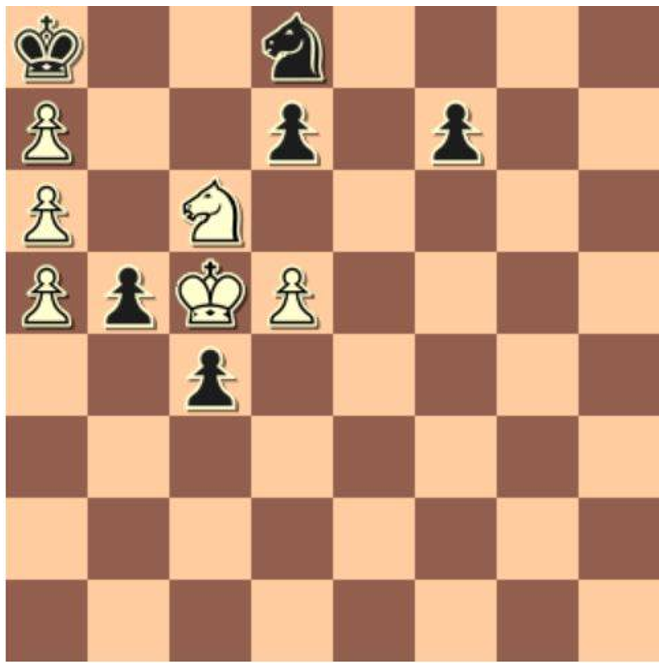 A Chess Study Requiring Backpropagation
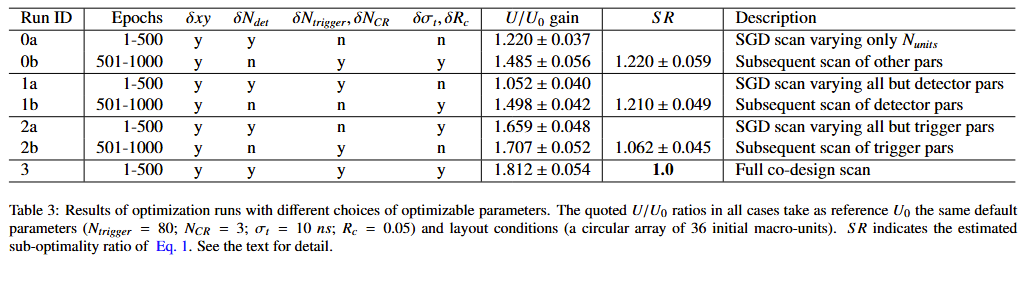 Co-Design Of Scientific Experiments