Fake Banner
Environmentalists, What Are You Asking From Dedmoroz Lenin For Earth Day This Year?

Tomorrow is Earth Day. It is also Lenin's birthday. That's not coincidence. The leader of...
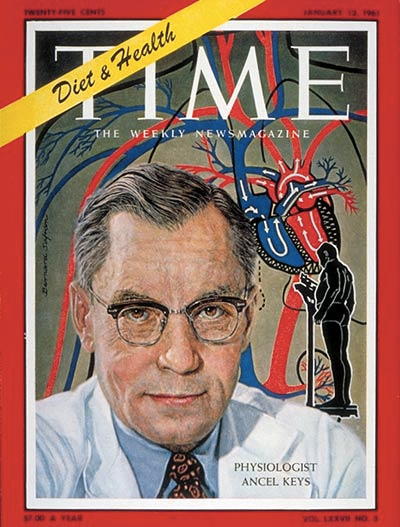
How Ancel Keys Went From MAHA Hero To MAHA Villain

If a lot of the food and health claims you read and hear today seem like things left over from...

Are Baseball Pitchers Faster Today?

On September 7, 1974, pitching for the California Angels, Nolan Ryan, known for his velocity, became...

Ground-Nesting Bee Populations Don't Get Publicity But They're Everywhere

Honeybees get attention in environmental fundraising campaigns because people don't understand...

User picture.
picture for Tommaso Dorigopicture for Heidi Hendersonpicture for Fred Phillipspicture for picture for Hontas Farmerpicture for Atreyee Bhattacharya
Hank CampbellRSS Feed of this column.

I founded Science 2.0® in 2006 and since then it has become the world's largest independent science communications site, with over 300,000,000 direct readers and reach approaching one billion. Read More »

Blogroll
So People for the Ethical Treatment of Animals doesn't like Super Mario.  Really, I don't either.  Wasn't he the bad guy in Donkey Kong?  Donkey Kong was the name of the game, after all, and the big primate only steals Pauline because Mario was a mean jerk to him. How did he suddenly become a good guy? 

Oh, that was 30 years ago?

I am trapped in the past, just like PETA.  Though they are trapped in the 17th century and I am only trapped in 1981, long after animal testing achieved pretty much every advance in medical science, that stuff the anti-science hippies at PETA refuse to acknowledge.
The enemy of my enemy is my friend, an old saying goes.  Roman, Arabic or Chinese, it doesn't matter who claims to have credit for immortalizing it first, people have known it to be true since there were more than two people.

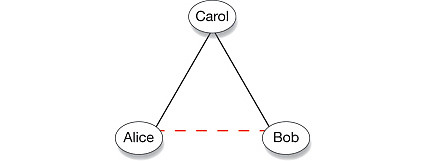
Since physicists love Alice and Bob, we can make a psychological dissonance graphic also by introducing a third character, Carol.  If the solid lines are positive and dashes are negative, there is equilibrium as long as everyone is an enemy or everyone is a friend.  It is where there is one enemy that games of "Risk" really get played.
The last few years have seen a real spike in end-of-the-world conspiracy theories.  Why?  More asteroids, more flares, more earthquakes?  No, just more Internet to talk about them, which gives bored news media something to talk about and bored science sites more news media to debunk.

At least one end-of-the-world scenario for 2012 has been eliminated already - like the Christmas shopping season, people are pushing debunking the apocalypse farther and farther back and science is already eliminating 2012 apocalypses before 2011 is even over.  Sheesh.  When will we learn to just enjoy the anticipation?
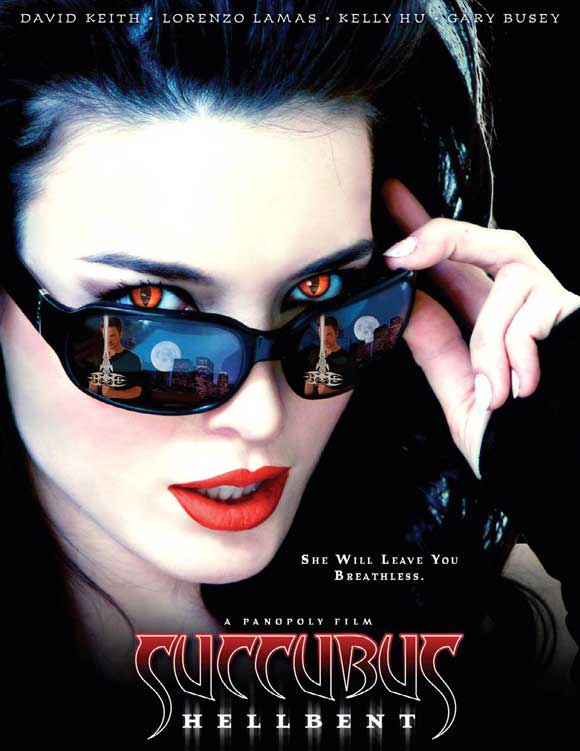
If you've ever thought you were being abducted by an alien or, if you are 400 years old, seduced by a succubus, and couldn't move, you are not alone.   A new article in Sleep Medicine Reviews says 7.6% of the population has had the same experience and it's called sleep paralysis.
The psychologists define sleep paralysis as "a discrete period of time during which voluntary muscle movement is inhibited, yet ocular and respiratory movements are intact" and it often involves hallucinations.
Some folks in Britain want to spend 10 years and millions of dollars to build a computer that goes really, really slow - and I think it's a great idea.

I partly think it's a great idea because it is not Americans spending millions of dollars, the same way I thought the LHC was a terrific idea...for Europe.  People who say you should spend a lot of taxpayer money for 'leadership' in science don't understand that argument when it is applied to military firepower - I don't understand it either way.  In a global world, paying for something does not buy expertise, attaining expertise does.  Silicon Valley was not paid for by taxes, it was paid for by profits, after all.
If you're worried about getting the flu, chances are that you got an influenza vaccine; these are created on an annual basis and use a method from the 1950s; it is egg-based technology, literally produced in chicken eggs.  Some vaccines, like polio, are now created using laboratory-grown cell lines that are capable of hosting a growing virus.  The first is inefficient, the second is expensive.(1)

The future of vaccines looks a little different. The race is on to create a universal flu vaccine, one that does not have to be recreated each year, and to also bring the technology cost down to where it is more financially constructive to get people a vaccine than have them in the hospital.(2)