Fake Banner
Blood Pressure Medication Adherence May Not Be Cost, It May Be Annoyance At Defensive Medicine

High blood pressure is an important risk factor for developing cardiovascular disease and premature...

On January 5th, Don't Get Divorced Because Of Hallmark Movies

The Monday after New Year's is colloquially called Divorce Day, but it's more than marriages ending...

Does Stress Make Holidate Sex More Likely?

Desire to have a short-term companion for the holidays - a "holidate" - is common enough that it...

To Boomers, An AI Relationship Is Not Cheating

A recent survey by found that over 28 percent of adults claim they have an intimate, even romantic...

User picture.
picture for Fred Phillipspicture for Hontas Farmerpicture for Tommaso Dorigopicture for picture for Patrick Lockerbypicture for Ilias Tyrovolas
Hank CampbellRSS Feed of this column.

I founded Science 2.0® in 2006 and since then it has become the world's largest independent science communications site, with over 300,000,000 direct readers and reach approaching one billion. Read More »

Blogroll

Last week, the Western Plant Health Association, which represents California, Arizona and Hawaii companies involved in plant nutrients, soil amendments, agricultural minerals and crop protection products (basically, technologies such as fertilizer and pesticides), held its annual meeting in Maui and I was invited to speak about the issues involved in bringing agricultural science to a public that is increasingly removed from its food.

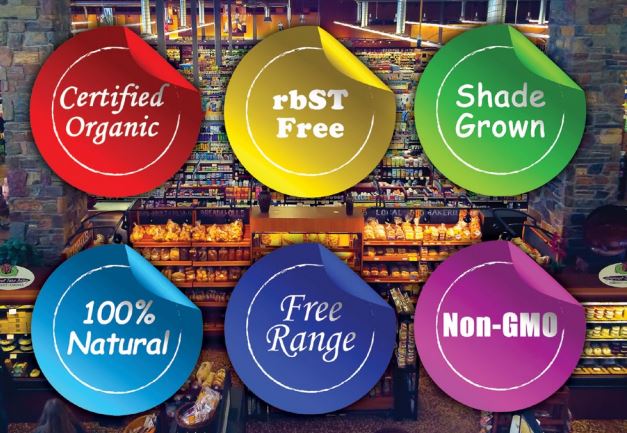
In the early days of food labeling and regulations, it was just about mandating honesty. If you go to buy mayonnaise, you shouldn't have to wonder if it is mayonnaise (1), and then labels became a marketing distinction.

Better ingredients meant a better product and that appealed to people who cared about higher quality or superior health for their families. 

More recently, labels have become a way to promote self-identification with a world view - you could show you are more ethical and care more about your children and the developing world, and even the whole planet, if you buy a special label.
A pilot Earth Index commissioned by BBC Earth using data from the United Nations Environment Programme World Conservation Monitoring Centre (UNEP-WCMC) sets a new standard for estimating pretend money. It values coral at $10 trillion for the global economy. Trees are worth even more, at $16 trillion, which means the pretend value of trees are almost as much as all of the real value of the people in the United States (GDP $17.42 trillion.) Heck, the Grand Canyon is worth $700 million and it just sits there looking stoic.

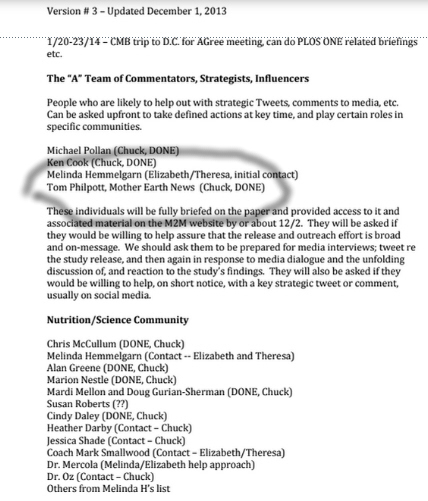
In an effort to keep the pressure on scientists who accept the overwhelming consensus on genetically modified organisms (GMOs), the hard-left political magazine Mother Jones has written another article using emails provided to the organic lobbying organization US Right To Know(1) to undermine science it has chosen not to accept. 

If you get money from a corporation, are you for sale?

It’s obviously a silly question, since almost everyone in America signs the backs of checks ratherr than the front of them, yet much of the public tends to think that if a scientist gets funding from the government or a corporation, they are mandated to produce a specific, pre-chosen result, even though those same people would not agree that their own “funding source” — an employer — controls their beliefs.

A new survey finds that how 40 percent of people function is a scientific mystery - because only 60 percent of people start their mornings with coffee.

This is baffling in a country where $18 billion annually is spent just on specialty coffees.