Fake Banner
Spring Forward Fall Back: We Hate Changing Clocks But Hate One Change Most

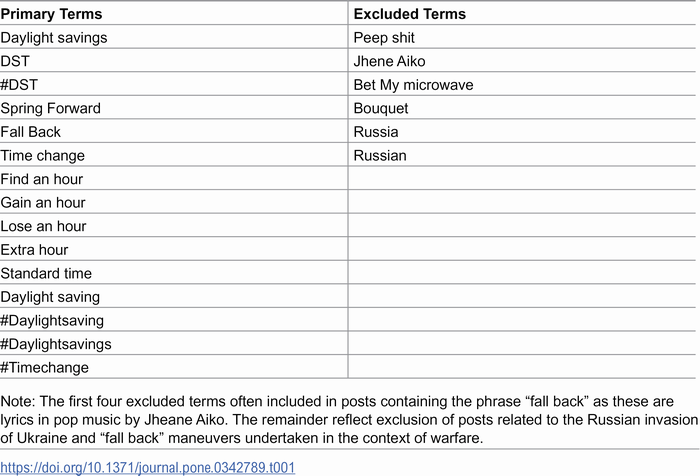
In 1918, with Gen Black Jack Pershing off to France to stop the Germans in World War I, the United...
Canadian Epidemiologists Claim Processed Foods Cause Bad Kids

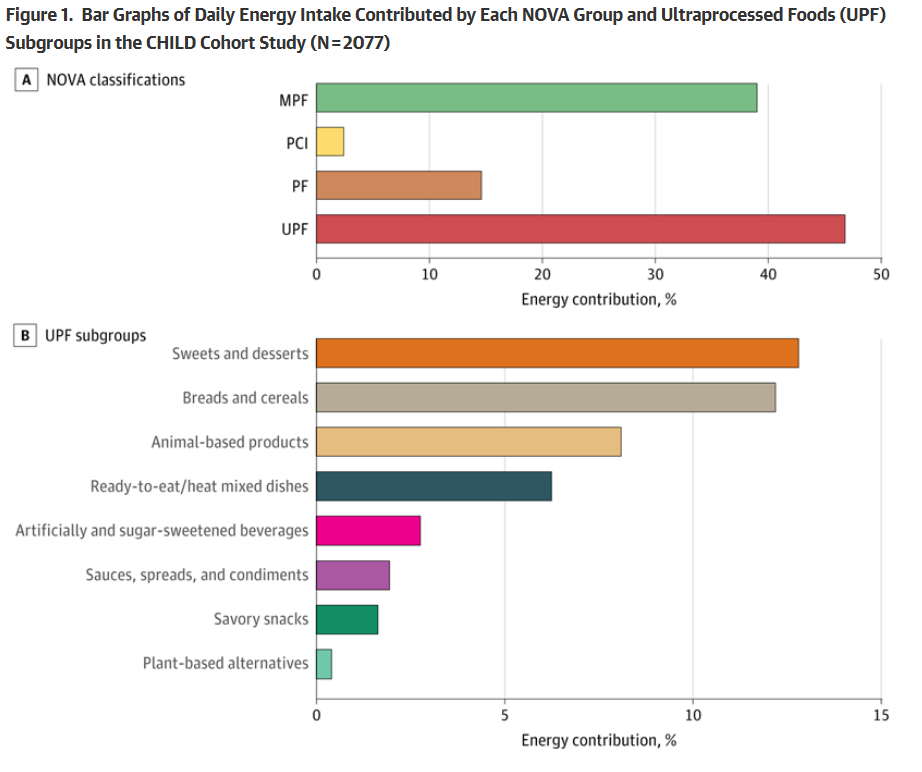
A cohort analysis of preschoolers in Canada has led the authors of the paper to call for bans...
What AI Can't Do: Humanity’s Last Exam

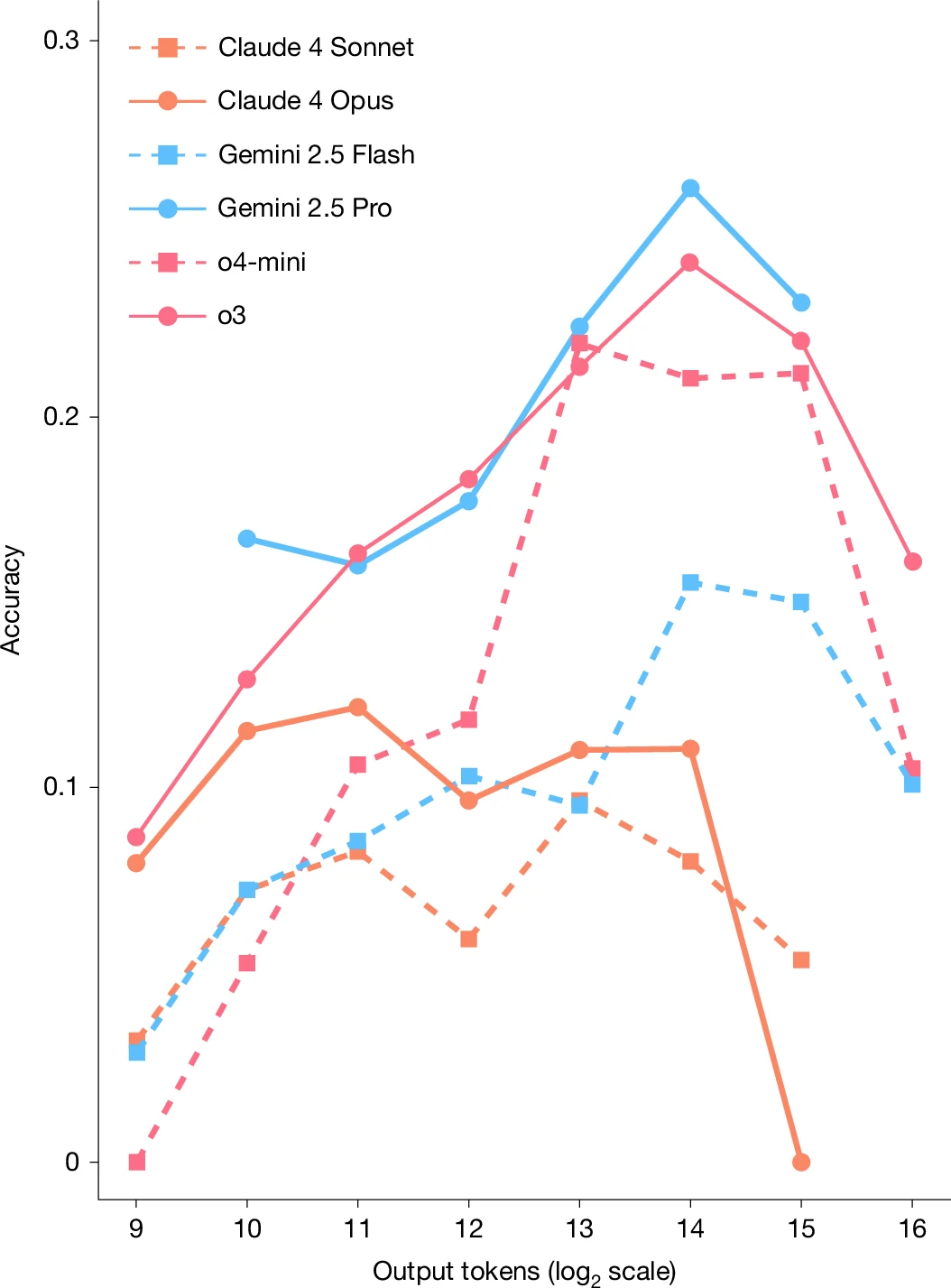
By this time 26 years ago, the "Dot-Com Bubble" was ready to burst. People who wanted to raise...

Does NBA Income Inequality Impact Team Performance?

A new paper says that players where a few superstars get the money leads to less cooperation and...

User picture.
picture for Tommaso Dorigopicture for Hontas Farmerpicture for picture for Fred Phillipspicture for Atreyee Bhattacharyapicture for Patrick Lockerby
Hank CampbellRSS Feed of this column.

I founded Science 2.0® in 2006 and since then it has become the world's largest independent science communications site, with over 300,000,000 direct readers and reach approaching one billion. Read More »

Blogroll
It's no surprise that the authors of a study, whose work is spun by people selling diet fads into being conclusive proof that a diet fad is science, disagree with what some media outlets are doing with their work - and that their disagreement gets far less attention than the reports being used to claim Miracle Science. 
The worst kept secret in science media, what one honest liberal blogger called The White Elephant In The Room, is its overwhelming partisanship.

It's easy to rationalize that. If Republicans are anti-science then naturally the biggest defenders and cheerleaders of science, journalists and bloggers, would be Democrats.
In 1966, when the "Star Trek" television show debuted, it was revolutionary - not just in the ways that are commonly stated, like that it took a stand against racism and petty geopolitics, we had Sidney Poitier and The Man From U.N.C.L.E. by then, but rather what it did for science.

In the post-World War II era, science had gone from being a well-respected endeavor to being 'mad'. This was after Harry Harlow's monkey isolation experiments,  after LSD on unwitting subjects, after the atomic bomb and after the forced sterilization of 60,000 people under the label of science.
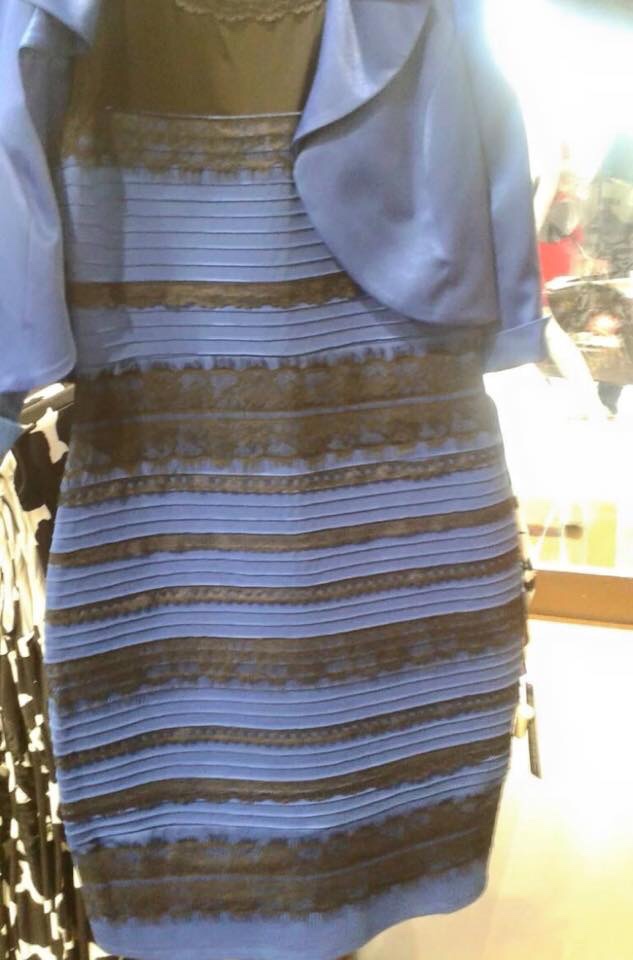
A dress that seems to be different colors to different people has all the Internet intrigued - and that's a good thing. It's a good way to understand science and psychology.

There are two hypotheses as to why people see dramatically different things; one is that our brains are constantly being bombarded by information and so we end up making a lot of assumptions and interpretations based on parameters. If you are looking up close at something and infer a blue background, you see the dress differently than people who assume it has an artificial light background, like yellow.


Though adopting a whole-food diet has become popular in some circles, is it really going to help you? Perhaps, perhaps not. 

One reason to err on the side of caution and not chase diet fads is that fads tend to be expensive and their benefit is unknown. A gluten-free diet, for example, will be 242 percent higher cost and the extra sugar, extra fat, hydroxypropyl methyl cellulose and xanthan gum in gluten-free foods are not a health positive.

What about the whole food diet?

All through the month of March, from 11:57 PM to midnight, visitors in Times Square can see artist Marco Brambilla's vision of Apollo 18, the mission that never was.

We may sometimes think science is in the doldrums today - young people nostalgically believe the 1960s and 1970s were some kind of Golden Age of Space Exploration - but things are much better now. Between 1965 and 1975 the budget for NASA was cut in half.(1)