Among the viable extensions of the standard model, an intriguing class of models involve the concept of a "hidden sector" of new particles only weakly coupled to the standard model one. These particles could be produced in the decay of heavy standard model particles, be invisible, but unstable, and thus soon decay back into standard model bodies, giving funny experimental signatures that our detectors could spot -if we looked for them carefully enough.
Until the second half of the nineties, when the LEP collider started to be upgraded to investigate higher centre-of-mass energies of electron-positron collisions than those until then produced at the Z mass, the Higgs boson was not the main focus of experiments exploring the high-energy frontier. The reason is that the expected cross section of that particle was prohibitively small for the comparatively low luminosities provided by the facilities available at the time. Of course, one could still look for anomalously high-rate production of final states possessing the characteristics of a Higgs boson decay; but those searches had a limited appeal.
Preparing the documents needed for an exam for a career advancement, to a scientist like me, is something like putting order in a messy garage. Leave alone my desk, which is indeed in a horrific messy state - papers stratified and thrown around with absolutely no ordering criterion, mixed with books I forgot I own and important documents I'd rather have reissued rather than searching for them myself. No, I am rather talking about my own scientific production - pubished articles that need to be put in ordered lists, conference talks that I forgot I have given and need to be cited in the curriculum vitae, refereeing work I also long forgot I'd done, internal documents of the collaborations I worked in, students I tutored, courses I gave.
Although now widely accepted as the most natural explanation of the observed features of the universe around us, dark matter remains a highly mysterious entity to this day. There are literally dozens of possible candidates to explain its nature, wide-ranging in size from subnuclear particles all the way to primordial black holes and beyond. To particle physicists, it is of course natural to assume that dark matter IS a particle, which we have not detected yet. We have a hammer, and that looks like a nail.
It is a well-known fact that given the availability of food, we eat far more than what would be healthy for our body. Obesity has become a plague in many countries, and the fact that it correlates very tightly with a decreased life expectancy is not a random chance but the demonstrated result of increased risk of life-threatening conditions connected with excess body fat.
Yet we eat, and drink, and eat. We look like self-pleasing monkeys trained to press a button to self-administer a drug. To make matters worse, many of the foods and drinks we consume contain substances purposely added to increase our addiction. So it takes a strong will to control our body weight.


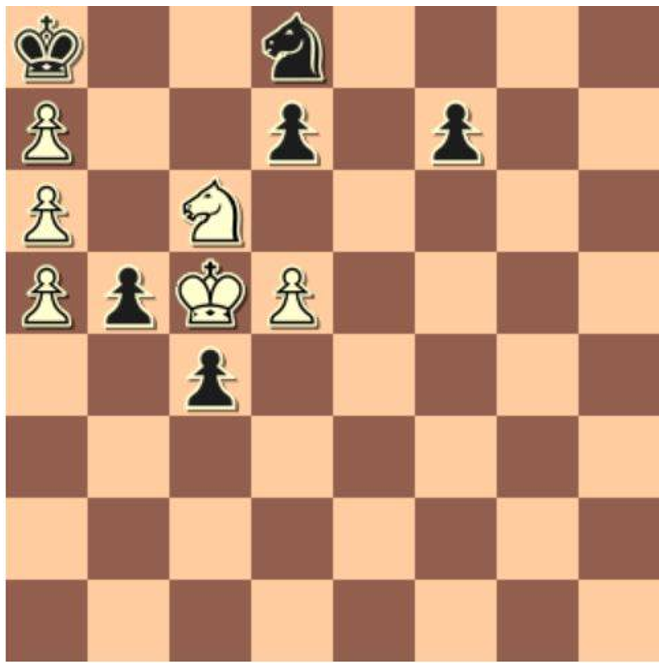 A Chess Study Requiring Backpropagation
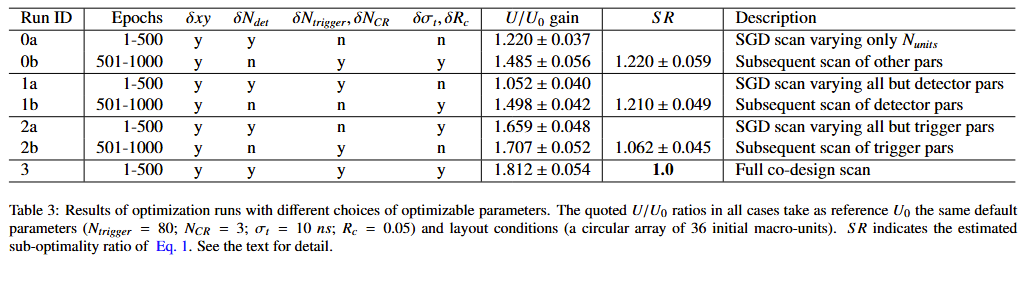 Co-Design Of Scientific Experiments
 Travel With Two Infants
 A Nice Little Combination