Fake Banner
Co-Design Of Scientific Experiments

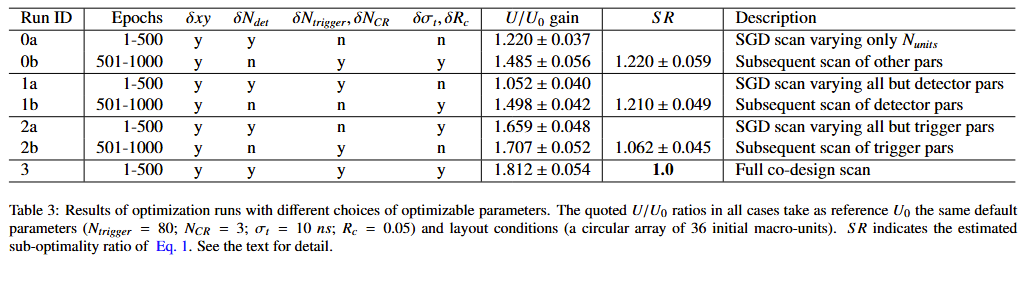
Next Monday, or Tuesday at the latest, you will find a new bulky paper in the arXiv. Titled "On...
Travel With Two Infants

The other day I traveled with Kalliopi and our two newborns to Padova from Lulea. After six full...
A Nice Little Combination

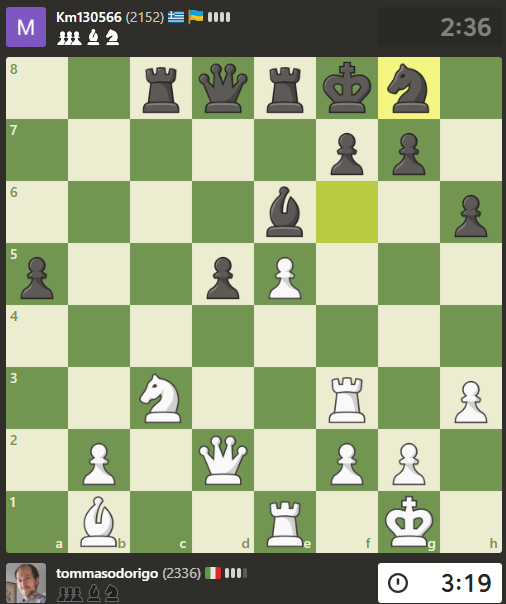
Although I have long retired from serious chess tournaments (they take too much time, a luxury...
The Strange Case Of The Monotonous Running Average

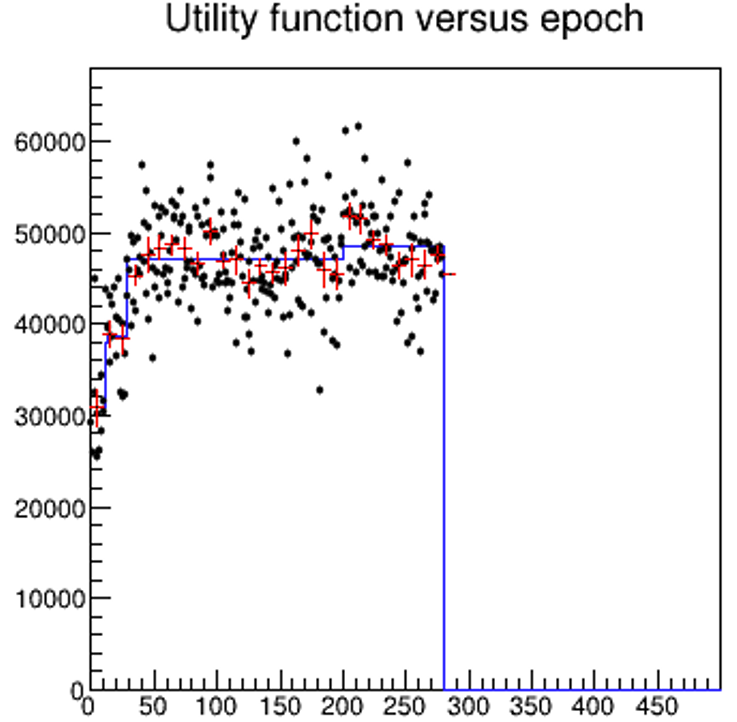
These days I am putting the finishing touches on a hybrid algorithm that optimizes a system (a...

User picture.
picture for Hank Campbellpicture for Patrick Lockerbypicture for Heidi Hendersonpicture for Bente Lilja Byepicture for Sascha Vongehrpicture for Johannes Koelman
Tommaso DorigoRSS Feed of this column.

Tommaso Dorigo is an experimental particle physicist, who works for the INFN at the University of Padova, and collaborates with the CMS and the SWGO experiments. He is the president of the Read More »

Blogroll
In Thessaloniki for a greek weekend and a wedding, I had a chance this morning to visit the city's archaeological museum. I was not expecting much, although I had a vague recollection that the area is rich with old archaeological sites and tombs, many of which were unearthed in pristine state. Hence I was extremely happy of the wealth of sculptures, jewelry, vases, and objects of all kinds, especially ones from the pre-Ellenistic period.
The collection of jewelry and gold and silver coins was impressive; by itself it was well worth the visit. But two things really made my day: some incredibly beautiful vases from Chios, and the Derveni papyrus.
The graph below, I hope you'll agree, is significantly cooler and better-looking than the typical data display plots you get from high-energy physics analyses. Colours are bright, graphical symbols are clean, and one grasps the essence of the information quickly once one knows what it is about. So, let me tell you what it is about for starters.
Yesterday I chaired the selection committee to choose the student who will be hired in the AMVA4NewPhysics network by the Padova section of INFN, and during the interviews I asked all candidates a couple of "easy" physics questions, meant to test the students' reasoning process rather than their prior knowledge.

The first question was only apparently easy - even too much, from the outset. The fact is, the devil is always hiding in the details, as I immediately realized as I tested it by asking an experienced colleague to answer it. He got part of the question wrong, but in doing so he clarified to me that there was a non trivial aspect below the surface.
The winners of the 2015 Nobel Prize in Physics are:

  • Takaaki Kajita Kajita (Super Kamiokande)
  • Arthur McDonald (Sudbury Neutrino Observatory - SNO)
“for the discovery of neutrino oscillations, which shows that neutrinos have mass"
It is with great sadness that I heard (reading it here first) about the passing away of Guido Altarelli, a very distinguished Italian theoretical physicist. Altarelli is best known for the formulas that bear his name, the Altarelli-Parisi equations (also known as DGLAP since it was realized that due recognition for the equations had to be given also to Dokshitzer, Gribov, and Lipatov). But Altarelli was a star physicist who gave important contributions to Standard Model physics in a number of ways.
Last Friday I was invited by the University of Padova to talk about particle physics to the general public, in occasion of the "Researchers Night", a yearly event organized by the European Commission which takes place throughout Europe - in 280 cities this year. Of course I gladly accepted the invitation, although it caused some trouble to my travel schedule (I was in Austria for lectures until Friday morning, and you don't want to see me driving when I am in a hurry, especially on a 500km route).