




Subject: BP control of GIS data
Regarding the loss of an open letter from the web, from whatever cause.
[EDIT]
June 15 2010 - 00:23 BST.
Important information has come to light which deserves prominence, hence this edit.
I can confirm that the letter was written by Andrew Stephens and Devon Humphrey.
I have been led to understand that the open letter was taken down
because some web sites were reading more into the letter than was clearly stated.
The letter has now been replaced with a note:
http://thegisinstitute.org/blog/deepwater-horizon/deepwater-gis-data-con...
I can assure my readers that there was no pressure placed on the site by any person or organisation to remove the letter.
There is no conspiracy surrounding the unpublishing of the open letter. Period.
[End of edit.]
It is my sincere belief that a letter which commences with the words "to whom it may concern" and which is posted in a public forum with free access to any person is thereby placed in the public domain.
A number of blogs have reported partial contents of an open letter written by Andrew Stephens and Devon Humphrey expressing concerns about the use of GIS data by BP. The link provided by these bloggers is now invalid.
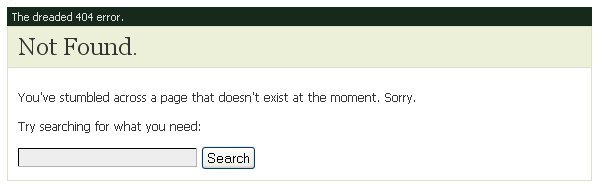
http://thegisinstitute.org/blog/deepwater-horizon/deepwater-gis-data-con...
It would be perfectly reasonable for any person to assume that the letter has been censored. However, if the publication of the letter in its original location was a breach of the site's terms and conditions, then its removal was not censorship. However, the site is registered to Andrew Stephens, one of the authors of the letter, as shown in the whois data:
Domain Name:THEGISINSTITUTE.ORG
Created On:27-Aug-2002 16:26:44 UTC
Last Updated On:23-Oct-2009 14:25:43 UTC
Expiration Date:27-Aug-2010 16:26:59 UTC
Sponsoring Registrar:eNom, Inc. (R39-LROR)
Status:CLIENT TRANSFER PROHIBITED
Registrant ID:f68a65ffe392b8ac
Registrant Name:Andrew Stephens
Registrant Organization:The GIS Institute
When I viewed the source code of the - since removed - page I found that it contained spurious web content. That brings up the possibility that the site was being hacked.
In the spirit of open science I reproduce the letter here in full, as published June 11 2010 on the website of The GIS Institute [edit - erroneous address deleted].
[edit] - the Mailing address for The GIS Institute is PO Box 1124 Boulder, CO 80306
Letter begins verbatim below line. Some original formating and page style is lost, but the ASCII code is retained in full and unedited:
----------------------------------------------------------------------------------------------------
Deepwater Horizon GIS Data Concerns
From: Andrew Stephens and Devon Humphrey
Date: June 9, 2010
Subject: BP control of GIS data
To Whom It May Concern:
Executive Summary
This letter is being submitted to make it known that several key factors of the National Incident Management System (NIMS) and Incident Command Structure (ICS) are not being met in the Unified Command process of the BP Deepwater Horizon Incident. Specifically regarding the treatment of Geographic Information System (GIS) data, current configuration and process limit, or exclude completely, the flow of information about the extent and status of the disaster to government entities, emergency responders, and the public.
GIS is essential to the oil spill response effort and to the recovery of public resources. Almost every map and geographic display representing the Deepwater Horizon Incident is sourced by GIS data. Current GIS management processes indicate that BP is treating GIS data as proprietary information, and these data are currently being stored behind the BP corporate firewall. It is our understanding that public agencies, for example, The US Fish and Wildlife Service and The Louisiana National Guard, are literally submitting the only copy of agency field data, via wireless-enabled mobile GPS devices, directly to a BP GIS server behind the corporate firewall in Houston. Examples of these data are; dead bird and fish locations with photos, boom placement, engineered construction barriers, including dates, and other descriptive information and photos.
State Emergency Operation Center (EOC) staff, Parish EOC staff, and other Emergency Responders and Recovery Specialists do not have access to these GIS datasets, contrary to all NIMS guidance, protocols and principles.
Per NIMS, redundancy of incident information is to be managed jointly, and fully accessible by the Federal On Scene Coordinator (FOSC), the State On Scene Coordinator (SOSC), and the Responsible Party. Technology allows implementation of this design to occur instantaneously and automatically (see attached diagram). The intent of this letter is to inform The President, the National Incident Commander, the FOSC, the SOSC, and the public, of the need to establish and enforce NIMS compliant access policies over all Deepwater Horizon oil spill GIS data.
The Geospatial Intelligence Officer (GIO) and the GIS Unit Leader, who proposed NIMS-compliant GIS architecture to Unified Command, and supported access to these GIS data, have been removed from the Houma ICP by BP IT department managers.
Introduction
Andrew Stephens and Devon Humphrey, both Geographic Information Systems (GIS) professionals with 40 years combined GIS experience, were the primary architects of the GIS Unit and lab at Incident Command Post (ICP) Houma. Mr. Stephens has 20 years GIS experience, teaching GIS to organizations worldwide, and is an expert in GIS deployment, start-up, training and workflow design. Mr. Humphrey has 20 years background in Oil Spill GIS with Texas General Land Office, where he was on the development team of an award-winning oil spill GIS. He has also been an instructor since 1994 at the National Spill Control School at Texas A&M University, Corpus Christi. The ‘Spill School’ is named in the Oil Pollution Act of 1990.
From late April through May 28 of this year, while employed by BP contractor The Response Group (TRG), we created a GIS-based Common Operating Picture (COP) capability for ICP Houma, using state-of-the-art GIS technology. The task was done in record time, and while under significant obstacle and pressure to deliver mapping products for Incident Command, military staff, and political appointees from Washington DC.
We planned the GIS to be NIMS compliant, featuring architecture that provided instantaneous and automated copies of the data to be replicated amongst the triad of ICS participants; Federal, State, and Responsible Party. Our design represented an open, yet secure system, and featured best practices and tools of the GIS industry. While on duty, we also advocated delivery of GIS data to the local parish EOC’s, and to the vast number of responders and local officials requesting this information (per NIMS), so they could take informed action in their communities. The NIMS Resource Center FAQ on the FEMA website states: “Public Information consists of the processes, procedures, and systems to communicate timely, accurate, and accessible information on the incident’s cause, size, and current situation to the public, responders, and additional stakeholders (both directly and indirectly affected).” We were unable to meet the requests to deliver data locally – in our understanding, this was due to security policy restrictions of the BP IT department.
After three weeks of service with no day off, Mr. Humphrey and Mr. Stephens were removed from post. It is our understanding the order came from senior BP IT staff from Houston. These IT directors never met us, they never came on-site to understand the urgent and complex nature of our work, or how efficiently we were operating. They did not communicate with us directly, nor did they ask questions about response GIS. They had no sense of our strong work ethic, the quality of our product, nor the team spirit and community we fostered at the ICP. We are professional and enthusiastic with this technology, and that was evident to everyone we worked with or demonstrated technology for.
The only copy of the GIS database we created is behind the BP firewall, managed and edited only by BP IT staff and their contractors. It is our understanding that several agencies, most importantly US Fish and Wildlife, The Louisiana National Guard, and two teams of shoreline and rapid assessment personnel, are contributing GPS/GIS data directly from the field to this GIS database without copy or backup to the FOSC, or the SOSC. We are deeply concerned about the location and stewardship of these data, as they represent a significant component of the record of this disaster, and they are not being managed in a NIMS-compliant manner.
The NIMS Resource Center FAQ on the FEMA website states: “Information technology systems must be able to work together and should not interfere with one another when multiple jurisdictions, organizations, and functions come together to respond to an incident. Effective emergency management and incident response activities rely on flexible communications and information systems that provide a common operating picture to emergency management/response personnel and their affiliated organizations. Systems should support the following Communications and Information Management concepts and principles: interoperability; reliability, scalability, and portability; and resiliency and redundancy of any system and its components.”
It is our opinion that BP’s IT department was not, and is not currently, aware of the NIMS standards, guidance, and compliance protocols mandated by former President George W. Bush for incidents such as this BP oil spill.
Details, a timeline, and a layperson’s summary follow:
Initially, ICP Houma GIS staff and products were primarily serving US Coast Guard task forces on the water, over-flight, and oil-plume mapping. The GIS Unit quickly migrated away from the fragmented skills, flash drives and personal laptops, to a networked drive with a file Geodatabase, then to an Enterprise-class Spatial Database Engine and ArcGIS Server, all state of the art GIS tools. ArcGIS Mobile (field-to-server direct capability) figured prominently into the overall design, and by Friday the 28th of May, The Louisiana National Guard was posting data directly from the field via wireless-enabled GPS units to the BP GIS server in Houston. There are now over 150 layers of base map and operational data served to users of ArcGIS desktop, a browser-based Flex viewer (a critical Common Operating Picture (COP) element we planned and deployed). The system, which would have normally taken significant time to plan and implement, was fully operational in less than two weeks. Map requests were dominating the GIS staff time, so standardized map products were created on a schedule, each following a data deliverable to the team – for example, the twice-daily airborne SLAR imagery receivable was processed and delivered as a map product available from the document management team. Creating these processes while processing map requests, orienting a growing user-base to the GIS technology, staffing for the ever-increasing demand of functionality from incident command and the field was no small task.
The range and depth of talent was truly remarkable. As the demand for GIS products and services grew, so did the GIS team, and its ability to deliver. Federal Intelligence (National Geospatial-Intelligence Agency (NGA)) assets were put into service against the spill, as were NGA staff. The GIS lab was a common stop by visiting Admirals, Captains, Colonels, and many others. The team had the honor of demonstrating the GIS technology, and the history of the GIS Unit, to various members of Unified Command, including the outgoing Commandant of the Coast Guard, Admiral Thad Allen, Coast Guard Commandant Admiral Robert Papp, Area Command FOSC Rear Admiral Mary Landry, Rear Admiral James Watson (now Area Command FOSC), Tom Strickland (Chief of Staff for Interior Secretary Ken Salazar), David Hayes (Deputy Secretary of Department of Interior), Jane Lute (Deputy Secretary of Homeland Security), representatives from the State of Louisiana Governor’s Office, Army National Guard, Air Force, US Fish&Wildlife and many others. Houma FOSC Captain Stanton stated when he thanked us for our work, “this is what oil spill response is supposed to look like!”
On Friday May 28, 2010, after 21 days of service, and just hours after US Coast Guard Commandant, Admiral Robert Papp, complimented us on our work in the GIS lab, we were removed by our contractor, TRG. It is our understanding that this specific request was made by staff of the Houston-based IT department at BP. We got the original news from one of our teammates after we had gone for the day, and it took several hours to reach the owner of TRG, Roy Barrett. Mr. Barrett said to Mr. Stephens by phone, that several upper-level IT directors, and “higher level directors than I’ve ever dealt with” were on a conference call Friday May 28th. Mr. Barrett relayed that the IT group in Houston felt that we were a “problem”, and they asked him to ask us “not to return to the building”. In our opinion, this action was taken in response to our consistent application of NIMS protocols, and for our insisting that the FOSC and the SOSC be copied on all GIS data via simple architectural and procedural designs, per NIMS (see attachment diagram).
As GIS Unit leaders, we also resisted the apparent takeover by BP’s IT department of the GIS server, originally ordered and approved by the ICP Houma FOSC, USCG Captain Stanton. On Thursday May 27, 2010, Mr. Stephens was made aware, by members of the GIS Unit, that we had no write access (editing capability) to the GIS database. Additionally, we could not post updates to the Flex COP viewer. Up to this day, Mr. Stephens was assured multiple times by local BP IT contractors and staff, that the GIS lab would be the place where development and deployment of the COP viewer would take place. The Common Operational Picture – the COP viewer – is a critical GIS tool (and NIMS component) for Incident Command to understand all aspects of the disaster. The COP is a map view of the GIS database, deployed on an intranet website in the ICP, making GIS tools available for non-GIS trained personnel. In ICP Houma, most requests for new COP viewer functionality would literally walk in through the doors of the GIS lab. The GIS team had become quite able to interpret and understand new user requirements, and implement them quickly, sometime in minutes, so that all IC staff in the building could use the new tools. The net affect, before the viewer control was taken away by BP IT, was that we were able to receive new requirements, write the code, and implement new tools and functionality requests in the moment, making them available immediately via the COP viewer. Mr. Stephens left that late that day, and still the GIS Unit developer could not post updates to the viewer. These delays were impacting Incident Command staff, by affecting the timing and quality of GIS information available for planning.
It is our understanding that at this time, BP controls all editing, contribution, and access to the GIS record for this ecological disaster, a GIS/spatial/map database of what and where features are in the response area, but as importantly when all these movements, features and activities took place. We are also aware of at least one agency, NOAA, who is not submitting data directly to BP, perhaps for NIMS or quality control concerns.
Timeline
Early GIS efforts (Incident Week 1) Last weeks of April
Scarce GIS work taking place. Incident Command Post Houma (ICP) stood-up on or about April 21. A small number individuals, from TRG, NOAA, Fish and Wildlife and other agencies were making and plotting situation maps with GIS – no managing entity or GIS best practices in place at all. Responders immediately began requesting map products from these “mappers”. First map templates developed.
BP IT department activity:
Non-existent
What it meant for GIS operations and disaster response:
Basic operations and mapping only – file management, planning and backup were not occurring. All GIS computer equipment was provided by individuals with personal laptops running ArcGIS software.
Incident Week 2 – First week of May: Devon Humphrey deployed to ICP Houma, secured GIS lab space.
GIS Accomplishments:
Mr. Humphrey named GIS Unit Lead by Planning Section Chief. A network NAS drive was purchase from Best Buy, and the local BP IT staff mapped two network drives which all GIS staff could connect to, and use for a data repository. Map request demand exploded in the ICP, standardized map products were introduced. A room for GIS lab was secured.
BP IT department activity:
Mounted NAS drive onto vanilla network.
What it meant for GIS operations and disaster response:
Basic operations and mapping only. The arrival of Devon Humphrey ensured some data management and map quality enhancements, though increased map requests pre-empted progress on centralizing data and allowed only small gains in efficiency for map production.
Incident Week 3 – Second week of May: Drew Stephens deployed to ICP Houma, GIS Unit organized and grew, permanent server approved and ordered.
GIS Accomplishments:
Recruited GIS professionals with 10-15 years experience recruited and hired by Drew Stephens. Standard map products and data deliverables were documented, and daily workflows were created. Database was centralized in a standard ESRI File Geodatabase (GDB) format, along with all map products and services. Devon Humphrey promoted to Geographic Intelligence Officer (GIO) at the request of, and reporting directly to, Incident Command. Drew Stephens promoted to GIS Unit Lead, reporting directly to Planning Section Chief. Paperwork for a NIMS-compliant server architecture approved, by Federal On Scene Coordinator, USCG Captain Ed Stanton, and USCG Rear Admiral James Watson. A request for 10 GIS workstations to replace the personal laptops was submitted. Paperwork submitted for workstations and GIS database/server. First NIMS organizational chart of the GIS Unit created.
BP IT department activity:
Non-existent
What it meant for GIS operations and disaster response:
A team was clearly in place, and both vision and leadership were being demonstrated. Every team member knew their roles and responsibilities, and these roles changed or expanded daily. All team members documented their workflows in order to support turnover and stabilization of this highly volatile environment. Our clients, the responders, were getting great product.
Incident Week 4 – Third week of May: Database and temporary server in place. Permanent server arrives, and is placed behind BP firewall.
GIS Accomplishments:
Database centralized and running on Enterprise-class SDE SQL Server architecture on a “loaner” server in the GIS lab – an amazing feat. The National Geospatial Intelligence Agency (NGA) sent a fulltime analyst to the GIS Unit to supervise the image and data products the NGA is providing for derived boom locations and plume status. Louisiana National Guard requirements lead to the automated creation of a daily 1:24K map book for booming strategies. Flex COP viewer is released to “view” the operational picture of the GIS via intranet in the ICP building only. COP viewer went viral, used all over the ICP by all response staff – an overnight success in the importance and utility of GIS data. New tools added daily.
BP IT department activity:
We were “discovered”, due to our first request for a server. IT wanted to know why we needed it, and we first heard that there was a “no server” policy for the “vanilla” network. IT wanted a password put on the viewer – the Unified Command triad of BP, FOSC, and SOSC vetoed this attempt at control. USCG server arrives, BP pays for it and places it behind the firewall.
What it meant for GIS operations and disaster response:
Our finest week. We were now operational, and getting very good at what we do. Finally had time to actually look beyond the current day, and make plans for deploying ArcGIS Mobile technology, as well as plan for staffing needs into the next weeks and future.
Incident Week 5 – Fourth week of May: Mobile deployed, Over-flight program begins.
GIS Accomplishments:
ArcGIS Mobile deployed successfully with the Louisiana National Guard – allows field personnel to send data from GPS devices directly to the server over mobile network. Field GPS training class was successful. New Mobile ‘clients’ were requesting access to this new technology. Over-flight coordinator named on the GIS Unit Org Chart – collected flight track from multiple aircraft, and geo-referenced pictures and processed into a daily merged layer for the GIS.
BP IT department activity:
We were now being deluged by requests and tasking from BP IT in Houston, and the staff they had flown in from all over the world. They stood-up the new server, and broke the links to the COP viewer on the first day, as we had predicted. BP’s IT department was clearly attempting to build a business unit, while the GIS Unit was responding to a dynamic emergency response.
What it meant for GIS operations and disaster response:
The GIS Unit was becoming distracted and time-occupied with requests and tasking from Houma BP IT staff, who were trying to learn and understand what we were doing. Houston-based BP IT staff were attempting to manage the database remotely, and task our team. The dichotomy of GIS personnel dedicated to emergency response, compared to BP’s IT needs and policies was clear. Friction was increasing, and BP IT staff were consistently breaking chain of command protocols required by NIMS.
Incident Week 6
GIS Accomplishments:
Our replacements have no history with the lab, yet certainly they are GIS professionals. We assume they are getting along fine, though they must be having trouble telling the story of the lab, and explaining how the various processes evolved when Admirals and VIP staff are touring the ICP.
BP IT department activity:
Total control over the GIS lab, the GIS database, the GIS server, and all staff.
What it means for GIS operations and disaster response:
One speculative consequence of BP’s actions is that priorities for data use, dissemination, and analysis may have negative impacts on spill response timing and operations. Because BP IT decisions for the ICP are evidently being made from Houston, there is extremely limited exposure to the needs of commanders and field personnel in Houma. Furthermore, since edits need to be implemented on BP proprietary systems in Houston by BP personnel, the ability to quickly adapt to needs in ICP Houma, which were changing and growing on a daily basis, were very likely impaired. GIS professionals, scientists and developers have an approach to their work that relies upon openness and adaptability in order to succeed. Therefore, it is highly probable that decision support was weakened by BP’s actions to take control over the GIS environment.
What this means to the non-GIS layperson:
1) The current configuration and process allow BP to limit or slow down the flow of information about the extent of the disaster to the government, the public and law enforcement, which I believe is against the spirit and letter of NIMS.
2) The current process allows BP to treat GIS datasets as proprietary information. It is my understanding that public agencies, like The US Fish and Wildlife Service and The Louisiana National Guard, are literally submitting the only copy of agency field data directly to a BP GIS server behind the corporate firewall. Examples of these data are; dead bird and fish locations with photos, boom deployment and engineered construction, dates, along with other descriptive information and photos.
3) The GIS information is essential to the recovery of public resources, and some data belongs to US taxpayers, not BP. BP is paying for the hardware and collection of these GIS datasets, yet it is my understanding that the data belong to the people of the United States. BP must not be allowed to protect these data as if they were a proprietary product.
4) State Emergency Operation Center staff, Parish EOC staff, and other Emergency Responders and Recovery Specialists do not have access to these GIS datasets, contrary to all NIMS guidance, protocols and principles. The effort to slow down the flow of information is at the expense of the containment and cleanup effort of the responders and is in our opinion, suspect behavior by BP.
5) The Federal On Scene Coordinator at ICP Houma, US Coast Guard Captain Ed Stanton, standing with USCG Rear Admiral James Watson, approved the National Incident Management System (NIMS) compliant design, and ordered the first database and server. That server was received by BP, and placed behind the BP firewall.
Conclusion
At the very least, per NIMS, there must be redundancy of GIS information managed jointly, and fully accessible to both the FOSC and the SOSC. Technology allows implementation of this design to occur instantaneously and automatically.
The Incident Commander, the FOSC, the SOSC, and the President need to establish NIMS compliant access policies over this GIS data while they still can. This GIS information is an important component of the record, and it would be a loss to learn that some critical part were mistakenly edited, deleted or otherwise changed.
We urge The President, via Incident Command, to determine a NIMS compliant, secure, data sharing policy, based on GIS industry best practices for all GIS data of the BP oil spill. We believe a high priority should be placed on sharing this information to all responders and researchers, for our welfare, rather than leaving it to one party to control access for its own welfare. We must not allow BP to slow down the collection or organization or distribution of these data – they have demonstrated in other areas during this incident, that they are often slow or inaccurate when providing scientific data, quantitative methods, and projection figures.
We did the best work of our GIS careers at the ICP in Houma, and we are proud of the accomplishments, hard work, and every decision made while on post.
Sincerely,
Andrew Stephens, Former GIS Unit Lead ICP Houma, and
Devon Humphrey, Former GIO ICP Houma
------------------------------------------------------------------------------
End of verbatim content above line.





Comments