Banner
Pilot Study: Fibromyalgia Fatigue Improved By TENS Therapy

Fibromyalgia is the term for a poorly-understood condition where people experience pain and fatigue...

High Meat Consumption Linked To Lower Dementia Risk

Older people who eat large amounts of meat have a lower risk of dementia and cognitive decline...

Long Before The Inca Colonized Peru, Natives Had A Thriving Trade Network

A new DNA analysis reveals that long before the Incan Empire took over Peru, animals were...

Mesolithic People Had Meals With More Tradition Than You Thought

The common imagery of prehistoric people is either rooting through dirt for grubs and picking berries...

User picture.
News StaffRSS Feed of this column.

News Releases From All Over The World, Right To You... Read More »

Blogroll

Differences in gene expression levels between people of European versus African ancestry can affect how each group responds to certain drugs or fights off specific infections, say researchers in the American Journal of Human Genetics.

They used Affymetrix exon arrays to show that expression levels for nearly five percent of the 9,156 human genes they studied varied significantly between individuals of European and African ancestry. The research team took an unbiased whole genome approach and found significant differences in several unrelated processes, especially among genes involved in producing antibodies to potential microbial invaders.

A report in a recent New England Journal of Medicine, led by researchers at the New England Newborn Screening Program (NENSP) of the University of Massachusetts Medical School (UMMS), indicates a declining incidence of a genetic disease, providing what may be the first demonstration of a link between two independent population-based screening programs.

The state of Massachusetts has offered universal newborn screening to detect cystic fibrosis (CF) since 1999. Independently, recommendations for nationwide (adult) carrier screening for CF were introduced in the U.S. around 2002, coming from the National Institutes of Health, the American College of Obstetrics and Gynecology and the American College of Medical Genetics.

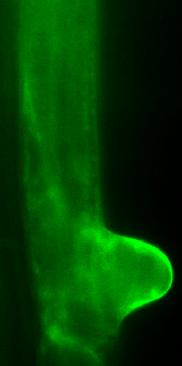
Scientists at the John Innes Centre in Norwich have discovered how roots find their way past obstacles to grow through soil. The discovery also explains how germinating seedlings penetrate the soil without pushing themselves out as they burrow.

“The key is in the fuzzy coat of hairs on the roots of plants” says Professor Liam Dolan. “We have identified a growth control mechanism that enables these hairs to find their way and to elongate when their path is clear”.

Root hairs explore the soil in much the same way as a person would feel their way in the dark. If they come across an obstacle, they feel their way around until they can continue growing in an opening.

In the 1980s and 90s, Scotland was known for its alarmingly high suicide rate. But since 2000, suicide rates have fallen sharply. A study published in the online open access journal BMC Public Health found this reduction is associated with a significant drop in hangings as a means of suicide.

Dr Cameron Stark led the research team from the Department of Public Health, NHS Highland. The research team based the analysis on routinely collected information for the period 1980-2004 from the General Register Office for Scotland (GROS). The data showed a 42% reduction in suicide rates among 15-29 year old men, from 42.5/100,000 in 2000 to 24.5/100 000 in 2004, There were no significant changes in trend in any other male age group in the period reviewed.

A team of scientists from Cardiff University’s School of Earth and Ocean Sciences and Amgueddfa Cymru - National Museum Wales travelled to Africa to find new evidence of climate change which helps explain some of the mystery surrounding the appearance of the Antarctic ice sheet.

Ice sheet formation in the Antarctic is one of the most important climatic shifts in Earth’s history. However, previous temperature records show no evidence of the oceans cooling at this time, but instead suggest they actually warmed, presenting a confusing picture of the climate system which has long been a mystery in palaeoclimatology.

Utilizing a technique that combines low temperature measurements and theoretical calculations, Hebrew University of Jerusalem scientists and others have revealed for the first time the electronic structure of single DNA molecules.

The knowledge of the electronic properties of DNA is an important issue in many scientific areas from biochemistry to nanotechnology -- for example in the study of DNA damage by ultraviolet radiation that may cause the generation of free radicals and genetic mutations. In those cases, DNA repair occurs spontaneously via an electronic charge transfer along the DNA helix that restores the damaged molecular bonds.