Banner
Pilot Study: Fibromyalgia Fatigue Improved By TENS Therapy

Fibromyalgia is the term for a poorly-understood condition where people experience pain and fatigue...

High Meat Consumption Linked To Lower Dementia Risk

Older people who eat large amounts of meat have a lower risk of dementia and cognitive decline...

Long Before The Inca Colonized Peru, Natives Had A Thriving Trade Network

A new DNA analysis reveals that long before the Incan Empire took over Peru, animals were...

Mesolithic People Had Meals With More Tradition Than You Thought

The common imagery of prehistoric people is either rooting through dirt for grubs and picking berries...

User picture.
News StaffRSS Feed of this column.

News Releases From All Over The World, Right To You... Read More »

Blogroll

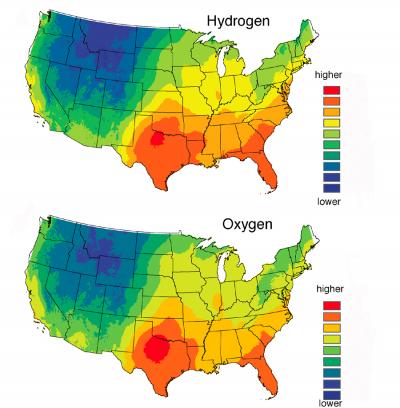
University of Utah scientists developed a new crime-fighting tool by showing that human hair reveals the general location where a person drank water, helping police track past movements of criminal suspects or unidentified murder victims.

“You are what you eat and drink – and that is recorded in your hair,” says geochemist Thure Cerling, who led the research effort with ecologist Jim Ehleringer. The new hair analysis method also may prove useful to anthropologists, archaeologists and medical doctors in addition to police.

“We have found significant variations in hydrogen and oxygen isotopes in hair and water that relate to where a person lives in the United States,” Ehleringer says.

There are currently no objective clinical laboratory blood tests for mood disorders. The current reliance on patient self-report of symptom severity and on the clinicians’ impression is a rate limiting step in effective treatment and new drug development.

Investigators from Indiana propose, and provide proof of principle for, an approach to help identify blood biomarkers for mood state. They measured whole-genome gene expression differences in blood samples from subjects with bipolar disorder that had low mood vs. those that had high mood at the time of the blood draw, and separately, changes in gene expression in brain and blood of a mouse pharmacogenomic model.

The rise of oxygen and the oxidation of deep oceans between 635 and 551 million years ago had an impact on the increase and spread of the earliest complex life, including animals, according to a study in PNAS.

The atmosphere had almost no oxygen until 2.5 billion years ago and it was not until about 600 million years ago that the atmospheric oxygen level rose to a fraction of modern levels. Geologists and evolutionary biologists have speculated that the rise of the breathing gas and subsequent oxygenation of the deep oceans are intimately tied to the evolution of modern biological systems.

A new tool called "Carbon Hero" was regional prize winner in the 2007 European Satellite Navigation Competition, sponsored by ESA’s Technology Transfer Programme. It uses satellite navigation technology to track journeys and tells people their carbon footprint.

“With Carbon Hero calculating your carbon footprint is easy,” explains Andreas Zachariah, a graduate student from the Royal College of Art in London and inventor of Carbon Hero. “This easy-to-use mobile system uses satellite navigation data to calculate the environmental impact of travel. With its specialist database and algorithm, it can determine the mode of transport and its environmental impact with almost no user input.”

The United States is the world's top corn grower, producing 44 percent of the global crop. In 2007, U.S. farmers produced a record 13.1 billion bushels of corn, an increase of nearly 25 percent over the previous year, according to the U.S. Department of Agriculture. The 2007 production value of corn was estimated at more than $3 billion. Favorable prices, a growing demand for ethanol and strong export sales have fueled an increase in farmland acreage devoted to corn production.

A team of scientists have completed a working draft of the corn genome, an accomplishment that should accelerate efforts to develop better crop varieties to meet society's growing demands for food, livestock feed and fuel.

Corn, also known as maize, underlies myriads of products, from breakfast cereal, meat and milk to toothpaste, shoe polish and ethanol.

The pea is an important crop species but it is unsuited to the Agrobacterium-based genetic modification techniques that are commonly used to work with crops. Researchers have now discovered the first high-throughput forward and reverse genetics tool for the pea (Pisum sativum) and it could have major benefits for crop breeders around the world.

Researchers from the INRA Plant Genomics Research Unit at Evry, and the INRA Grain Legumes Research Unit at Bretenières, both in France, developed a high-quality genetic reference collection of Pisum sativum mutants within the European Grain Legumes Integrated Project.

Abdelhafid Bendahmane and colleagues used plants from an early-flowering garden pea cultivar, Caméor, to create a mutant population, which they then systematically phenotyped for use in both forward and reverse genetics studies.