Banner
Pilot Study: Fibromyalgia Fatigue Improved By TENS Therapy

Fibromyalgia is the term for a poorly-understood condition where people experience pain and fatigue...

High Meat Consumption Linked To Lower Dementia Risk

Older people who eat large amounts of meat have a lower risk of dementia and cognitive decline...

Long Before The Inca Colonized Peru, Natives Had A Thriving Trade Network

A new DNA analysis reveals that long before the Incan Empire took over Peru, animals were...

Mesolithic People Had Meals With More Tradition Than You Thought

The common imagery of prehistoric people is either rooting through dirt for grubs and picking berries...

User picture.
News StaffRSS Feed of this column.

News Releases From All Over The World, Right To You... Read More »

Blogroll

Biologists have elucidated the mechanism of a plant gene that controls the amount of atmospheric ozone entering a plant’s leaves and their finding helps explain why rising concentrations of carbon dioxide in the atmosphere may not necessarily lead to greater photosynthetic activity and carbon sequestration by plants as atmospheric ozone pollutants increase.

It also provides a new tool for geneticists to design plants with an ability to resist droughts by regulating the opening and closing of their stomata—the tiny breathing pores in leaves through which gases and water vapor flow during photosynthesis and respiration.

Some of the oldest tales and wisest mythology allude to the snake as a mischievous seducer, dangerous foe or powerful iconoclast; however, the legend surrounding this proverbial predator may not be based solely on fantasy. As scientists from the University of Virginia recently discovered, the common fear of snakes is most likely intrinsic.

Evolutionarily speaking, early humans who were capable of surviving the dangers of an uncivilized society adapted accordingly. And the same can be said of the common fear of certain animals, such as spiders and snakes: The ancestors of modern humans were either abnormally lucky or extraordinarily capable of detecting and deterring the threat of, for example, a poisonous snake.

Hydrogen gas fueled vehicles could dramatically reduce greenhouse gas emissions and lessen the country’s dependence on sources of fossil fuel - but production and storage are obstacles. With current technologies, hydrogen gas storage tanks have to be as large as or larger than the trunk of a car to carry enough gas to travel even 100-200 miles.

Liquid hydrogen is denser and takes up less space but it is very expensive and difficult to produce. Its production It also reduces the environmental benefits of hydrogen vehicles. Widespread commercial acceptance of hydrogen vehicles will require finding the right material that can store hydrogen gas at high volumetric and gravimetric densities in reasonably sized light-weight fuel tanks.

Do bats have animal magnetism? Yes, say researchers from the Universities of Leeds and Princeton who say they have discovered that bats use a magnetic substance in their body called magnetite as an ‘internal compass’ to help them navigate.

Dr Richard Holland from Leeds' Faculty of Biological Sciences and Professor Martin Wikelski from Princeton University studied the directions in which different groups of Big Brown bats flew after they had been given different magnetic pulses and released 20km north of their home roost.

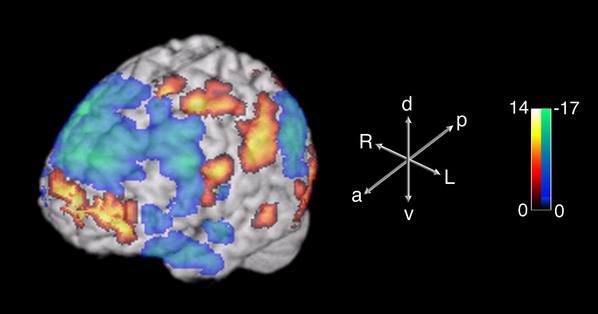
Scientists funded by the National Institute on Deafness and Other Communication Disorders (NIDCD) have found that, when jazz musicians are engaged in the highly creative and spontaneous activity known as improvisation, a large region of the brain involved in monitoring one’s performance is shut down, while a small region involved in organizing self-initiated thoughts and behaviors is highly activated.

The researchers propose that this and several related patterns are likely to be key indicators of a brain that is engaged in highly creative thought.

During the study, six highly trained jazz musicians played the keyboard under two scenarios while in the functional MRI scanner.

Turning just one Sumatran province's forests and peat swamps into pulpwood and palm oil plantations is generating more annual greenhouse gas emissions than the Netherlands and rapidly driving the province's elephants into extinction, a new study by WWF and partners has found.

The study found that in central Sumatra's Riau Province nearly 10.5 million acres of tropical forests and peat swamp have been cleared in the last 25 years. Forest loss and degradation and peat decomposition and fires are behind average annual carbon emissions equivalent to 122 percent of the Netherlands total annual emissions, 58 percent of Australia's annual emissions, 39 percent of annual UK emissions and 26 percent of annual German emissions.