Banner
Pilot Study: Fibromyalgia Fatigue Improved By TENS Therapy

Fibromyalgia is the term for a poorly-understood condition where people experience pain and fatigue...

High Meat Consumption Linked To Lower Dementia Risk

Older people who eat large amounts of meat have a lower risk of dementia and cognitive decline...

Long Before The Inca Colonized Peru, Natives Had A Thriving Trade Network

A new DNA analysis reveals that long before the Incan Empire took over Peru, animals were...

Mesolithic People Had Meals With More Tradition Than You Thought

The common imagery of prehistoric people is either rooting through dirt for grubs and picking berries...

User picture.
News StaffRSS Feed of this column.

News Releases From All Over The World, Right To You... Read More »

Blogroll

The newspaper, that daily chronicle of human events, is undergoing the most momentous transformation in its centuries-old history. Online versions are proliferating, attracting young readers, and generally carving out a sizable swath of the news business. In the United States alone, 34 million people have made a daily habit of reading an online newspaper.

An online news site can change minute by minute and generate a different front page for each reader. The most interesting and useful customization involves capturing information about the readers' interests from their past behavior. There's already a model for that--the recommendation systems used by Web sites like Amazon, TiVo, and Netflix.

Researchers at the Department of Artificial Intelligence (DIA) of the Universidad Politécnica de Madrid’s School of Computing (FIUPM) have, in conjunction with Madrid’s Universidad Rey Juan Carlos, developed an algorithm that is capable of processing 30 images per second to recognize a person’s facial expressions in real time and categorize them as one of six prototype expressions: anger, disgust, fear, happiness, sadness and surprise.

Applying the facial expression recognition algorithm, the developed prototype is capable of processing a sequence of frontal images of moving faces and recognizing the person’s facial expression. The software can be applied to video sequences in realistic situations and can identify the facial expression of a person seated in front of a computer screen.

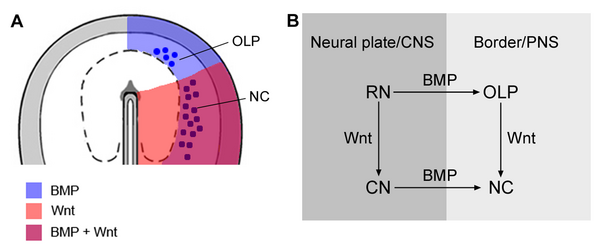
The human nervous system consists of the brain and spinal marrow, which constitute the central nervous system (CNS), and sensory nerve cells that comprise the peripheral nervous system (PNS).

Information from our surroundings-sight, smell, hearing, etc.-are transmitted from specific sensory nerve cells in the PNS to the central nervous system, where it is processed and governs our response. These processes require the two nervous systems to be functionally connected.

NASA's Aeronautics Research Mission Directorate has amended its NASA Research Announcement to solicit additional research proposals. The Research Opportunities in Aeronautics 2007 has been amended to include new topics in support of the Subsonic Rotary Wing Project.

Astronomers using NASA's Hubble Space Telescope have compiled a large catalog of gravitational lenses in the distant universe. The catalog contains 67 new gravitationally lensed galaxy images found around massive elliptical and lenticular-shaped galaxies. This sample demonstrates the rich diversity of strong gravitational lenses. If this sample is representative, there would be nearly half a million similar gravitational lenses over the whole sky.

The lenses come from a recently completed, large set of observations as part of a huge project to survey a single 1.6-square-degree field of sky (nine times the area of the full Moon) with several space-based and Earth-based observatories.

While current-generation solar cell technologies are too expensive and inefficient for wide-scale commercial applications, the demands of United States energy needs are spurring new advancements in improving solar cell efficiency.

A team of Northwestern University researchers has developed a new anode coating strategy that significantly enhances the efficiency of solar energy power conversion. Their paper about the work focuses on “engineering” organic material-electrode interfaces in bulk-heterojunction organic solar cells.