Banner
Pilot Study: Fibromyalgia Fatigue Improved By TENS Therapy

Fibromyalgia is the term for a poorly-understood condition where people experience pain and fatigue...

High Meat Consumption Linked To Lower Dementia Risk

Older people who eat large amounts of meat have a lower risk of dementia and cognitive decline...

Long Before The Inca Colonized Peru, Natives Had A Thriving Trade Network

A new DNA analysis reveals that long before the Incan Empire took over Peru, animals were...

Mesolithic People Had Meals With More Tradition Than You Thought

The common imagery of prehistoric people is either rooting through dirt for grubs and picking berries...

User picture.
News StaffRSS Feed of this column.

News Releases From All Over The World, Right To You... Read More »

Blogroll

Mount Sinai researchers have discovered that the release of blood stem cells from bone marrow is regulated by the brain through the cyclical human biological clock, via adrenergic signals transmitted by the sympathetic nervous system. These new findings, published online today on the website of the journal Nature, point out that the harvest of stem cells for transplantation may be improved by timing it at the peak of their release.

The study describes the mechanisms at the molecular levels in which signals from the biological clock in the brain are sent via the sympathetic—or "fight or flight" branch—of the nervous system, directly to bone marrow stem cell niches. Researchers, using mice as a model, were able to show the rhythmic release and peak of stem cells in circulation during the mouse’s resting period, and that changes in the light cycle or an experimental “jet lag” altered the release patterns. This is the first time a study has demonstrated that the brain regulates a stem cell niche.

Researchers at the University of Arkansas for Medical Sciences (UAMS) have reported a 10-fold life extension in the complex animal C. elegans, tiny worms that live in the soil.

Reported in the February 2008 issue of the journal Aging Cell, the discovery was made by a team of researchers headed by Robert Shmookler Reis, professor in the UAMS Departments of Geriatrics, Biochemistry/Molecular Biology and Pharmacology/Toxicology and research scientist at the Central Arkansas Veterans Healthcare System.

Lice from 1,000-year-old mummies in Peru may unravel important clues about a different sort of passage: the migration patterns of America’s earliest humans, a new University of Florida study suggests.

“It’s kind of quirky that a parasite we love to hate can actually inform us how we traveled around the globe,” said David Reed, an assistant curator of mammals at the Florida Museum of Natural History on the UF campus and one of the study’s authors.

DNA sequencing found the strain of lice to be genetically the same as the form of body lice that spawns several deadly diseases, including typhus, which was blamed for the loss of Napoleon’s grand army and millions of other soldiers, he said.

Over 70 percent of high school teachers are female and girls in high school take as many math courses as boys, yet it's believed female interest in math and science still wanes considerably in high school and college.

A new study conducted by researchers at the University of Texas at Austin, the University of Pennsylvania, and Michigan State University published in Child Development says girls, more than boys, look to their close friends when they make important decisions such as whether to take math and what math classes to take, confirming how significant peers are during adolescence.

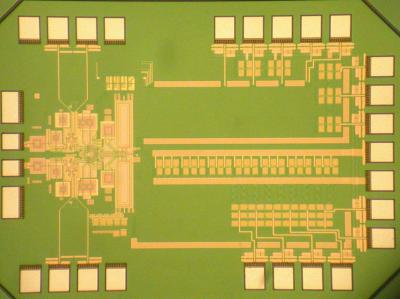
At today’s IEEE International Solid State Circuit Conference, IMEC introduced its prototype of a 60GHz multiple antenna receiver, and invites industry to join its 60GHz research program. The 60GHz band offers massive available bandwidth that enables very high bit rates of several Gbits-per-second at distances up to 10 meters (about 33 feet).

To make the 60GHz technology cost-efficient to manufacture, low power and affordable in consumer products, IMEC has built its RF solution in a standard digital CMOS process thereby avoiding the extra cost of alternative technologies or dedicated RF process options.

The second industry goal is to overcome high path losses at mm-wave frequencies by using a phased antenna array approach.

A new study documents malformations seen in an infant born to a kidney transplant recipient who had taken mycophenolate mofetil (MMF), a widely used immunosuppressant available commercially as Cellcept®. The findings suggest a specific birth defect pattern particular to this drug, reinforcing its potential to harm to the fetus.

Approximately 14,000 births to organ transplant recipients, primarily kidney transplant patients, have been reported worldwide. Although pregnancy was initially ill-advised for these women, the American Society of Transplantation concluded in 2003 that pregnancy is usually safe following the first year of a transplant, provided that organ rejection or other complications have not occurred. The fetal side-effects of several immunosuppressant drugs have been studied, though not for widely used newer medications, such as (MMF).