Banner
Pilot Study: Fibromyalgia Fatigue Improved By TENS Therapy

Fibromyalgia is the term for a poorly-understood condition where people experience pain and fatigue...

High Meat Consumption Linked To Lower Dementia Risk

Older people who eat large amounts of meat have a lower risk of dementia and cognitive decline...

Long Before The Inca Colonized Peru, Natives Had A Thriving Trade Network

A new DNA analysis reveals that long before the Incan Empire took over Peru, animals were...

Mesolithic People Had Meals With More Tradition Than You Thought

The common imagery of prehistoric people is either rooting through dirt for grubs and picking berries...

User picture.
News StaffRSS Feed of this column.

News Releases From All Over The World, Right To You... Read More »

Blogroll

Unlike the rest of the cells in your body, your red blood cells lack nuclei. That quirk dates back to the time when mammals began to evolve. Other vertebrates such as fish, reptiles, and birds, have red cells that contain nuclei that are inactive. Losing the nucleus enables the red blood cell to contain more oxygen-carrying hemoglobin, thus enabling more oxygen to be transported in the blood and boosting our metabolism.

Scientists have struggled to understand the mechanism by which maturing red blood cells eject their nuclei. Now, researchers in the lab of Whitehead Member Harvey Lodish have modeled the complete process in vitro in mice, reporting their findings in Nature Cell Biology. The first mechanistic study of how a red blood cell loses its nucleus, the research sheds light on one of the most essential steps in mammalian evolution.

According to a study in Molecular Biology and Evolution, the Vikings never left Northwest England - up to 50 percent of the DNA they found in men had Scandinavian ancestry.

The 100 men in the study were primarily from the Wirral in Merseyside and West Lancashire and their surnames were in existence as far back as medieval times. Results revealed that 50 percent of their DNA have Norse origins.

A cellular protein that helps guide immune cells to the gut has been newly identified as a target of HIV when the virus begins its assault on the body's immune system, according to researchers from the National Institute of Allergy and Infectious Diseases (NIAID), part of the National Institutes of Health (NIH).

“The identification of this new receptor opens up new avenues of investigation that may help further elucidate the complex mechanisms of the pathogenesis of HIV infection,” says NIAID Director Anthony S. Fauci, M.D., chief of the Institute’s Laboratory of Immunoregulation (LIR) and senior author of the new study.

Raytheon Company has delivered a new SUV to the Department of Homeland Security's Domestic Nuclear Detection Office - with a radiation detection system.

It's designed to operate in urban environments and prevent the smuggling of nuclear materials through ports of entry.

"This is a tremendous result by our Raytheon-led team in a very rapid response to an urgent and critical homeland security need," said Mary Petryszyn, vice president of Civil Security and Response Programs.

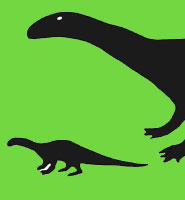
The celebrated Bristol Dinosaur, Thecodontosaurus, has been shown to live on subtropical islands around Bristol, instead of in a desert on the mainland as previously thought.

This new research could explain the dinosaur’s small size (2 m) in relation to its giant (10 m) mainland equivalent, Plateosaurus. Like many species trapped on small islands, such as the ‘hobbit’, Homo floresiensis, of Flores and pygmy elephants on Malta, the Bristol Dinosaur may have been subjected to island dwarfing.

Geological mapping indicates that the islands were quite small in size and, judging by abundant remains of fossil charcoal, were often swept by fires.

FACT: The inner core of the earth is a sphere with a radius of about 1,200 km, made mostly of iron, which has different mechanical and magnetic properties based on temperature.

MYSTERY: Elastic waves pass that through this core move faster parallel to the earth’s axis of rotation than they do parallel to the equator.

At the high temperatures that prevail in the core of the earth, these waves should pass at the same speed regardless of their direction.