Banner
Pilot Study: Fibromyalgia Fatigue Improved By TENS Therapy

Fibromyalgia is the term for a poorly-understood condition where people experience pain and fatigue...

High Meat Consumption Linked To Lower Dementia Risk

Older people who eat large amounts of meat have a lower risk of dementia and cognitive decline...

Long Before The Inca Colonized Peru, Natives Had A Thriving Trade Network

A new DNA analysis reveals that long before the Incan Empire took over Peru, animals were...

Mesolithic People Had Meals With More Tradition Than You Thought

The common imagery of prehistoric people is either rooting through dirt for grubs and picking berries...

User picture.
News StaffRSS Feed of this column.

News Releases From All Over The World, Right To You... Read More »

Blogroll

ESA’s orbiting gamma-ray observatory, Integral, has made the first unambiguous discovery of highly energetic X-rays coming from a galaxy cluster. The find has shown the cluster to be a giant particle accelerator.

The Ophiuchus galaxy cluster is one of brightest in the sky at X-ray wavelengths. The X-rays detected are too energetic to originate from quiescent hot gas inside the cluster and suggest instead that giant shockwaves must be rippling through the gas. This has turned the galaxy cluster into a giant particle accelerator.

Most of the X-rays come from hot gas in the cluster, which in the case of Ophiuchus is extremely hot, at 100 million degrees Kelvin. Four years ago, data from the Italian/ Dutch BeppoSAX satellite showed a possible extra component of high-energy X-rays in a different cluster, the Coma cluster.

Ice loss in Antarctica increased by 75 percent in the last 10 years due to a speed-up in the flow of its glaciers and is now nearly as great as that observed in Greenland, according to a new, comprehensive study by UC Irvine and NASA scientists.

In a first-of-its-kind study, an international team led by Eric Rignot, professor of Earth system science at UCI and a scientist with NASA’s Jet Propulsion Laboratory, Pasadena, Calif., estimated changes in Antarctica’s ice mass between 1996 and 2006 and mapped patterns of ice loss on a glacier-by-glacier basis. They detected a sharp jump in Antarctica’s ice loss, from enough ice to raise global sea level by 0.3 millimeters (.01 inches) a year in 1996, to 0.5 millimeters (.02 inches) a year in 2006.

‘Truthiness,’ according to fount-of-all-important-wisdom and television host Stephen Colbert, represents the human preference to follow our intuition despite the presence of actual facts or evidence - and the more ambiguous an answer to a question, the more likely an individual will believe it is truthful.

Psychologists Rick Dale of the University of Memphis, Michael Spivey of Cornell University and the late Chris McKinstry affirmed this when they asked college students questions that ranged in levels of vagueness and tracked their corresponding arm movements to clicking ‘yes’ or ‘no’ on a computer screen.

Specifically, questions such as “is murder sometimes justifiable?” are considered ambiguous and could cause the sensation of being ‘pulled’ in both directions at once; however, questions like “can a kangaroo walk backwards?” have a high probability of ‘no’ responding.

Genes have the ability to recognise similarities in each other from a distance, without any proteins or other biological molecules aiding the process, according to new research published this week in the Journal of Physical Chemistry B. This discovery could explain how similar genes find each other and group together in order to perform key processes involved in the evolution of species.

In a project funded by Technology Foundation STW, Haimin Tao examined the conditions a good regulation system for energy transfer must meet. As the sources and storage elements vary considerably in terms of aspects such as voltage level, the conventional conversion technique needed to be improved. The search for improvements focused on soft switching, reduction of current amplitudes and a greater efficiency.

To safeguard the quality of the power flows, the researcher sought the appropriate regulators and storage systems so that the energy generated by external sources could be (temporarily) stored in suitable components, such as batteries and supercapacitors. Eventually he arrived at a triple port system that rendered energy transfer between different sources possible. As the new triple port converter transforms the energy in a single step, it could be more cost effective, flexible and efficient than the conventional approach.

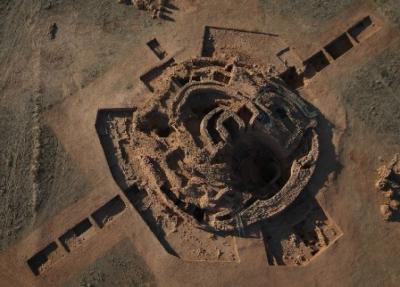
Researchers of the Group of Recent Prehistory Studies (GEPRAN) of the University of Granada, from the department of Prehistory and Archaeology, have taken an important step to determine how life was in the Iberian Peninsula in the Bronze Age.

Since 1974, archaeologists from Granada, directed by professors Trinidad Nájera Colino and Fernando Molina González, have been working on the site of the Motilla del Azuer, in the municipal area of Daimiel (province of Ciudad Real), in search of the necessary information to reconstruct the day by day in this thrilling and unknown historical period.

The sites, known as “motillas”, represent one of the most peculiar types of prehistoric settlements in the Iberian Peninsula.