Fake Banner
Travel With Two Infants

The other day I traveled with Kalliopi and our two newborns to Padova from Lulea. After six full...

A Nice Little Combination

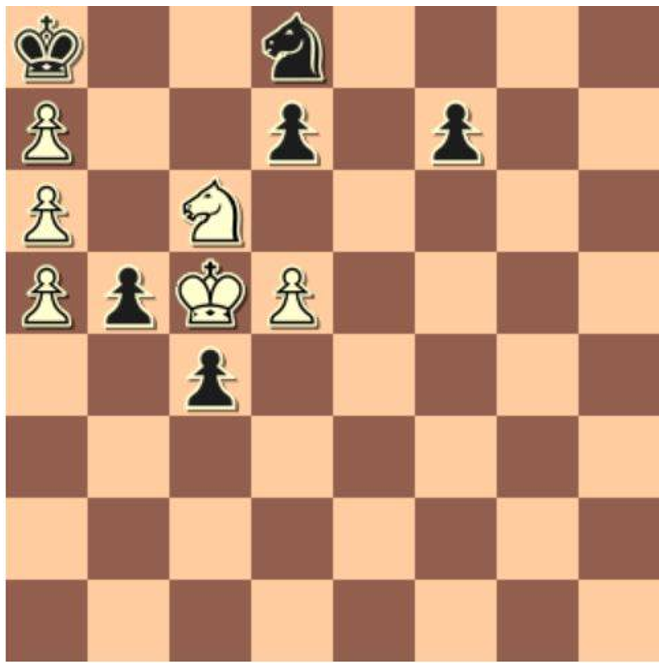
Although I have long retired from serious chess tournaments (they take too much time, a luxury...

The Strange Case Of The Monotonous Running Average

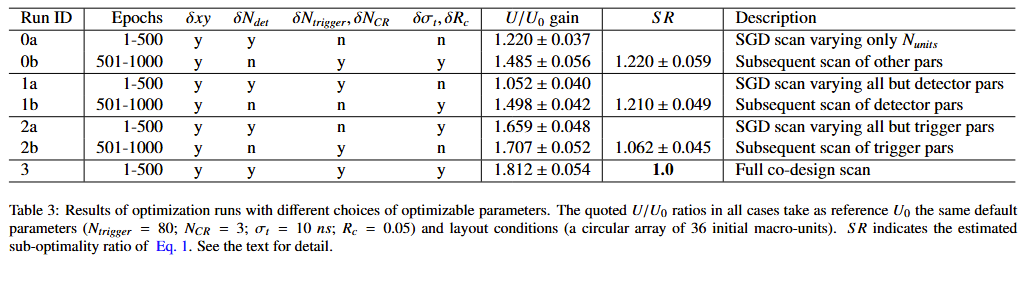
These days I am putting the finishing touches on a hybrid algorithm that optimizes a system (a...

Turning 60

Strange how time goes by. And strange I would say that, since I know time does not flow, it is...

User picture.
picture for Hank Campbellpicture for Patrick Lockerbypicture for Heidi Hendersonpicture for Bente Lilja Byepicture for Sascha Vongehrpicture for Johannes Koelman
Tommaso DorigoRSS Feed of this column.

Tommaso Dorigo is an experimental particle physicist, who works for the INFN at the University of Padova, and collaborates with the CMS and the SWGO experiments. He is the president of the Read More »

Blogroll
The CMS Collaboration at the LHC collider has recently measured a non-negligible rate for the fraction of Higgs boson decays into muon-tau pairs, as I reported in this article last summer. The observation is not statistically significant enough to cause an earthquake in the world of high-energy physics, and sceptics like myself just raised a gram of eyebrows at the announcement - oh yeah, just another 2-sigma effect. However, the matter becomes more interesting if there is a theoretical model which allows for the observed effect, AND if the model is not entirely crazy.
A comet is a magical sight in the heavens. Comets visible to the naked eye are a uncommon event, and sometimes they put up very suggestive shows in our skies. Those of us who have witnessed the apparition of a bright comet do not forget that experience easily. 
The recent landing on comet Churyumov-Gerasimenko of the Rosetta spacecraft has made even more fascinating the observation of comets from the ground, as we got treated by close-ups of the comet surface that resemble mountainous terrains on Earth. Imagining a rock streaming in the sky, coming nearby after a long trip from the Oort cloud, and maybe returning sometimes in the future, or maybe getting lost forever, is truly remarkable.
The terrorist attack of two days ago in Paris to the satirical newspaper Charlie Hebdo left most of us hit hard by the blow to freedom of the press and freedom of thought, which are among that core set of rights on which we have built our society and which we feel we really cannot give up.

I confess I have never unfolded a copy of the Charlie Hebdo newspaper, but I am quite familiar with the work of Wolinski, the 80-year-old cartoonist, who perished in the attack along with his colleagues. I liked his sense of humor and his cartoons a lot, and I am quite pissed off by those two morons taking that away from me.
The following is a guest post by David Orban, CEO at Dotsub, faculty and advisor at Singularity University, and trustee of Network Society Research.

When I implanted an NFC chip in my left hand about two months ago at the Singularity University Summit Europe in Amsterdam, I followed the tradition of our species that a hundred thousand years or more ago decided to become a cyborg.

Apologizing for the silence of last week, due not so much to Christmas holidays but to my working around the clock to write a grant proposal, I wish to show you today a graph which describes very well the complexities of modern day frontier theoretical calculations. That graph is the collection of some of the Feynman diagrams that have to be calculated in order to evaluate a property of the electron called its "anomalous magnetic moment".

Ben Allanach, guest blogger, is a Professor of Theoretical Physics at the University of Cambridge. He is grumpy about the way that public funds are being unnecessarily directed to scientific publishing houses. So I am offering this space to him to hear what he has to say about that...