Fake Banner
Travel With Two Infants

The other day I traveled with Kalliopi and our two newborns to Padova from Lulea. After six full...

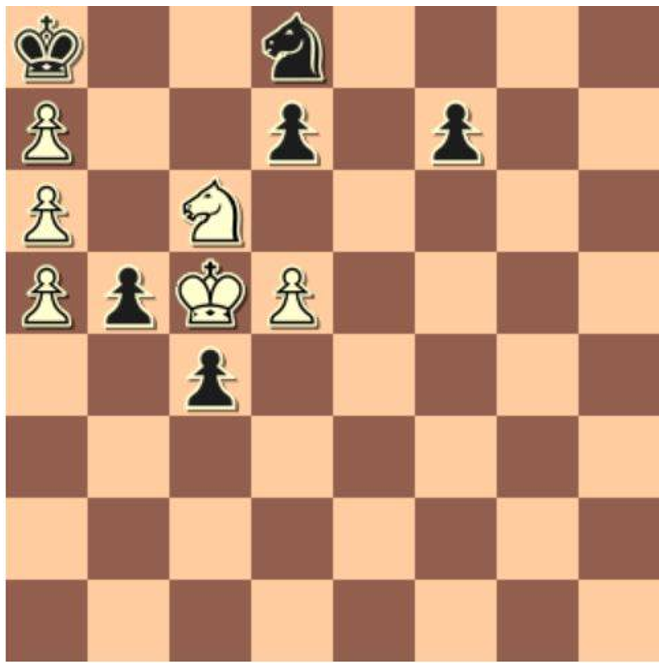
A Nice Little Combination

Although I have long retired from serious chess tournaments (they take too much time, a luxury...

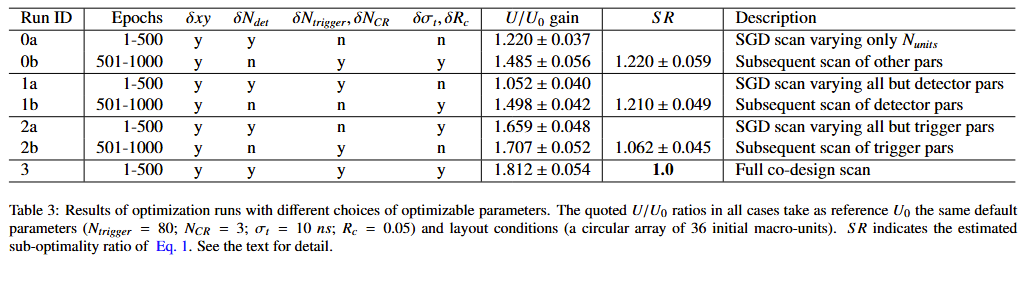
The Strange Case Of The Monotonous Running Average

These days I am putting the finishing touches on a hybrid algorithm that optimizes a system (a...

Turning 60

Strange how time goes by. And strange I would say that, since I know time does not flow, it is...

User picture.
picture for Hank Campbellpicture for Patrick Lockerbypicture for Heidi Hendersonpicture for Bente Lilja Byepicture for Sascha Vongehrpicture for Johannes Koelman
Tommaso DorigoRSS Feed of this column.

Tommaso Dorigo is an experimental particle physicist, who works for the INFN at the University of Padova, and collaborates with the CMS and the SWGO experiments. He is the president of the Read More »

Blogroll
I remember a funny shirt I once saw at a physics conference - it gave 10 tips on what to do when "everything else fails". Here is the list:
10. Subtract Infinity
9. Add heavy fermions
8. Set all fermion masses to zero
7. Invent another symmetry
6. Throw it on the lattice
5. Blame it on the Planck scale
4. Recall the success of the SM
3. Invoke the Anthropic Principle
2. Wave hands a lot, speak with a strong accent
1. Manipulate the data
Yesterday I worked from scratch at a problem which certainly others have already solved in the past. I have mixed feelings with such situations: on one side I hate to reinvent the wheel, especially if there is an easy way to access a good solution; on the other I love to invent new ones...


Anyway this time I have decided I will ask you for some help, as collectively we may have a better idea of the optimal solution to the specific problem I am trying to address. But before I explain the problem, let me give you some background on the general context.

Searches for new physics at the LHC
A week ago I offered readers of this blog to review a paper I had just written, as its publication process did not include any form of screening (as opposed to what is customary for articles in particle physics, which receive multiple review stages). That's not the first time for me: in the past I did the same with other articles, and usually I received good feedback. So I knew this could work.
Bringing the concept of peer review to another dimension, I am offering you to read a review article I just wrote. You are invited to contribute to its review by suggesting improvements, corrections, changes or amendments to the text. I sort of need some scrutiny of this paper since it is not a report of CMS results -and thus I have not been forced by submit it for internal review to my collaboration.
I am quite happy to report today that the CMS experiment at the CERN Large Hadron Collider has just published a new search which fills a gap in studies of extended Higgs boson sectors. It is a search for the decay of the A boson into Zh pairs, where the Z in turn decays to an electron-positron or a muon-antimuon pair, and the h is assumed to be the 125 GeV Higgs and is sought for in its decay to b-quark pairs. 

If you are short of time, this is the bottomline: no A boson is found in Run 1 CMS data, and limits are set in the parameter space of the relevant theories. But if you have a bit more time to spend here, let's start with the beginning - What's the A boson, you might wonder for a start. 
I am using my blog to advertise the opening of PhD positions in Padova University, to work at several research projects and obtain a PhD in Physics. These are offered to Chinese students through the China Scolarship Council. More information is available at this link.
If you are a bright Chinese student who speaks at least some English and is willing to spend three years working in data analysis for Higgs physics in the CMS experiment, I will take you - so what are you waiting for ? Applications close soon!


Below is a table with deadlines and information.