Fake Banner
Travel With Two Infants

The other day I traveled with Kalliopi and our two newborns to Padova from Lulea. After six full...

A Nice Little Combination

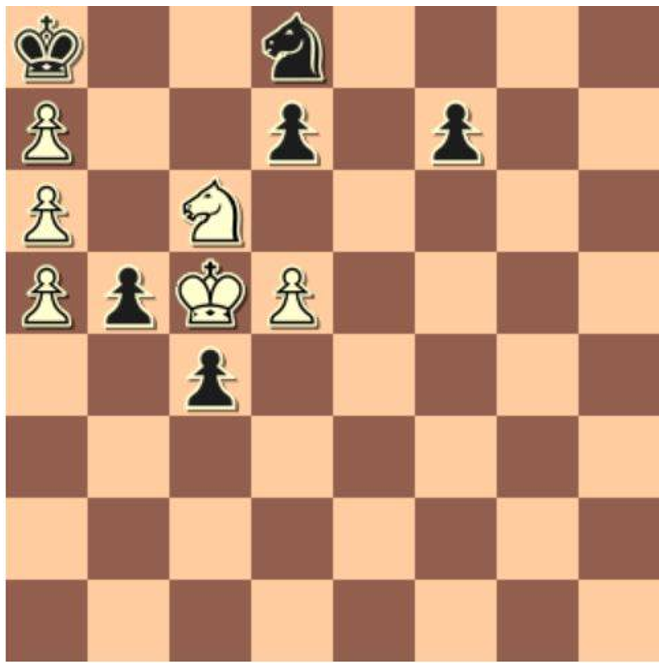
Although I have long retired from serious chess tournaments (they take too much time, a luxury...

The Strange Case Of The Monotonous Running Average

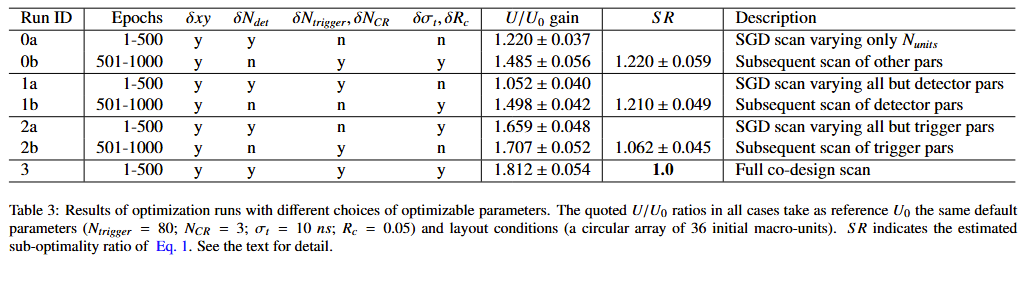
These days I am putting the finishing touches on a hybrid algorithm that optimizes a system (a...

Turning 60

Strange how time goes by. And strange I would say that, since I know time does not flow, it is...

User picture.
picture for Hank Campbellpicture for Patrick Lockerbypicture for Heidi Hendersonpicture for Bente Lilja Byepicture for Sascha Vongehrpicture for Johannes Koelman
Tommaso DorigoRSS Feed of this column.

Tommaso Dorigo is an experimental particle physicist, who works for the INFN at the University of Padova, and collaborates with the CMS and the SWGO experiments. He is the president of the Read More »

Blogroll
This one is definitely too juicy to ignore - I need to join the crowd of bystanders-in-awe. 
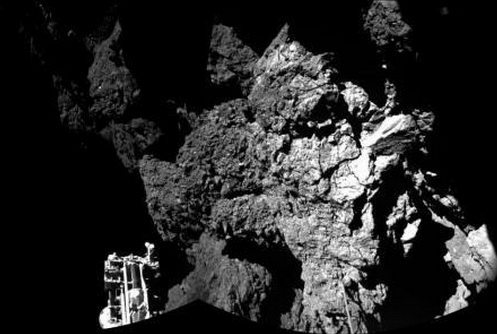
As you may have heard, ESA's ROSETTA spacecraft successfully landed yesterday on the solid nucleus of comet 67/P, Churyumov-Gerasimenko - a 2.5 mile long conglomerate of rock and ice. I refrain from giving detail of that enormous achievement for humankind, because I rather want to comment on this rather funny twist of the whole story. But still let's first enjoy at least one nice picture of the surface of that distant solar system body...


Forget the Higgs Boson, the Landing on Comets, Missions to Mars, the Genome Project, Nanostructures and all that. This start of this new millennium looks like the dark ages to me if I have to gauge it from discussions I overhear in public places. 
Just... WOW. I did not expect this to happen in my lifetime (and no, I do not expect to die tomorrow either). The Atacama Large Millimeter Array in Chile has pictured a forming planetary system in a young star surrounded by a complex nebula of hot gas.I still remember the Scientific American article I read some 25 years ago about planet formation simulations, which showed how computer models of planetesimals rotating in a cloud of gas around a star. The planetesimals would pick up matter around as they swept the orbital plane, and in the matter of millions of years acquire a planetary mass and "clean up" the area around. Now we are seeing this before us, in the picture below offered by ALMA.
Results of a new search for single top production and large missing energy have been published by the ATLAS collaboration in a recent preprint. I think it is worthwhile to have a look at the idea behind this new search, as the signature of invisible particles produced in LHC collisions and escaping the detectors is important in many of the current and future investigations of beyond-the-standard-model physics.
Just a short entry to mention that the blog of my colleague Michael Schmitt, a professor at Northwestern University and a member of the CMS collaboration, is as active as ever, with several very interesting and well-written pieces recently published:
The Large Hadron Collider at the CERN laboratories in Geneva is currently in shutdown, finalizing the upgrades that will allow it to restart next year at the  centre-of-mass energy of 13 TeV - over 60% more than the last 8 TeV run. ATLAS and CMS have collected no more proton-proton collisions since almost two years ago; yet the collaborations are as busy as ever producing physics results from the analysis of the 2012 data.

Rather than focusing on any single result, below I give some highlights of the most recent publications by CMS. Another post will discuss ATLAS results in a few days.