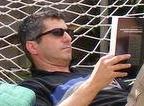
One year ago I had the pleasure to spend some time with George Zweig during a conference in Crete (ICNFP 2013). He is a wonderful storyteller and a great chap to hung around with, and I had great fun in the after-dinners on the terrace of the Orthodox Academy of Crete overlooking the Aegean sea, drinking raki and chatting about physics and other subjects.
"If you have seen the movie Particle Fever about the discovery of the Higgs boson, you have heard the theorists saying that the only choices today are between Super-symmetry and the Landscape. Don’t believe them. Super-symmetry says that every fermion has a boson partner and vice versa. That potentially introduces a huge number of new arbitrary constants which does not seem like much progress to me. However, in its simpler variants the number of new constants is small and a problem at high energy is solved. But, experiments at the LHC already seem to have ruled out the simplest variants.
Among the viable extensions of the standard model, an intriguing class of models involve the concept of a "hidden sector" of new particles only weakly coupled to the standard model one. These particles could be produced in the decay of heavy standard model particles, be invisible, but unstable, and thus soon decay back into standard model bodies, giving funny experimental signatures that our detectors could spot -if we looked for them carefully enough.
Until the second half of the nineties, when the LEP collider started to be upgraded to investigate higher centre-of-mass energies of electron-positron collisions than those until then produced at the Z mass, the Higgs boson was not the main focus of experiments exploring the high-energy frontier. The reason is that the expected cross section of that particle was prohibitively small for the comparatively low luminosities provided by the facilities available at the time. Of course, one could still look for anomalously high-rate production of final states possessing the characteristics of a Higgs boson decay; but those searches had a limited appeal.
Preparing the documents needed for an exam for a career advancement, to a scientist like me, is something like putting order in a messy garage. Leave alone my desk, which is indeed in a horrific messy state - papers stratified and thrown around with absolutely no ordering criterion, mixed with books I forgot I own and important documents I'd rather have reissued rather than searching for them myself. No, I am rather talking about my own scientific production - pubished articles that need to be put in ordered lists, conference talks that I forgot I have given and need to be cited in the curriculum vitae, refereeing work I also long forgot I'd done, internal documents of the collaborations I worked in, students I tutored, courses I gave.


 Choosing Your Bets: The Selection Bias
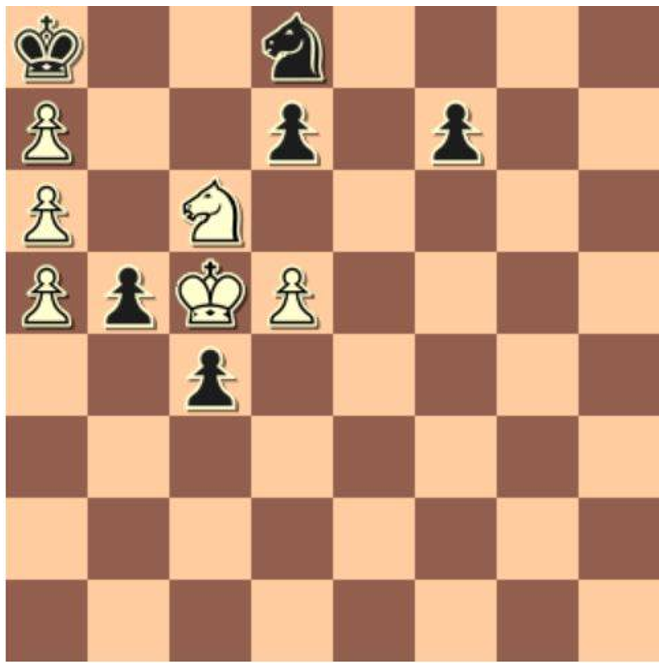 A Chess Study Requiring Backpropagation
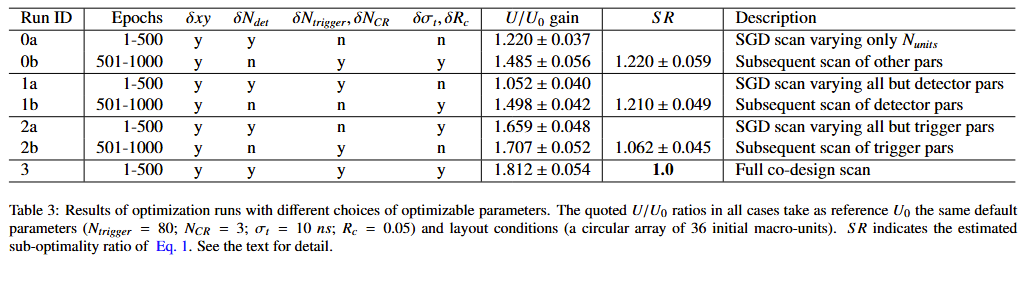 Co-Design Of Scientific Experiments