Fake Banner
Travel With Two Infants

The other day I traveled with Kalliopi and our two newborns to Padova from Lulea. After six full...

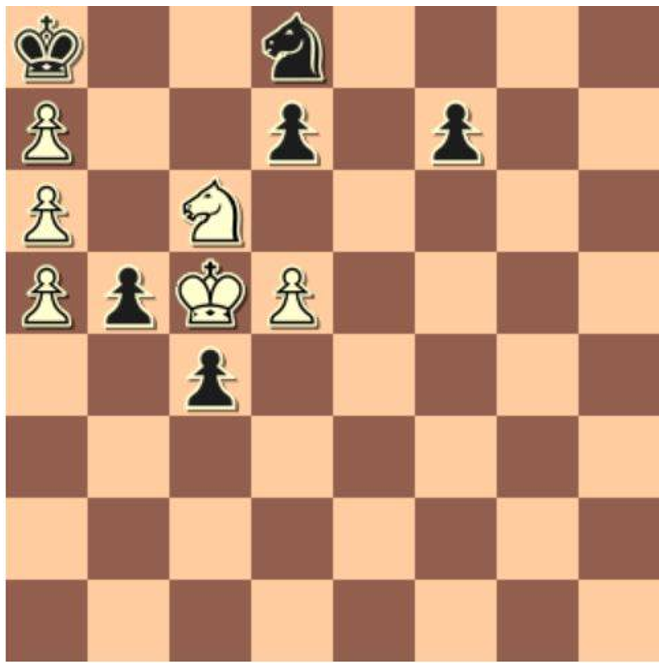
A Nice Little Combination

Although I have long retired from serious chess tournaments (they take too much time, a luxury...

The Strange Case Of The Monotonous Running Average

These days I am putting the finishing touches on a hybrid algorithm that optimizes a system (a...

Turning 60

Strange how time goes by. And strange I would say that, since I know time does not flow, it is...

User picture.
picture for Hank Campbellpicture for Patrick Lockerbypicture for Heidi Hendersonpicture for Bente Lilja Byepicture for Sascha Vongehrpicture for Johannes Koelman
Tommaso DorigoRSS Feed of this column.

Tommaso Dorigo is an experimental particle physicist, who works for the INFN at the University of Padova, and collaborates with the CMS and the SWGO experiments. He is the president of the Read More »

Blogroll
Many new particles and other new physics signals claimed in the last twenty years were later proven to be spurious effects, due to background fluctuations or unknown sources of systematic error. The list is long, unfortunately - and longer than the list of particles and effects that were confirmed to be true by subsequent more detailed or more statistically-rich analysis.
A timely article discussing the hot topic of the production rate of pairs of vector bosons in proton-proton collisions has appeared on the Cornell arxiv yesterday. As you might know, both the ATLAS and CMS collaborations, who study the 8-TeV (and soon 13-TeV) proton-proton collisions delivered by the Large Hadron Collider at CERN, have recently reported an excess of events with two W bosons. The matter is discussed in a recent article here.
I guess every profession has its own kind of personalized spam. Here is a couple of recent samples from my own:

  • From a Fermilab address: "According to the TRAIN database training for course FN000508 / CR - Workplace Violence and Active Shooter/Active Threat Awareness Training expired on 07/01/2014. Please make arrangements to take this class. If this training is no longer required then you or your supervisor should complete the Individual Training Needs Assessment [...]"
Note that
(1) I am not a user any longer, so their database is at fault. They still send out these notifications anyway.
In the process of revising a chapter of my book, I found a clip I would like to share here, as it contains an analogy I cooked up and which I find nice enough to be proud of. Well, two analogies, as you'll soon find out; here I am speaking of the cat weighing trouble at the end of the piece - the other is quite trivial.
The topic is the widely different masses of fermions, the building blocks of our universe, and the trouble in making sense of it and of measuring precisely their values. Comments welcome!

Two years have passed since the discovery of the Higgs boson (on July 4th, 2012), and the young particle still causes excitement. Originally it was the excess of Higgs decays to photon pairs as seen by the ATLAS experiment - but that anomaly has vanished with more data and more careful analyses. Then, it was the turn of the twin peaks: ATLAS again saw an inconsistent mass measurement with photon pairs and Z boson pairs.
Among the many more-or-less boring news from the ICHEP conference (International Conference on High Energy Physics), which is presently going on in Valencia (Spain), one bit today is sending good vibrations through the spine of many of the few phenomenologists who have chosen to remain faithful to the idea of Supersymmetry all the way to the bitter end. It is the excess of diboson events that ATLAS has just reported there.