Fake Banner
Travel With Two Infants

The other day I traveled with Kalliopi and our two newborns to Padova from Lulea. After six full...

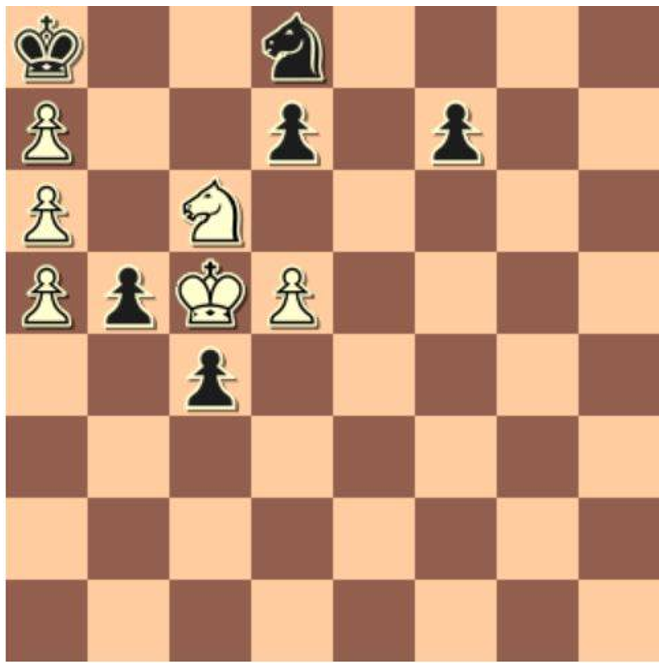
A Nice Little Combination

Although I have long retired from serious chess tournaments (they take too much time, a luxury...

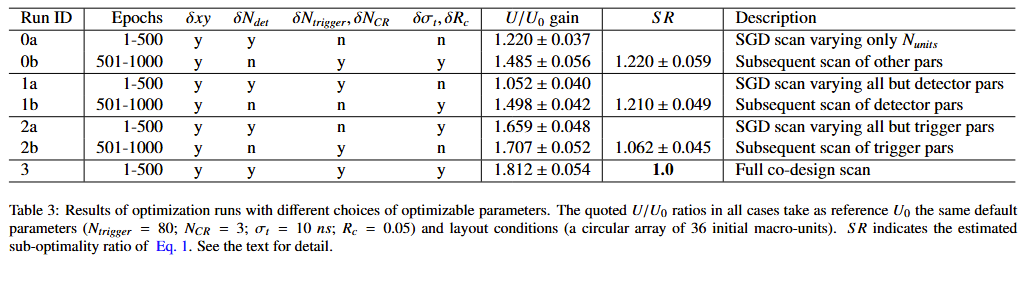
The Strange Case Of The Monotonous Running Average

These days I am putting the finishing touches on a hybrid algorithm that optimizes a system (a...

Turning 60

Strange how time goes by. And strange I would say that, since I know time does not flow, it is...

User picture.
picture for Hank Campbellpicture for Patrick Lockerbypicture for Heidi Hendersonpicture for Bente Lilja Byepicture for Sascha Vongehrpicture for Johannes Koelman
Tommaso DorigoRSS Feed of this column.

Tommaso Dorigo is an experimental particle physicist, who works for the INFN at the University of Padova, and collaborates with the CMS and the SWGO experiments. He is the president of the Read More »

Blogroll
Finally the decay of Higgs bosons to b-quark pairs is emerging from LHC data, too.
Supersymmetry, the extension of the Standard Model of particle physics that was once sold as an almost certain discovery that the LHC experiments would bump into upon starting to collect proton-proton collisions, is not in a very healthy situation these days.
In 1992 the top quark had not been discovered yet, and it did not make much sense for the CDF collaboration to have a full meeting devoted solely to it; rather, analyses targeting the search of the top quark were presented at a meeting which dealt with both bottom and top quarks. This was called back then "Heavy Flavour meeting".
Two days ago I wrote a quick post to stimulate non-flat-EEG readers to consider an apparently trivial question, which in fact hid many subtleties. The general question I wanted to address was whether an estimate missing an uncertainty was more or less useful than a quoted uncertainty on the same parameter when the estimate itself was missing.
Compare the following situations:

1 - You dial the number of a call center, and the automated system informs you that the estimated waiting time is eight minutes.

2 - You dial the number of a call center, and the automated system tells you that the estimated waiting time has a uncertainty of plus or minus one minute.

Which automated system is providing you with a more informative answer in your opinion ? Could you base on the information provided by the first one your decision to hang the phone and go for a beer or stay on the line  ? Or would you be more confident of your decision (not necessarily the same!) based on the information provided by the second statement ?
With the Higgs boson in the bag, the game called "global fit" that particle physicists have been playing for a couple of decades has changed significantly. The knowledge of the Higgs boson mass provided by the measurements obtained by the ATLAS and CMS experiments, added to dozens of  other measurements of critical observable properties of subatomic particles that have been measured at LEP/SLC, LEPII, the Tevatron, and the LHC itself, allow us to constrain some of the fundamental parameters of the Standard Model more than direct experimental determinations do.

But what the heck is a global fit ?