In 1992 the top quark had not been discovered yet, and it did not make much sense for the CDF collaboration to have a full meeting devoted solely to it; rather, analyses targeting the search of the top quark were presented at a meeting which dealt with both bottom and top quarks. This was called back then "Heavy Flavour meeting".
Two days ago I wrote
a quick post to stimulate non-flat-EEG readers to consider an apparently trivial question, which in fact hid many subtleties. The general question I wanted to address was
whether an estimate missing an uncertainty was more or less useful than a quoted uncertainty on the same parameter when the estimate itself was missing.
Compare the following situations:
1 - You dial the number of a call center, and the automated system informs you that the estimated waiting time is eight minutes.
2 - You dial the number of a call center, and the automated system tells you that the estimated waiting time has a uncertainty of plus or minus one minute.
Which automated system is providing you with a more informative answer in your opinion ? Could you base on the information provided by the first one your decision to hang the phone and go for a beer or stay on the line ? Or would you be more confident of your decision (not necessarily the same!) based on the information provided by the second statement ?
With the Higgs boson in the bag, the game called "global fit" that particle physicists have been playing for a couple of decades has changed significantly. The knowledge of the Higgs boson mass provided by the measurements obtained by the ATLAS and CMS experiments, added to dozens of other measurements of critical observable properties of subatomic particles that have been measured at LEP/SLC, LEPII, the Tevatron, and the LHC itself, allow us to constrain some of the fundamental parameters of the Standard Model more than direct experimental determinations do.
But what the heck is a global fit ?
"A detailed study of four-jet hadronic events at LEP 1.5 has been reported by the ALEPH collaboration. From selected four-jet events, the invariant masses of jet pairs are computed, and out of the three jet combinations, the one with the lowest difference in jet-pair masses is retained. [...] Not only is the total number of four-jet events observed by ALEPH at 130-140 GeV larger than expected from QCD, but this excess is contained in a narrow window around 105 GeV for the sum of jet-pair masses. In this window, about two times the width of the estimated resolution, nine events are observed with only 0.8 events expected from QCD."
J.Mnich, "Recent Results from LEP", SLAC XXIV Summer Institute, 1996.
Last weekend I participated in a chess tournament in Mogliano. This year the event was not as strong a tournament as this used to be - only 24 players, two of them international masters. Anyway there was room for fun, since the time control was of 90 minutes for the whole game, with 30 second increments per move. This fostered a livelier play with lots of blunders especially during the second half of the games: of course the quality of the games was low with so little time to think, and younger players were favoured with respect to older ones like myself.


 Choosing Your Bets: The Selection Bias
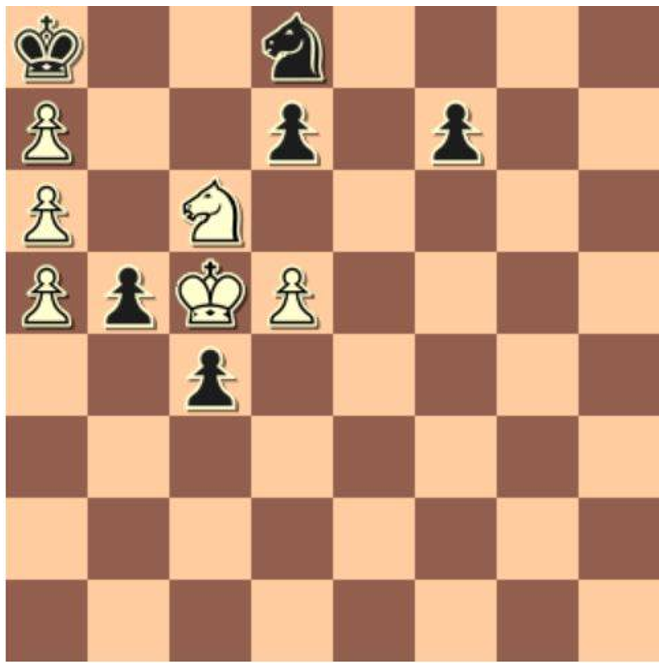 A Chess Study Requiring Backpropagation
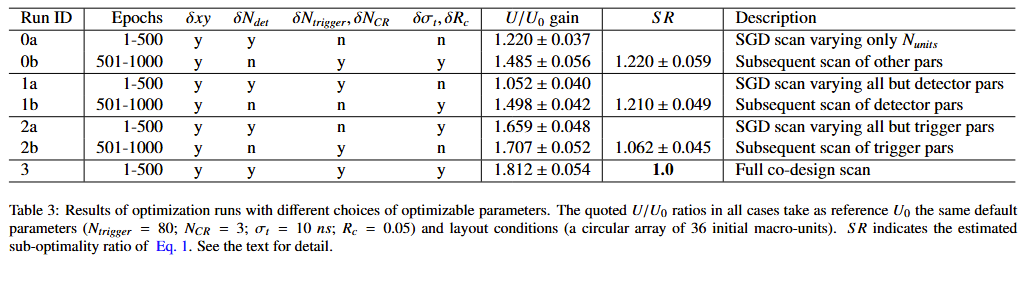 Co-Design Of Scientific Experiments