Fake Banner
Travel With Two Infants

The other day I traveled with Kalliopi and our two newborns to Padova from Lulea. After six full...

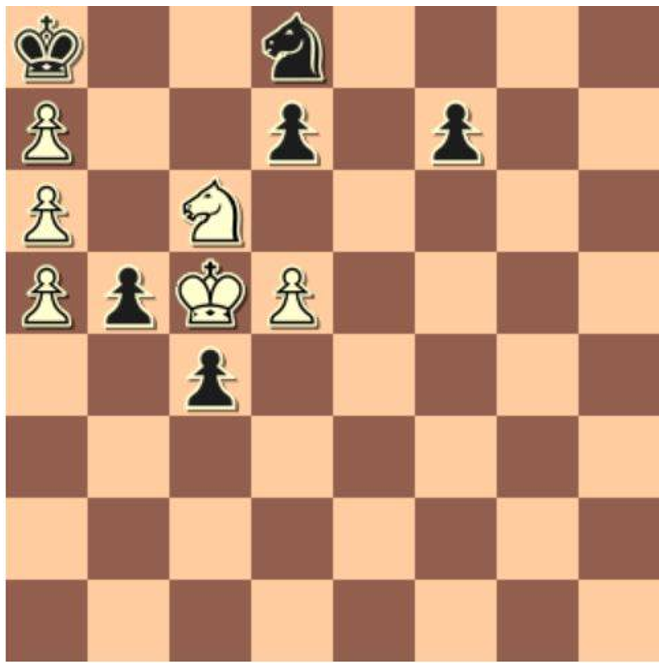
A Nice Little Combination

Although I have long retired from serious chess tournaments (they take too much time, a luxury...

The Strange Case Of The Monotonous Running Average

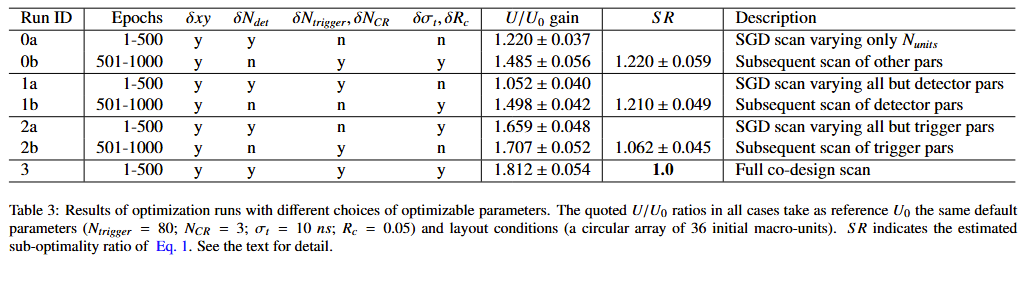
These days I am putting the finishing touches on a hybrid algorithm that optimizes a system (a...

Turning 60

Strange how time goes by. And strange I would say that, since I know time does not flow, it is...

User picture.
picture for Hank Campbellpicture for Patrick Lockerbypicture for Heidi Hendersonpicture for Bente Lilja Byepicture for Sascha Vongehrpicture for Johannes Koelman
Tommaso DorigoRSS Feed of this column.

Tommaso Dorigo is an experimental particle physicist, who works for the INFN at the University of Padova, and collaborates with the CMS and the SWGO experiments. He is the president of the Read More »

Blogroll
There have been other attempts in the past, so this is not strictly a new idea. However I found the interactive web page at http://htwins.net/scale2/ extremely well constructed.

It is a graphical display of the largest and smallest structures from galaxy superclusters down to quarks and the Planck length. By moving a scroll bar left or right, you can get a very clear sense of scale of the different things. And in so doing you learn the relative size of different objects, from planets to stars, or from stars to galaxies; or vice-versa, from cells to molecules and atoms.

I highly recommend it!
Now that the Higgs has been found, the current hype in popular science magazines suggests that the most pressing question in fundamental physics research is whether new particles will be found at the Large Hadron Collider: Is Supersymmetry the right extension of the standard model? Or are there new extra dimensions of space-time ? Can microscopic black holes be created in particle collisions ? I think all of you have heard some of these questions enough times by now.
The T2K Collaboration released today an analysis of their data in the Cornell Arxiv. T2K searches for electron neutrinos appearing in a muon neutrino beam produced by the J-PARC accelerator facility in Tokai-Mura, using a near detector located 280 meters downstream of the proton target, and a far detector (SuperKamiokande) at 295 km from the source.

The appearance of electron neutrinos in a muon neutrino beam is a very important oscillation signal of neutrinos, that allows the measurement of the parameter theta_13, one of the so far less-well known parameter of the neutrino mixing matrix.
To those who follow my twitter account: my account was hacked over a week ago, and only today could I get it back to work (the twitter support team is not -hehm- a prize-winning one).

So while I am busy deleting the >200 tweets that were (I believe automatically) posted there, you can safely add me back if you (understandably) masked me out.
The mediatic effect of the Higgs boson discovery of last July is clear to everybody. And CERN has been very good at exploiting it, making fundamental physics a familiar topic and creating interest worldwide. Yet I think we can do more. The gap between basic research in physics and the public is wide, and we are doing still too little to fill it.
What looks like a tantalizing signal of the rare two-muon decay of the Higgs boson has been evidenced in an analysis of 2011+2012 data just sent to PRL by the CMS collaboration. This analysis targeted supersymmetric neutral Higgs bosons, whose decay to muon pairs is enhanced for some values of the SUSY parameters, but was not expecting to see any signal in the 25 inverse femtobarns of collisions that the CMS experiment has so far collected.