Fake Banner
Travel With Two Infants

The other day I traveled with Kalliopi and our two newborns to Padova from Lulea. After six full...

A Nice Little Combination

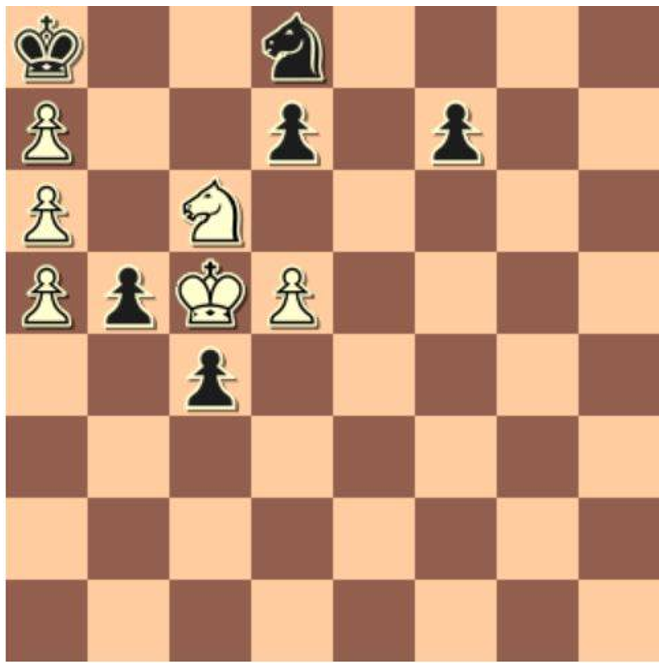
Although I have long retired from serious chess tournaments (they take too much time, a luxury...

The Strange Case Of The Monotonous Running Average

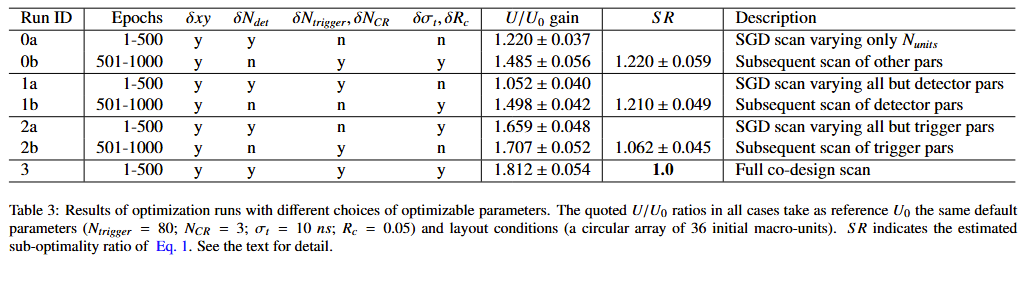
These days I am putting the finishing touches on a hybrid algorithm that optimizes a system (a...

Turning 60

Strange how time goes by. And strange I would say that, since I know time does not flow, it is...

User picture.
picture for Hank Campbellpicture for Patrick Lockerbypicture for Heidi Hendersonpicture for Bente Lilja Byepicture for Sascha Vongehrpicture for Johannes Koelman
Tommaso DorigoRSS Feed of this column.

Tommaso Dorigo is an experimental particle physicist, who works for the INFN at the University of Padova, and collaborates with the CMS and the SWGO experiments. He is the president of the Read More »

Blogroll
Now that the first of the Moriond conferences is over, and just as the second one starts, it is time to have a detached view at the Higgs boson results presented there this far by the CMS and ATLAS collaborations, to summarize where we stand and what new information we have gained since last fall, when some new results appeared for the HCP conference.
Nel 1929 Bruno Rossi, ricercatore presso l’istituto di fisica sperimentale
dell’Università di Firenze [...] intuì quella che sarebbe stata la sua ragione di vita: indagare sulla natura di questi corpuscoli ionizzanti provenienti dall’alto. Doveva realizzare un circuito che permettesse di rivelare e contare le coincidenze che si verificavano in una certa unità di tempo e realizzò uno strumento molto semplice, il circuito a coincidenze.
L’involucro dei tubi Geiger è collegato al polo negativo di una batteria da 1200 volt (non
disegnata). La scarica nei tubi genera un impulso di tensione negativa sulle resistenze da
Understanding and explaining how the Universe works has always been a ultimate goal for mankind. It is impossible to live our conscious existence without asking ourselves whether there is a meaning, a design, or if our existence is just the result of chance; and to avoid asking ourselves what happens after we die, if we will live again, and similar questions. Accepting our mortality is really hard without embracing a potential explanation, a hope, or some kind of faith.
Last week a new important paper appeared in the Arxiv: "MSSM Higgs Boson Searches at the LHC:Benchmark Scenarios after the Discovery of a Higgs-like Particle", by M.Carena, S.Heinemeyer, O. Stal, C.Wagner, and G.Weiglein. The paper fills a void that was created after the discovery of the Higgs particle last July by the ATLAS and CMS experiments: a thorough assessment of what constraints on the allowed chunks of SUSY parameter space in the light of the existence of a neutral scalar at 125 GeV.
Seeing Muons!

Seeing Muons!

Mar 01 2013 | comment(s)

My physics department in Padova is not a huge place, and yet I usually fail to be aware of what goes on around, since I spend all of my time buried inside my office. This morning, though, I had to pass by a meeting room on my way in, and I thus learned of a workshop about to start. Given my interest for the topic, I decided to attend to at least part of it.
"To date, there is no evidence for SUSY particles and lower limits on the masses are more than 4 GeV for gluinos and more than 20 GeV for squarks and sleptons."

D.H. Perkins, "Introduction to High-Energy Physics", 3rd ed., Addison-Wesley 1987.