Maybe more interesting than the
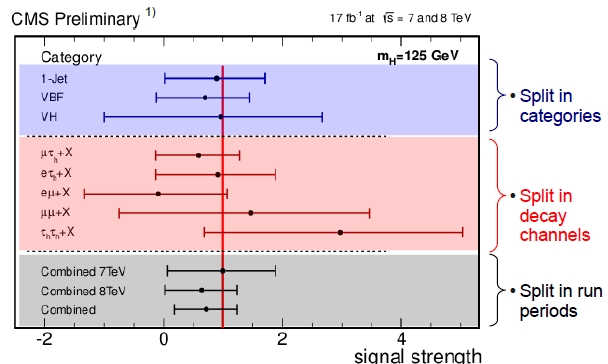
just reported result of searches for the Higgs boson into four-lepton final states (ee, eμ, μμ) are the result presented by CMS and ATLAS on the searches for the Higgs decay into tau-lepton pairs. The reason for the interest comes from the fact that last July the rather high rates of Higgs decays to photon pairs had suggested to some that this new particle might have reduced couplings to fermions, and could thus be a non-Standard Model particle after all.
Today new results of Higgs searches have first been shown in Kyoto, at the
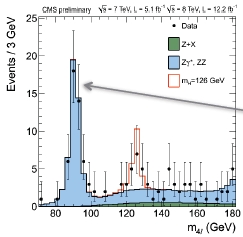
Hadron Collider Physics conference. Let us see the CMS and ATLAS updates of their measurements in the ZZ-> 4 leptons final state, which constitutes the best signal-to-noise channel to study Higgs properties cleanly and measure mass and spin-parity of the new found particle.
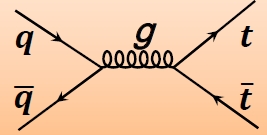
The Hadron Collider Physics symposium opened yesterday in Kyoto. I am not following the works very closely, but I did give a peek at today's talks, which were on the topic of top quark physics.
It has taken a while, but the rare decay of B_s mesons (particles composed of a bottom and an anti-strange quark) to muon pairs has finally been seen. The authors of the find -we cannot yet call it an observation given the scarce statistical significance of the signal- are the members of the LHCb collaboration, one of the four experiments working with the proton-proton collisions delivered by the Large Hadron Collider at CERN.
I read the text below in the Facebook page of a colleague and friend, Christopher Hill. The text was meant as a facebook rant - sort of - but it raises important points. I liked what he wrote and I asked him if I could repost it here to the benefit of a larger audience. He graciously agreed. NB: the title of the post is mine.
Now that the election and Sandy is (sort of) over, I want to post a rant that I didn't think was appropriate before now.
First, Nate Silver. I have heard him called everything from a genius to a wizard to a witch in recent days. He is none of the above. He is a guy who understands mathematics (in particular statistics) enough to be able to use it to predict elections.
The CDF and DZERO collaborations at the Fermilab Tevatron collider just saw published on Physical Review D (PRD 86, 092003) their final combination of their most recent and precise measurements of the mass of the top quark.
This result, which is probably going to be the definitive one by the Tevatron experiments, reaches a precision in the top mass which is comparable to the precision of the scale you have in your bathroom, despite the fact that measuring your body weight is a quite simpler matter than determining the mass of an elementary particle, let alone one which exists for less than a trillionth of a trillionth of a second.
A digression


 Travel With Two Infants
 A Nice Little Combination
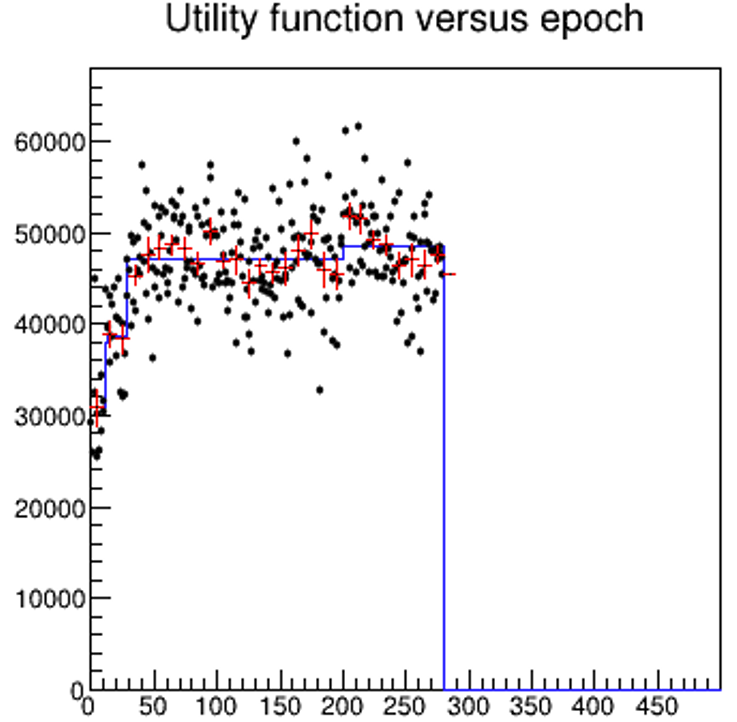 The Strange Case Of The Monotonous Running Average
 Turning 60