Fake Banner
Travel With Two Infants

The other day I traveled with Kalliopi and our two newborns to Padova from Lulea. After six full...

A Nice Little Combination

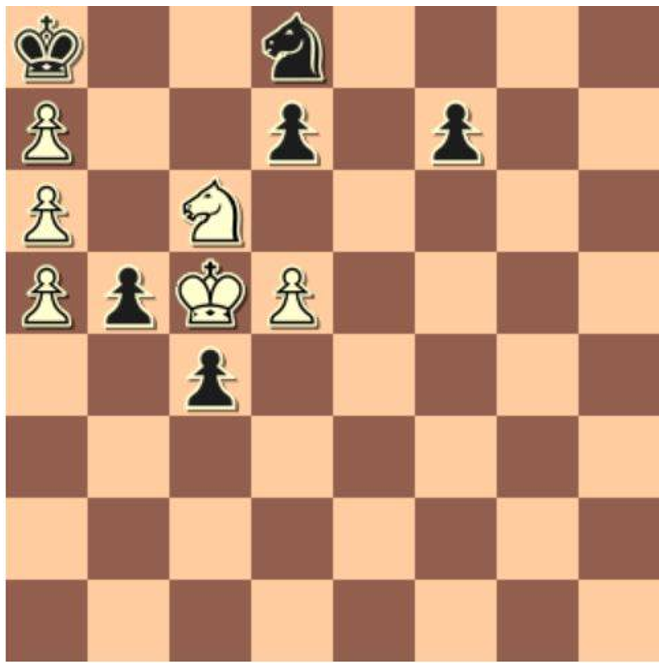
Although I have long retired from serious chess tournaments (they take too much time, a luxury...

The Strange Case Of The Monotonous Running Average

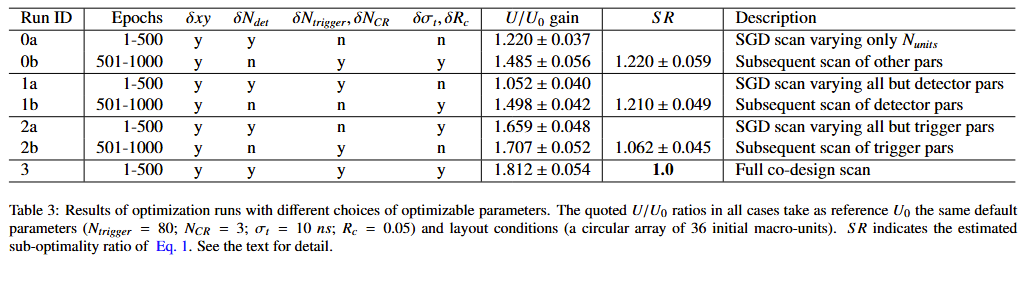
These days I am putting the finishing touches on a hybrid algorithm that optimizes a system (a...

Turning 60

Strange how time goes by. And strange I would say that, since I know time does not flow, it is...

User picture.
picture for Hank Campbellpicture for Patrick Lockerbypicture for Heidi Hendersonpicture for Bente Lilja Byepicture for Sascha Vongehrpicture for Johannes Koelman
Tommaso DorigoRSS Feed of this column.

Tommaso Dorigo is an experimental particle physicist, who works for the INFN at the University of Padova, and collaborates with the CMS and the SWGO experiments. He is the president of the Read More »

Blogroll
Just as you thought it was over for 2011, and you proceeded to hung the Higgs mass plots on the christmas tree as a wish for stronger signals next year, ATLAS comes out with a new particle discovery. That's what I like of particle physics - there's always so much going on that the excitement is never really over.
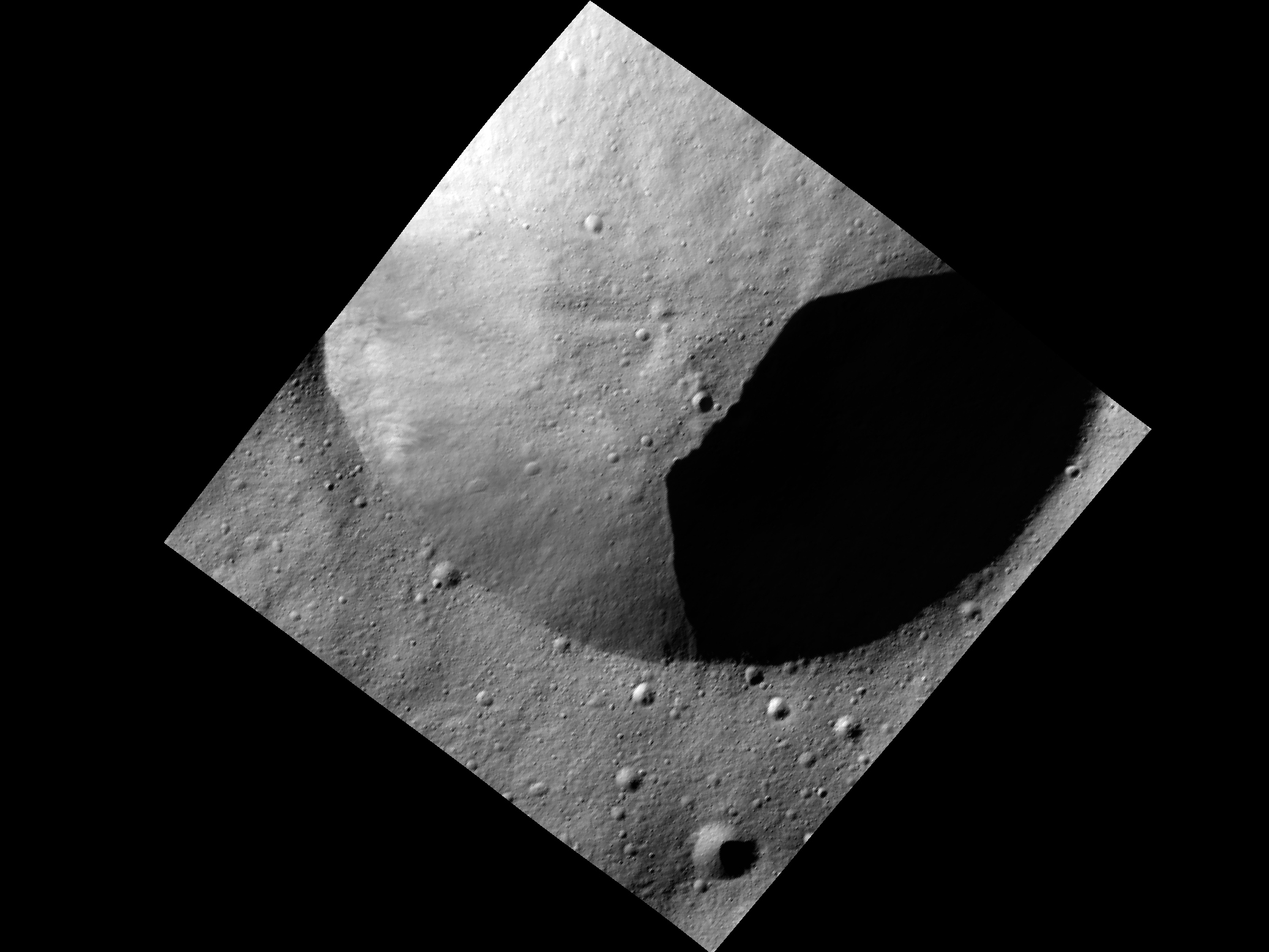
NASA is featuring the first high-resolution images of asteroid Vesta as taken by the DAWN spacecraft during a low-altitude orbit. The images show a very interesting surface, battered with old and more recent craters, plus "textures such as small grooves and lineaments that are reminiscent of the structures seen in low-resolution data from the higher-altitude orbits. Also, this fine scale highlights small outcrops of bright and dark material." (from the NASA piece).
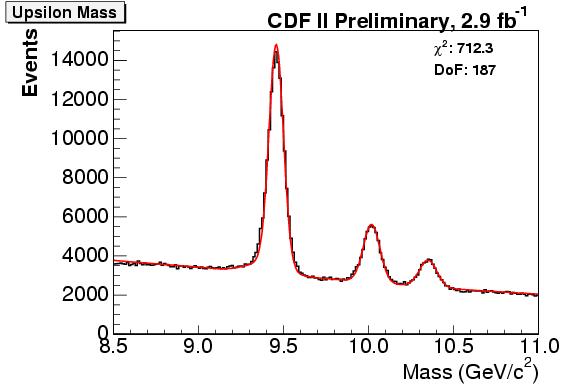
I was saddened today upon hearing of the death of Franco Rimondi, a colleague in the CDF experiment. Franco was a professor of physics at the university of Bologna since 1980. His research in particle physics encompasses the last forty years, during which he collaborated with many experiments, starting with bubble chamber kaon decay studies in the late sixties, and then ADONE at Frascati in the seventies, and the split field magnet (SFM) at CERN. The experiment he spent most of his research career on was however probably CDF, at the Fermilab Tevatron collider.
Have you ever looked at a histogram with the data displayed as counts per bin in the form of points with error bars, and wondered whether those fluctuations and departures from the underlying hypothesized model (usually overimposed as a continuous line or histogram) were really significant or worth ignoring ?
"[...] practically nobody took very seriously the CDF claim (not even most
members of the collaboration, and I know several of them), while practically everybody is
now convinced that the Higgs boson has been finally caught at CERN – no matter if
the so called ‘statistical significance’ is more ore less the same in both cases"

G. D'Agostini, "Probably a discovery", arxiv:1112.3620
Particle physics experiments usually invest a considerable part of the time used to produce a measurement in the task of determining the corresponding uncertainty on the estimate, or -when a new effect is observed (say a quantity is measured away from zero, when zero would be the "null hypothesis", predicted by the current model)- estimating the statistical significance of the observation.