These days I am preparing a three-hour course of statistics for particle physicists which I will give at a winter school in a couple of months. This stimulating task forces me to find nice and simple examples of good and bad applications of basic statistics. Stuff with high didactical value, and hopefully also entertaining.
Chess is a lifetime passion, there's no doubt about that. In twentyseven years of practice I have often found myself temporarily losing contact with my chess club, with tournaments, and online blitz games, only to return to the game with a renovated interest and hunger for putting my neurons to the test.
The fall of 2011 definitely classifies as one of my "coming back" moments. Here is a summary of the latest tournaments I played:
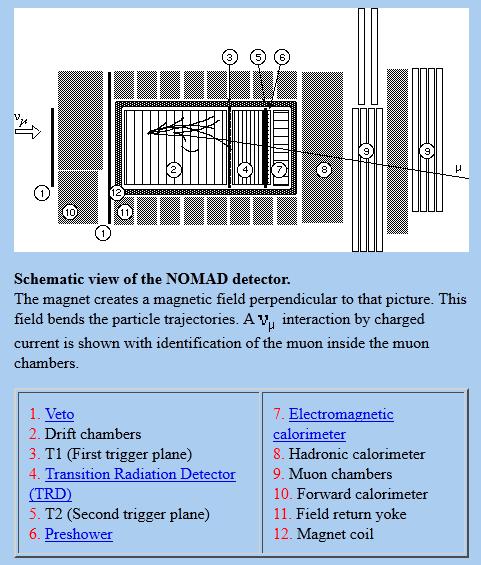
The Arxiv today features a quick-and-dirty
study of the occurrence of electron-positron pair signal in the NOMAD detector, which obtains very strong bounds on the superluminal behaviour of energetic muon neutrinos like the ones whose speed has been
recently and famously measured by OPERA.
The following is an excerpt from a book I am working on intermittently. I do not know whether the project will ever see the light, and it just occurred to me that I could share a tiny bit of it with you in my blog. Enjoy!
----
Due to the need of optimize my time, in the last couple of years my blogging has evolved to a rather monochromatic kind -physics, physics, physics. But it needs not be so: once in a while, there has to be a post here on personal matters.
So here you get to learn personal matters on yours truly. In particular, one bit of information, which by now is public even in my facebook profile so there's no point to avoid mentioning here: my wife and I separated by mutual consent yesterday.
Once in 737,000 times. That's how frequently happens what I saw yesterday evening, playing poker with my kids.
We were playing with eights and up since we were three, so 28 cards. And Filippo got served off the deck a straight flush. Even waiving the fact that it was a maximum flush (10-J-Q-K-A), there are only 16 such combinations in a 28-card deck, out of 12-some million possible hands.
Small-probability events do happen from time to time, and we usually give too much importance to them. I will most probably never see another straight flush at my table in my life, but maybe one day I'll die in a plane crash (an event which has similar odds).


 Choosing Your Bets: The Selection Bias
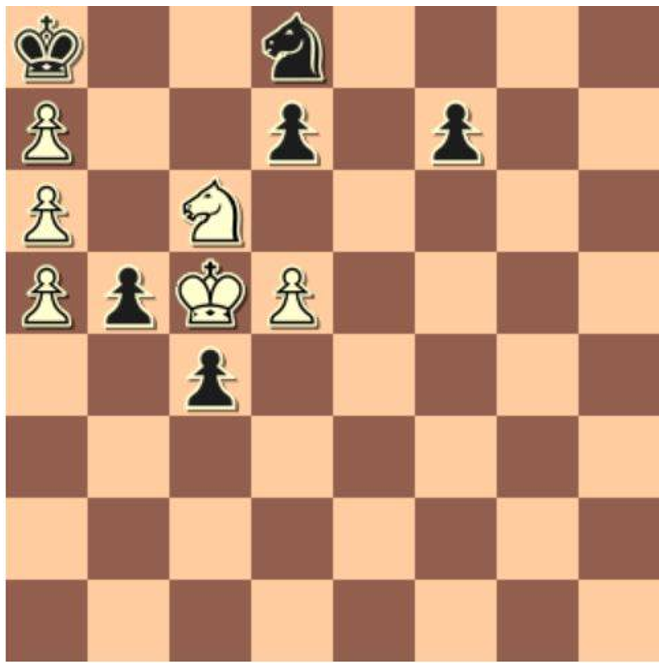 A Chess Study Requiring Backpropagation
 Co-Design Of Scientific Experiments