Fake Banner
Travel With Two Infants

The other day I traveled with Kalliopi and our two newborns to Padova from Lulea. After six full...

A Nice Little Combination

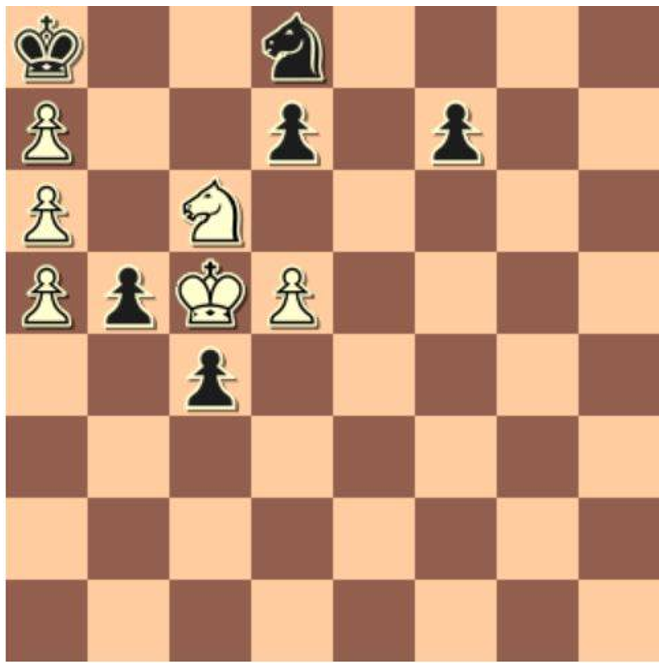
Although I have long retired from serious chess tournaments (they take too much time, a luxury...

The Strange Case Of The Monotonous Running Average

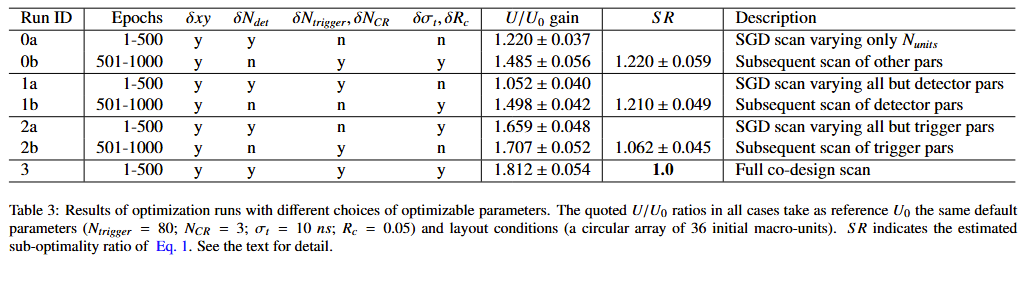
These days I am putting the finishing touches on a hybrid algorithm that optimizes a system (a...

Turning 60

Strange how time goes by. And strange I would say that, since I know time does not flow, it is...

User picture.
picture for Hank Campbellpicture for Patrick Lockerbypicture for Heidi Hendersonpicture for Bente Lilja Byepicture for Sascha Vongehrpicture for Johannes Koelman
Tommaso DorigoRSS Feed of this column.

Tommaso Dorigo is an experimental particle physicist, who works for the INFN at the University of Padova, and collaborates with the CMS and the SWGO experiments. He is the president of the Read More »

Blogroll
This afternoon (2.30 PM Chicago time) Pat Lukens, an old-timer of the CDF experiment, will give a "wine and cheese" seminar at Fermilab on the new observation of a heavy baryon, of the family of baryons containing bottom quarks, which was still at large.

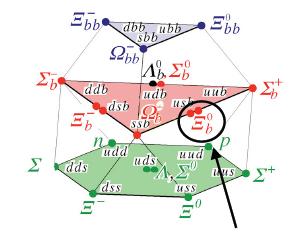
The new particle, called "Xi_b^0", fits a hole in the group representation graph of ground-state baryons with J=1/2. You can see it in the graph on the right. Of all states in the middle level (ones containing one bottom quark) only the Xi_b^0 was still missing. By the way: none of the baryons of the top level have yet been observed.
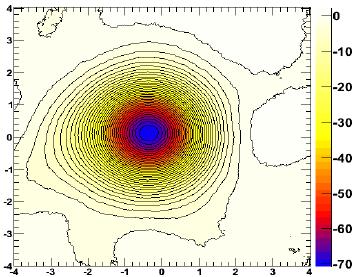
Today I casually ran into a very nice figure which is perfect for an entry as "guess the plot", both because of its mysterious appearance, and because of the interesting physics it hides. It is a two-dimensional "surface" and its shape should tell you something. For the moment, I will just say it is something which has to do with both particle physics and astrophysics, and that it is quite cool, being a new way of looking at something we know well.


Blogging from the whereabouts of one of the most beautiful places of the Mediterranean, Balos Beach (see picture), I wish to draw your attention today to one fun search that CMS produced on data collected in 2010: the one for gluinos in events with six jets.
Diakopes

Diakopes

Jul 16 2011 | comment(s)

In the beautiful hideout of Falassarna, Crete (see below), I am blogging today from the terrace of my hotel room, overlooking a wonderful beach. Although still "connected" and in touch with the happenings at CERN and Fermilab, I am for once in a detached, pensive mood, as I ponder over the status of HEP in this hot summer of 2011. So let me just assemble some thoughts below. Summer conferences are at our doors, but I will miss them.... I prefer to think at what we'll see at the next winter conferences!
I was waiting for the announcement in the Fermilab seminar of next Friday, but apparently despite I am still a member I am not well enough informed of what happens inside CDF, the experiment at the Tevatron proton-antiproton collider of Fermilab. So the paper is now public, and you can read the news in the Cornell arxiv: CDF sees an excess of muon pairs which is compatible with originating from the decay of B_s mesons.
While other sources (voluntarily not linked here, to avoid pissing off my collaborators) choose to be "on the news" these days, with a brand new exclusion plot of the Higgs boson obtained using almost one full inverse femtobarn of collisions which is not yet public but was made accessible by mistake on a Fermilab site, I will meekly point you out today to another result, which is by all means public and freely reproducible here (no reproach to Phil intended here -he acted in good faith and the fault is not his).