The interest for the
tentative new signal of a Higgs decay to photon pairs does not seem to cease. Yesterday I gave a short interview to Fabio De Sicot, on the latest Higgs rumour. Fabio works for an Italian radio station, Radio Città Fujiko.
The interview is
available as a podcast here, but be aware that it is in Italian...
Another comment on the
ATLAS rumour is worth mentioning today, even if it comes a bit late, because it is written by Jon Butterworth, who is a ATLAS collaborator who also writes for the Guardian. You can
find it here.
In particular here's a notable quote:
The thing is, CERN
is an exciting place right now. New data are coming in as I write.
There are lots of levels of collaboration and competition. Retaining a
Worth mentioning because of its irrelevance: that's my other choice for a post which points out a
new preprint by H.Nielsen, the Danish physicist who became famous by hypothesizing that the future was influencing the past in order to prevent us from discovering the Higgs boson.
Spring is my favourite season in Batavia, watching peaks blossom in every distribution... A
comment by Lubos Motl (in the thread of a post of mine on Higgs searches in ZZ decay modes) alerted me of a
new result by the DZERO collaboration, where a significant (2.5 standard deviations) fluctuation of the data in the mass distribution of t-prime quarks makes its ephemeral appearance. Lubos already
covered it in his blog.
It was bound to happen, and well predicted in advance, but it still feels good to report it here. The LHC last night exceeded by a good 15% the previous record instataneous luminosity for hadron collider beams, previously held by the Tevatron collider at 4.024x10^32 cm^-2 s^-1. The new record (soon to be surpassed by the LHC itself, anyway) is now 4.67x10^32.
Note: updated list of links at the bottom.
(Older Note: Bet on this signal! See at the bottom of the article! Odds are two to one in your favour now!)
(Older note: Update at the bottom.)
It seems I am late on this one -an internal note by the Atlas collaboration seems to contain the discovery of a bump in the diphoton mass distribution from data collected in 2010 and 2011. They find a signal that seems consistent, in mass and resolution, with what one would expect from a Higgs decay, if the Higgs were sitting at 115 GeV, the value at which LEP II found some hint (a 1.7 standard deviation signal) before being shut down in 2001.


 Choosing Your Bets: The Selection Bias
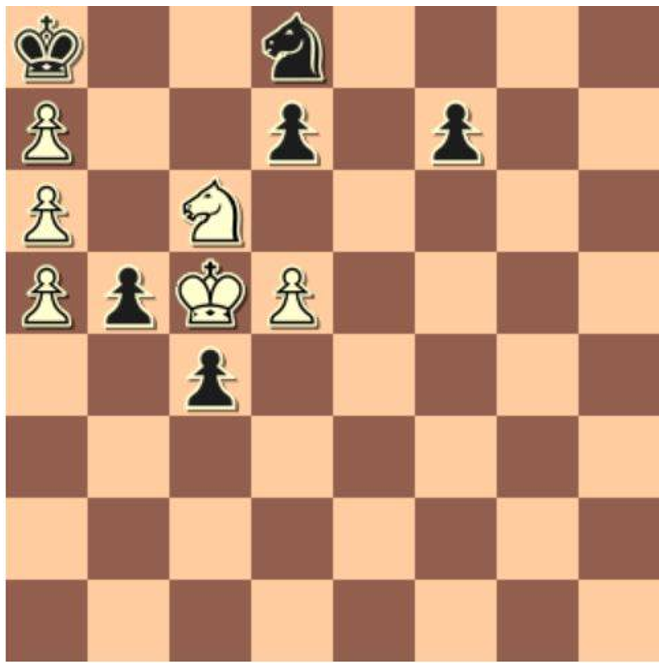 A Chess Study Requiring Backpropagation
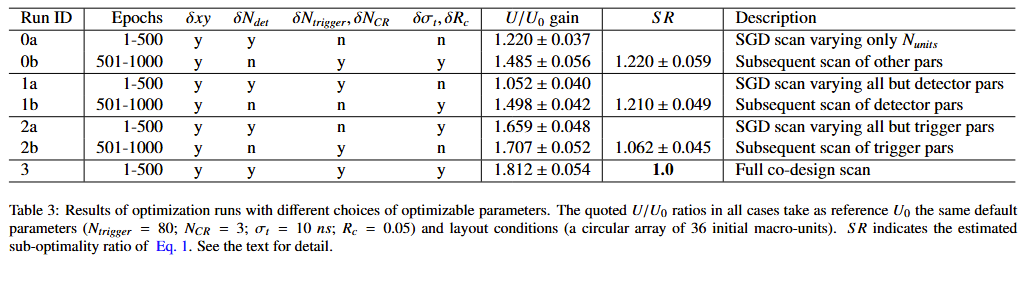 Co-Design Of Scientific Experiments