Fake Banner
Travel With Two Infants

The other day I traveled with Kalliopi and our two newborns to Padova from Lulea. After six full...

A Nice Little Combination

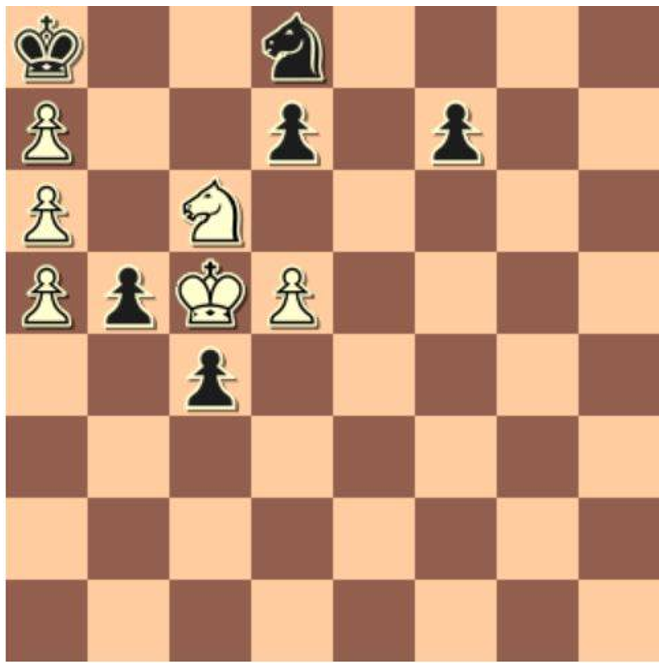
Although I have long retired from serious chess tournaments (they take too much time, a luxury...

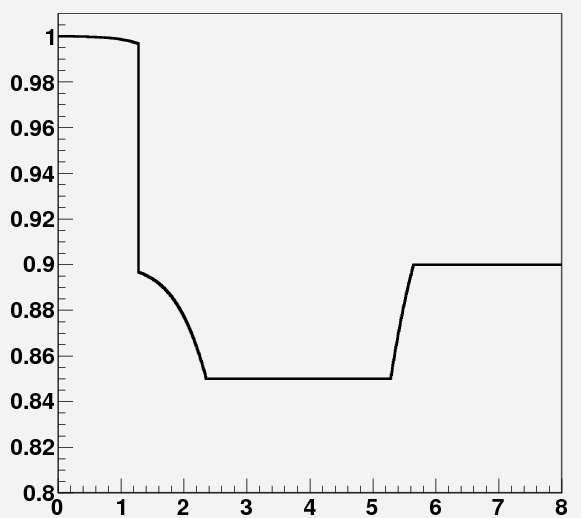
The Strange Case Of The Monotonous Running Average

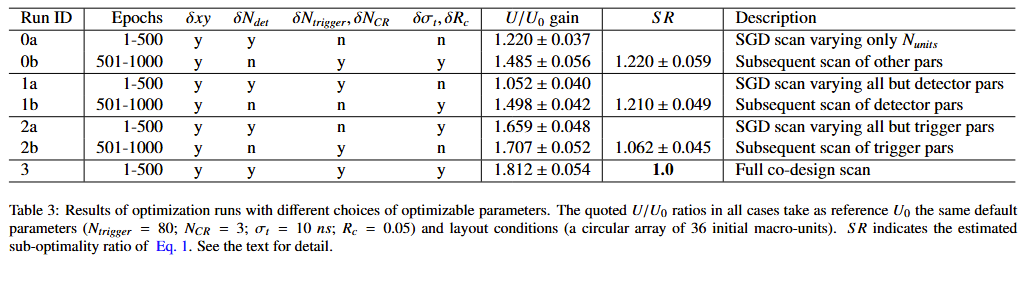
These days I am putting the finishing touches on a hybrid algorithm that optimizes a system (a...

Turning 60

Strange how time goes by. And strange I would say that, since I know time does not flow, it is...

User picture.
picture for Hank Campbellpicture for Patrick Lockerbypicture for Heidi Hendersonpicture for Bente Lilja Byepicture for Sascha Vongehrpicture for Johannes Koelman
Tommaso DorigoRSS Feed of this column.

Tommaso Dorigo is an experimental particle physicist, who works for the INFN at the University of Padova, and collaborates with the CMS and the SWGO experiments. He is the president of the Read More »

Blogroll
The Xenon 100 collaboration has finally released the results of their data analysis, and the results are saying that there is no Dark Matter in sight so far. Since we live in an age where time is precious, I think many of you are only interested in the bottomline. I can give it to you straight away, in the form of the plot which summarizes the results.

Xenon 100 finds three events compatible with a dark matter signal, with a background expected from more mundane sources amounting to 1.8+-0.6 events. The limit they extract on the cross section versus mass of the hypothetical particle are shown below by a thick blue curve, which cuts into the flesh of the preferred parameter space of constrained minimal supersymmetric theories (in grey), pushing them farther away.
A short post today, to mention the latest issue of the CMS Times, a online publication with news from the CMS experiment at CERN's Large Hadron Collider. The CMS Times is always informative and a good resource, but I usually forget to check it due to chronic shortage of CMS time in my agenda.
In the comments thread of one of the posts I wrote recently, where I discussed the new tentative signal of a new jet-decaying particle discovered by the CDF collaboration in their data, a reader asked me if hadronic signals of single vector bosons had been seen before by CDF.
In my post about the new CDF signal of a mysterious new resonance decaying to jet pairs, there is an active comments thread. I posted there a graph crafted by Tommaso Tabarelli de Fatis, a CMS collaborator, who picked the CDF data and simulation and scaled the energy scale of the latter up by a few percent, showing that the agreement of simulation and data was better, and that the bump at 145 GeV could be explained away this way. Below you can see the result of scaling the jet energy scale up by 4% (the jet energy scale is bumped up by just scaling the dijet mass; this is in principle approximate, but it is a good one at that).
Given the wide interest (about 20k readers in a day) that the new article by the CDF collaboration has attracted (see my original post here), I think I should collect in a separate post some auxiliary information, concerning past searches which might have been sensitive to such a signal in the past.
UPDATE (4/7): I posted a link to a nice animated GIF which shows the (approximate) effect of scaling up the MC/data jet energy scale factor on the CDF new particle signal. See here.

UPDATE (4/7):
I added some considerations on the tentative CDF signal in a separate post today (4/7). You can find there a comparison with older semileptonic diboson searches at CDF and DZERO.