On today's online version of the highest-diffusion newspaper in Italy,
Il Corriere Della Sera (a bit too right-winged for me, but still an important source) stands
a piece signed by none less than Carlo Rubbia, Physics Nobel prize in 1984 for the discovery of W and Z bosons. Despite his not so young age any more, Carlo is still extremely active in the field of high-energy physics, where he has moved his interest into neutrino physics.
It has been a while since I last wrote about results from the DZERO collaboration, and I am happy to be given a chance to do so by my casual Monday morning browsing of the most recent Arxiv preprints.
This might become the title of a series of posts, much like my "say of the week" series. In fact, the Large Hadron Collider is back in operation since earlier this month, and the instantaneous luminosity at which it collides protons at a center-of-mass energy of 7 TeV is going to keep gradually increasing, as better orbit parameters are found, more protons are injected in the machine, more bunches are made to circulate, and beams are squeezed in the surroundings of the experimental halls.
Still, it feels nice to report that the value of L = 2.4E32 cm^-2 s^-1
has been now achieved, a full 20% more than the highest number recorded
in the 2010 running.
The CDF collaboration sent to the preprint arxiv a
new paper a few days ago. In it, they report on a measurement of the mass difference of top and anti-top quarks. The result would not be worth discussing in detail, if it did not show a 2-sigma discrepancy which might be the first hint of a CPT violation. So let me discuss it here.
My blogging output here is scarce this week, because I am spending my time at the NEUTEL 2011 conference in Venice. I am producing some posts summarizing the talks I hear at the conference, together with a few colleagues. Our blog there will be short-lived, but already collects about 1000 views a day, growing by the day. Here is a selection of recent posts you can find -I only list here those published today or yesterday:


 Choosing Your Bets: The Selection Bias
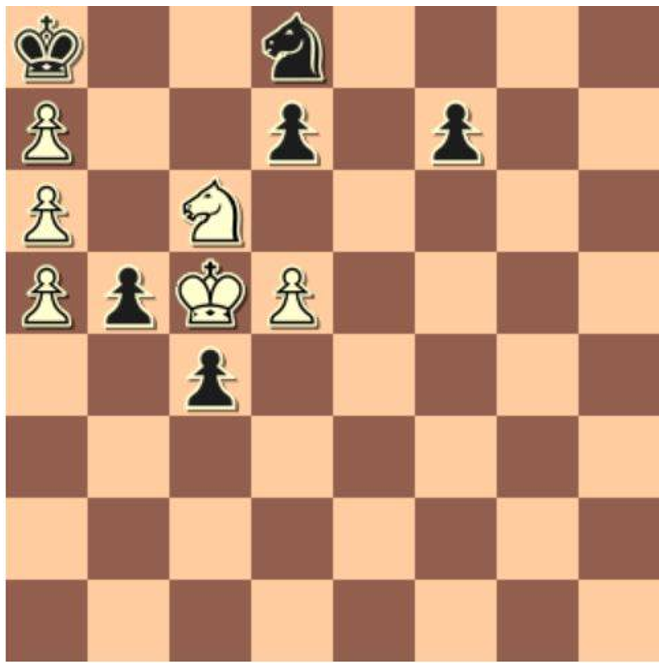 A Chess Study Requiring Backpropagation
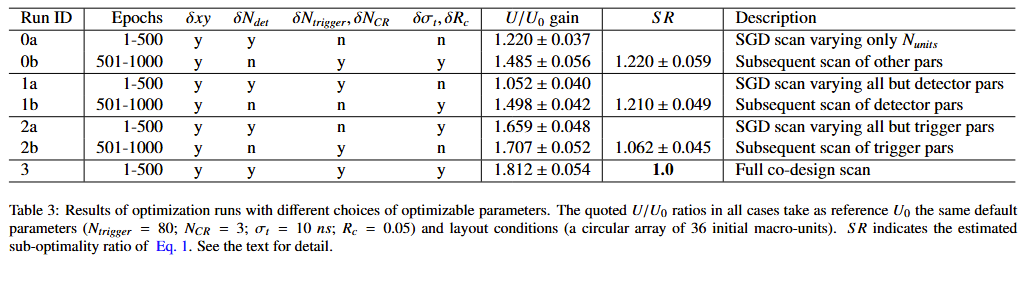 Co-Design Of Scientific Experiments











