A week ago a meeting was held in Chamonix to discuss in detail the schedule for the near future of the Large Hadron Collider, and to take a decision on the schedule, in particular for 2012.
"Lotteries are a tax on people who are bad at math"
Anonymous
This morning, as I walked out of home headed to work, the sky was clear and still dark. As I looked up, I immediately noticed the bright light of Venus above the houses of Venice. Have you ever watched Venus on a clear morning sky ? It is a marvelous sight! No wonder the planet was named after the most beautiful of all goddesses.
My trip to the University, in Padova, begins with a 7-minute walk to the Venice train station, followed by a 40 minute ride and then a further 15-minute walk in Padova to reach the Physics Department. While on the train I usually busy myself with document editing on my laptop, but on my walks I use to try and put to work the other main CPU I have got - my brain.
Just a quick post today, to show the invariant mass distirbution of pairs of opposite-sign muons collected by the ATLAS and CMS experiment. Such plots are incredibly rich in information, as they contain the signal of ten different resonant states, and allow one to figure out the masses and production rates that these particles have, as well as the resolution of the detectors. I have shown an early such plot by CMS some time ago, but now the graph has been updated to contain all the relevant data collected in 2010 by the detector.
I was contacted a few weeks ago by Bruno Arpaia, an Italian jornalist, translator, and writer of several remarkable novels. He explained that he had just finished a novel, "L'energia del vuoto" (the energy of vacuum) centered on the LHC and the research in particle physics, and that he wanted to thank me for supplying a lot of useful information in this blog, from which he had learned a few details useful for the writing of the book. I was of course quite happy to receive such a compliment, and to be proven that sometimes this blog may be useful.
I just read with interest some slides portraying the situation of male/female differences in the employment at the Italian National Institute of Nuclear Physics, the institute I myself work for. I do not wish to make a summary here, but just paste a graph which I find interesting. The graph compares male and female employment in the University with the one in the INFN, for corresponding levels of employment.


 Choosing Your Bets: The Selection Bias
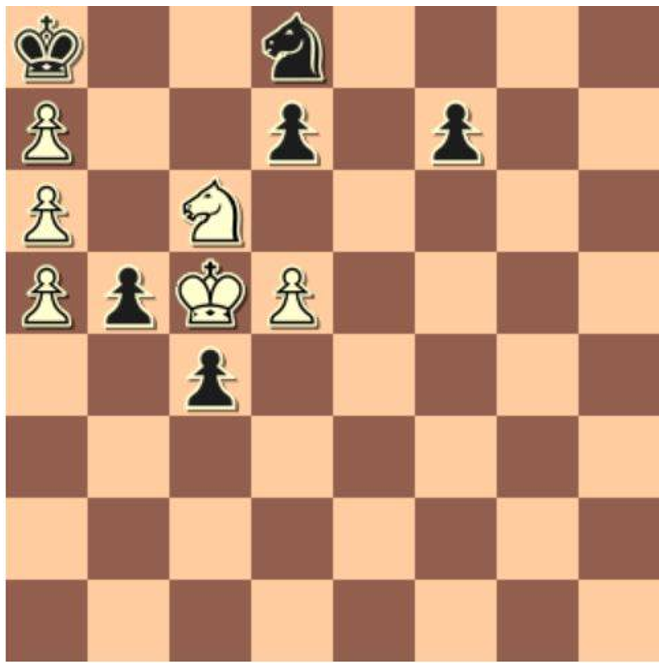 A Chess Study Requiring Backpropagation
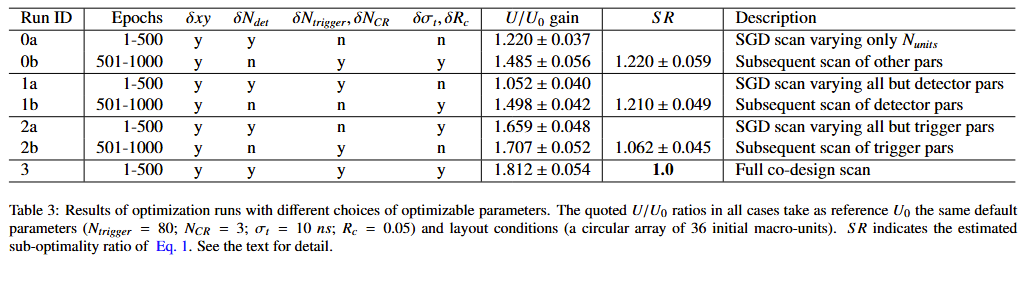 Co-Design Of Scientific Experiments