At PhyStat 2011, currently being held at CERN, talks are informal and the atmosphere is friendly, but I have heard very few jokes from the participants so far. Just a minute ago I witnessed what might be a pretty strong bid at the best joke of the conference.
Kyle Cranmer was showing results of very CPU-intensive calculations of renormalization-group equations used to derive measurable parameters of Supersymmetry from the value of basic parameters at a high-energy scale. He was mentioning that the original calculation used to take 720 CPU-days, but that they had found a series of shortcuts using neural networks, and the result was a huge improvement in speed: this was now a 1-minute calculation!
Looks like particle physicists have finally digested the food of Christmas break by now. Just as I was reviewing a new paper on the arxiv on the Tevatron Higgs limits, I ran into
another hot preprint, titled "The Reactor Antineutrino Anomaly".
While listening to highly interesting talks on cutting-edge statistical issues at
PHYSTAT 2011, I have casually been reading this morning
a paper recently posted on the arxiv, which was pointed out to me by a Cypriot friend, Alex (thanks, Alex!).
The authors (
J. Baglio,
A. Djouadi,
S. Ferrag,
When physicists working in a collaboration want to publish the observation of a new effect in the data, they need to first convince their peer that what they are observing is real, and not the product of a weird fluctuation.
Statistical fluctuations are everywhere, and they sometimes do produce weird results. We are only human, and when facing unlikely fluctuations we are invariably tempted to interpret them as the manifestation of something new and unknown.
Thanks to the Tevatron Facebook account manager, R.M. (Ron, tell me if I can disclose your identity here), I can offer to you today an exceptional plot of historical significance.
Before I paste below the plot in question, let me discuss what it is about. The Tevatron collider has operated since October 1985 -about a couple of geological eras back, in particle physics terms. The W and Z bosons were newborn babies back then, the top quark was thought to have a mass in the 30-50 GeV ballpark, and, to paraphrase the Rolling Stones, "Carlo Rubbia raged and the bodies stunk".
This just in. The Tevatron collider, proud and glory of Fermilab, the leading high-energy lab in the US, will stop collider operations for good at the end of FY2011. This means that CDF and DZERO will collect roughly 1800 additional inverse picobarns, reaching a total of about 10 inverse femtobarns of collected data (the delivered and acquired integrated luminosities differ due to downtimes as well as voluntary dead time of the triggering system).


 Choosing Your Bets: The Selection Bias
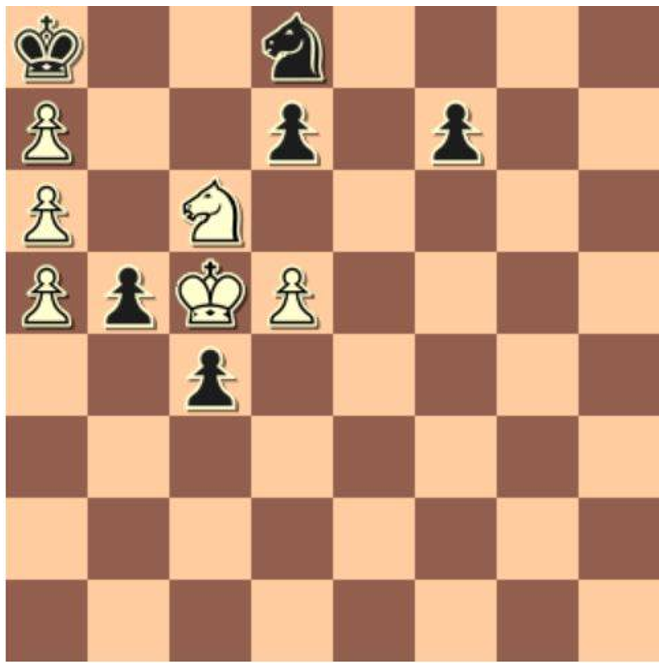 A Chess Study Requiring Backpropagation
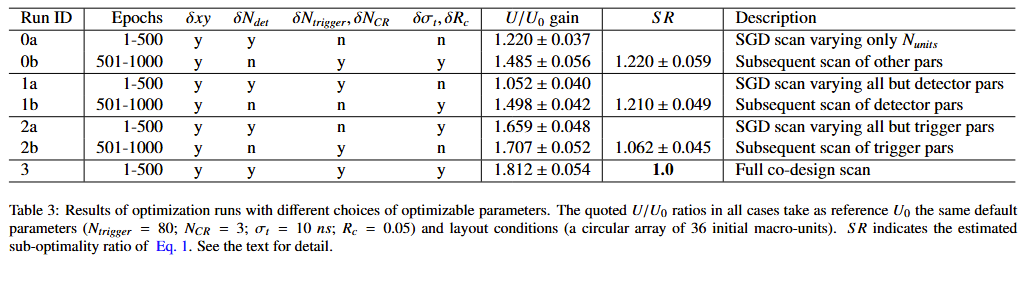 Co-Design Of Scientific Experiments











