A faithful reader of this blog
has been asking me for answers to some of the
42 questions which were
given at an exam for particle physics researcher wannabes in Italy in 2005. I already
provided some answers in a separate post a few months back, but the reader asked for an answer to some specific exercises which I had not bothered to deal with here. I will do so now.
A new result for the production cross section of Z boson pairs in proton-antiproton collisions at the 2-TeV Tevatron collider is now public, thanks to the efforts of the CDF collaboration. The measurement, in a nutshell, confirms Standard Model predictions nicely: the cross section is determined to be 1.45 picobarns, with an asymmetric error bar of of +0.60-0.51. The Standard Model, on the other hand, predicts that the cross section is 1.21 picobarns. The agreement of the two numbers, within uncertainties, says that all is well in the searched final state, and no unforeseen effects are at work.
In the past weeks I have been writing a piece about the Large Hadron Collider for a science popularization magazine, and I found myself squeezing my brain for a good analogy to the work of particle hunters. The idea I had was to convey the importance of energy and intensity, two parameters which must both be maximized by a particle accelerator in order to reach deeper in the structure of matter.
Teaching a subnuclear physics course is a quite refreshing experience.
In general, much of the stuff that one has learned through years of sweating on books slowly degrades and becomes "fuzzy". That fuzzy stuff still give you a warm feeling that you have grasped the important concepts and that you have acquired the necessary culture. But much better than the ignorance of culture is the precise knowledge that a continuous study provides. So when one is forced to re-study what one has forgotten, because of the need to teach a course, the result is pleasing.
As a form of encouragement for the first steps in the scientific publishing world, I am here taking the licence to draw your attention, dear reader, to the first article published here by my nephew Enrico, who isn't even 18 years old yet but is already showing significant writing and researching skills.
The article discusses the effects of an Italian law meant to reduce pollution by forcing the use of "green" gasoline. Unfortunately hings in Italy always end up half-baked: the government did not force the dismiss of non-catalitic cars, and Enrico shows quite clearly that this has ended up creating more pollution than if nothing had been done.


 Choosing Your Bets: The Selection Bias
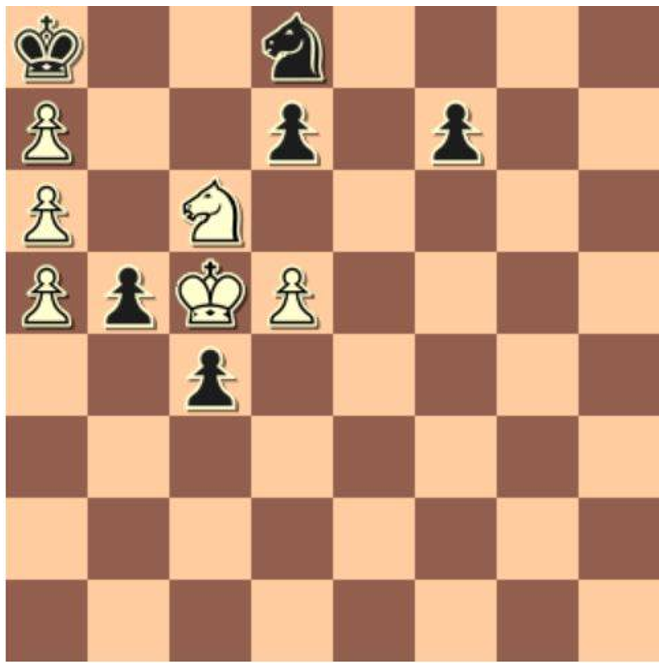 A Chess Study Requiring Backpropagation
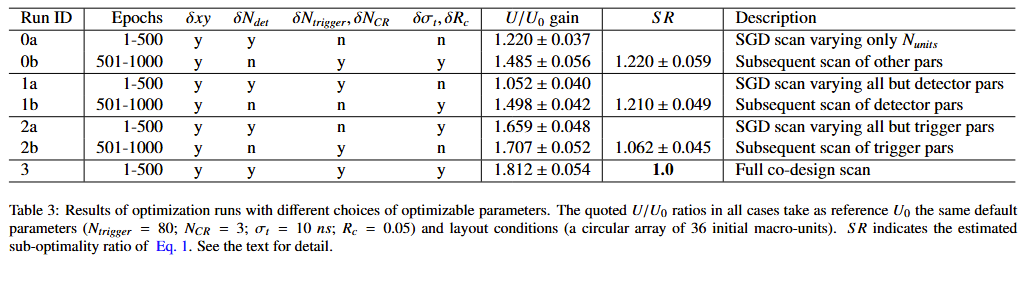 Co-Design Of Scientific Experiments











