Fake Banner
Travel With Two Infants

The other day I traveled with Kalliopi and our two newborns to Padova from Lulea. After six full...

A Nice Little Combination

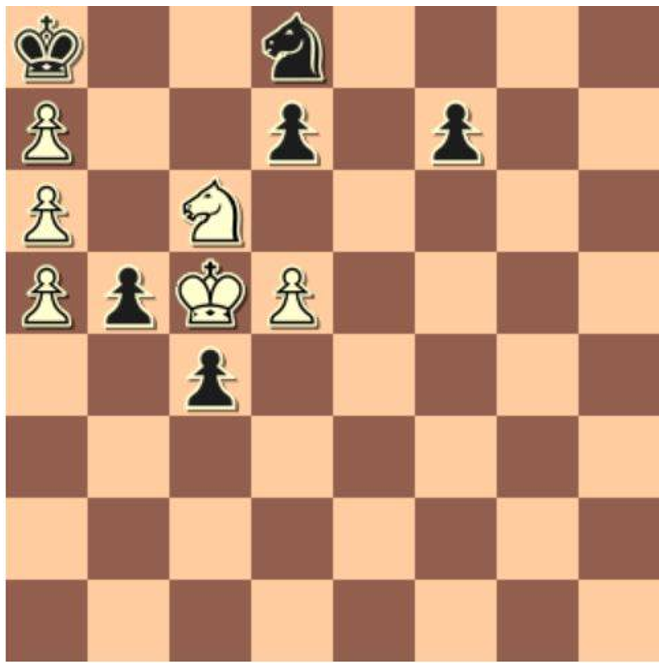
Although I have long retired from serious chess tournaments (they take too much time, a luxury...

The Strange Case Of The Monotonous Running Average

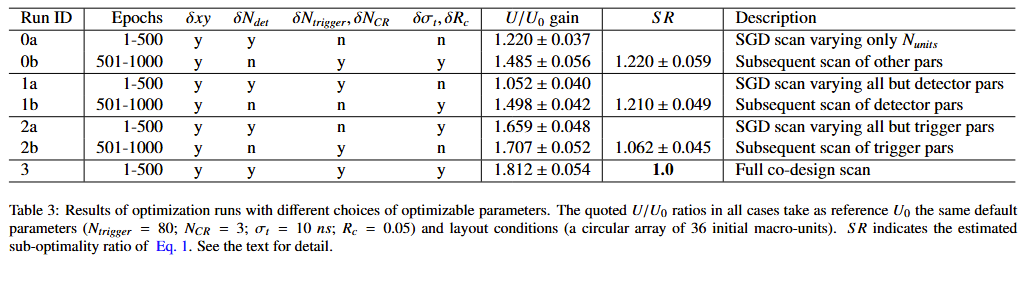
These days I am putting the finishing touches on a hybrid algorithm that optimizes a system (a...

Turning 60

Strange how time goes by. And strange I would say that, since I know time does not flow, it is...

User picture.
picture for Hank Campbellpicture for Patrick Lockerbypicture for Heidi Hendersonpicture for Bente Lilja Byepicture for Sascha Vongehrpicture for Johannes Koelman
Tommaso DorigoRSS Feed of this column.

Tommaso Dorigo is an experimental particle physicist, who works for the INFN at the University of Padova, and collaborates with the CMS and the SWGO experiments. He is the president of the Read More »

Blogroll
"If you're going to tell people the truth, be funny or they'll kill you"

G. Marx
The CDF Collaboration has recently produced results of a search for Supersymmetric Higgs bosons in events with three or more bottom-quark jets. Here I wish to give just the highlights of this analysis, but before I do I will try to spend 5' on making sense of the previous sentence.

In good order, below I explain first of all 1) what is CDF, 2) what is the Tevatron, 3) what are Higgs bosons from Supersymmetry, 4) how can these be sought with bottom quarks, and 5) what are bottom quark jets. After I am done with these five explanations, those of you who are still here will no doubt appreciate the results I am showing today. Can I make it in 5 minutes ? Sure, but can you read forty lines of text in the same amount of time ?
Today, for the first time in 18 years of association to the Italian National Institute of Nuclear Physics (INFN), I leave for a trip abroad, to the CERN laboratories, on my own wallet.

The situation into which basic research has been thrown by our crazy government borders the ridiculous, but is pretty darn serious. Italian physicists often travel to foreign laboratories to attend their apparata, collect data, perform their research, discuss with colleagues. If they lose money to do this, they will stop their foreign activities. I think in particular at graduate students and young post-docs, who earn salaries insufficient for a living, and whose per-diem compensation when abroad used to allow them to cover their expenses.
Today is a good day: I can rest in peace without working out my daily share of science popularization here, because I have something better to do, which will have a much more sizable positive effect for the diffusion of particle physics. In fact, I hold in my hands a brand new copy of Gian Francesco Giudice's book, "A Zeptospace Odyssey - A Journey into the Physics of the LHC". All I have to do is to explain to you why you really should buy, read, and give as a present this book to all your friends.

Gian Francesco Giudice

In my friend Peter Woit's blog I read an interesting account of an interview to Greene and Kachru, two leading string theorists. Here is an excerpt, which Peter got from the World's Science Festival:

John Hockenberry, the panel’s moderator, asked Greene if he thought experimental evidence would come during his lifetime.

“I’d be surprised,” said Greene.

“And in your lifetime?” Hockenberry asked Kachru.

"I do not understand why journalists and others want to know about the latest discoveries in physics even when they know nothing about the earlier discoveries that give meaning to the latest discoveries"

Richard Feynman (quoted by G.F.Giudice, "A Zeptospace Odyssey", Oxford University Press 2010)