Fake Banner
Travel With Two Infants

The other day I traveled with Kalliopi and our two newborns to Padova from Lulea. After six full...

A Nice Little Combination

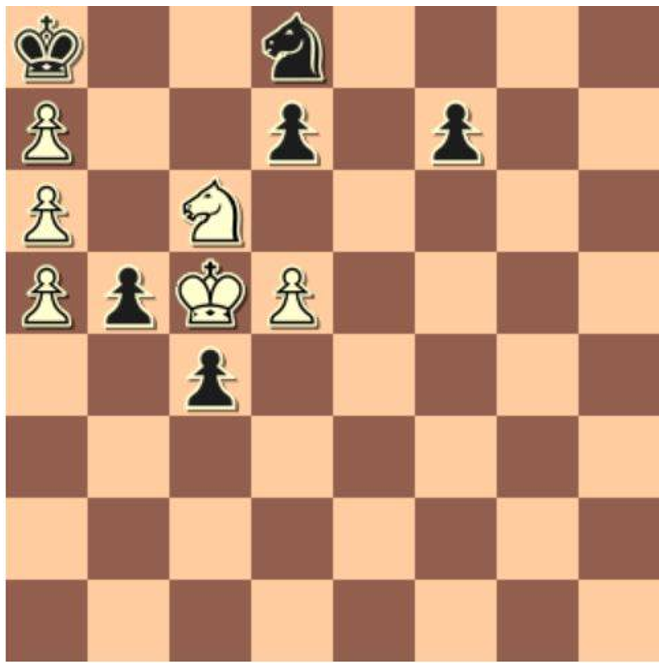
Although I have long retired from serious chess tournaments (they take too much time, a luxury...

The Strange Case Of The Monotonous Running Average

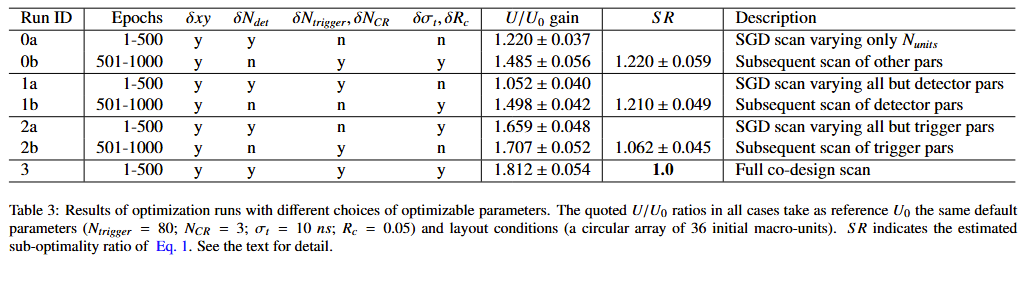
These days I am putting the finishing touches on a hybrid algorithm that optimizes a system (a...

Turning 60

Strange how time goes by. And strange I would say that, since I know time does not flow, it is...

User picture.
picture for Hank Campbellpicture for Patrick Lockerbypicture for Heidi Hendersonpicture for Bente Lilja Byepicture for Sascha Vongehrpicture for Johannes Koelman
Tommaso DorigoRSS Feed of this column.

Tommaso Dorigo is an experimental particle physicist, who works for the INFN at the University of Padova, and collaborates with the CMS and the SWGO experiments. He is the president of the Read More »

Blogroll
A weekly visit to the Cornell Arxiv is more than enough for a physicist like me, since my daily work is not affected too much by whatever happens to be published there. Oftentimes, when I browse the contents of hep-ph (the folder containing preprints on particle phenomenology) I do not end up actually reading any papers, and limit myself to "sniffing" what is going on, by looking at the titles and author names. But at times I venture to browse through the pages, with mixed results.
I have no energy today to put together a detailed discussion of a brand new, exciting search for supersymmetric Higgs boson performed in data collected by the CDF experiment at the Tevatron proton-antiproton collider. All I can do for you is to show the interesting result of the search, and give you some very general ideas of what this is and why it is interesting. Maybe tomorrow or Saturday I will be able to pay more justice to the analysis.
2010 has just started with the best auspices to bring us exciting new science, and there comes a pledge to forecast what will happen in 2020. Oh, well - rest is not what I became a scientist for.

Making non-trivial predictions today for how will basic research be in subnuclear physics ten years down the line is highly non-trivial. For exactly the opposite reason that it is equally hard in several other fields of research.
The success of today's particle physics experiments relies to a surprisingly large extent on a seldom told functionality of the giant apparata that detect the faint echoes of subatomic particles hitting or punching through their sensitive regions: the capability of triggering.
"One way of thinking about the confinement problem was suggested by e+ e- annihilation into hadrons. Initially, the virtual photon dissociates into a quark and an antiquark that move with almost the speed of light back-to-back. Feynman had argued that additional pairs would be produced in the region between them, along the line separating the initially produced . The new pairs and original would rearrange and become a bunch of outgoing mesons [...].
"The threat is much stronger than its execution"

Aaron Nimzovich (complaining to the arbiter of a chess match that his opponent had put a cigar in his mouth, after the arbiter had pointed out that the cigar was unlit).