Fake Banner
Travel With Two Infants

The other day I traveled with Kalliopi and our two newborns to Padova from Lulea. After six full...

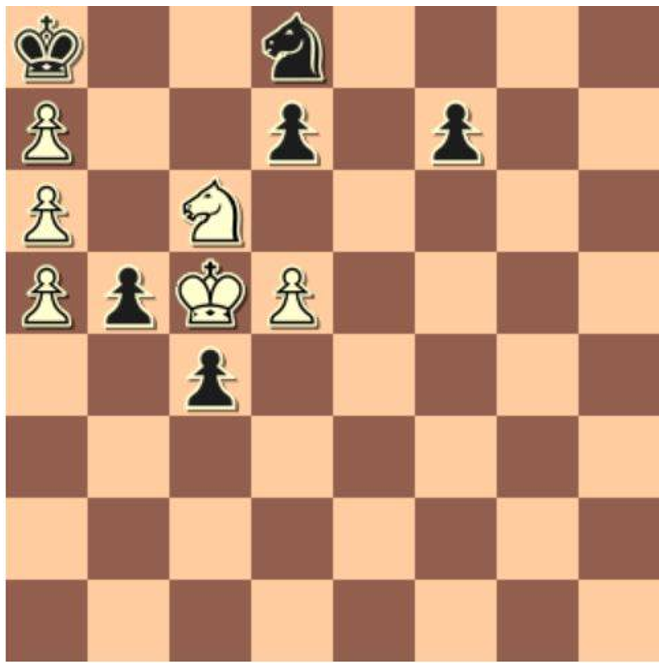
A Nice Little Combination

Although I have long retired from serious chess tournaments (they take too much time, a luxury...

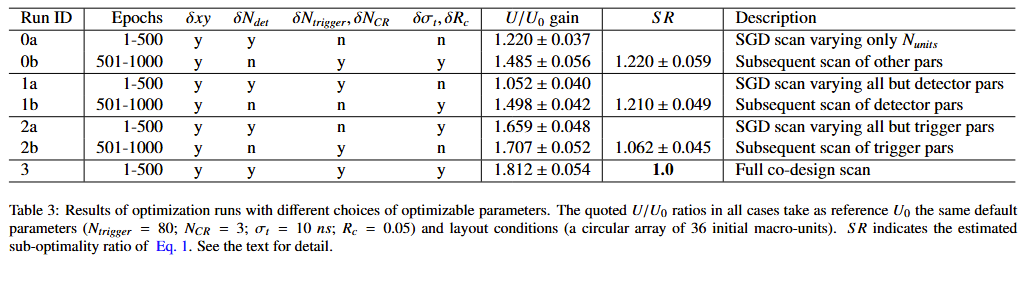
The Strange Case Of The Monotonous Running Average

These days I am putting the finishing touches on a hybrid algorithm that optimizes a system (a...

Turning 60

Strange how time goes by. And strange I would say that, since I know time does not flow, it is...

User picture.
picture for Hank Campbellpicture for Patrick Lockerbypicture for Heidi Hendersonpicture for Bente Lilja Byepicture for Sascha Vongehrpicture for Johannes Koelman
Tommaso DorigoRSS Feed of this column.

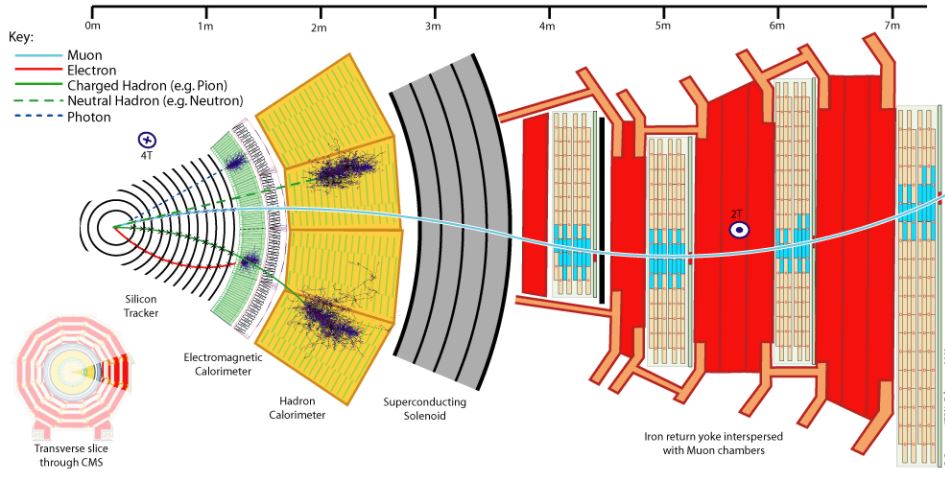
Tommaso Dorigo is an experimental particle physicist, who works for the INFN at the University of Padova, and collaborates with the CMS and the SWGO experiments. He is the president of the Read More »

Blogroll
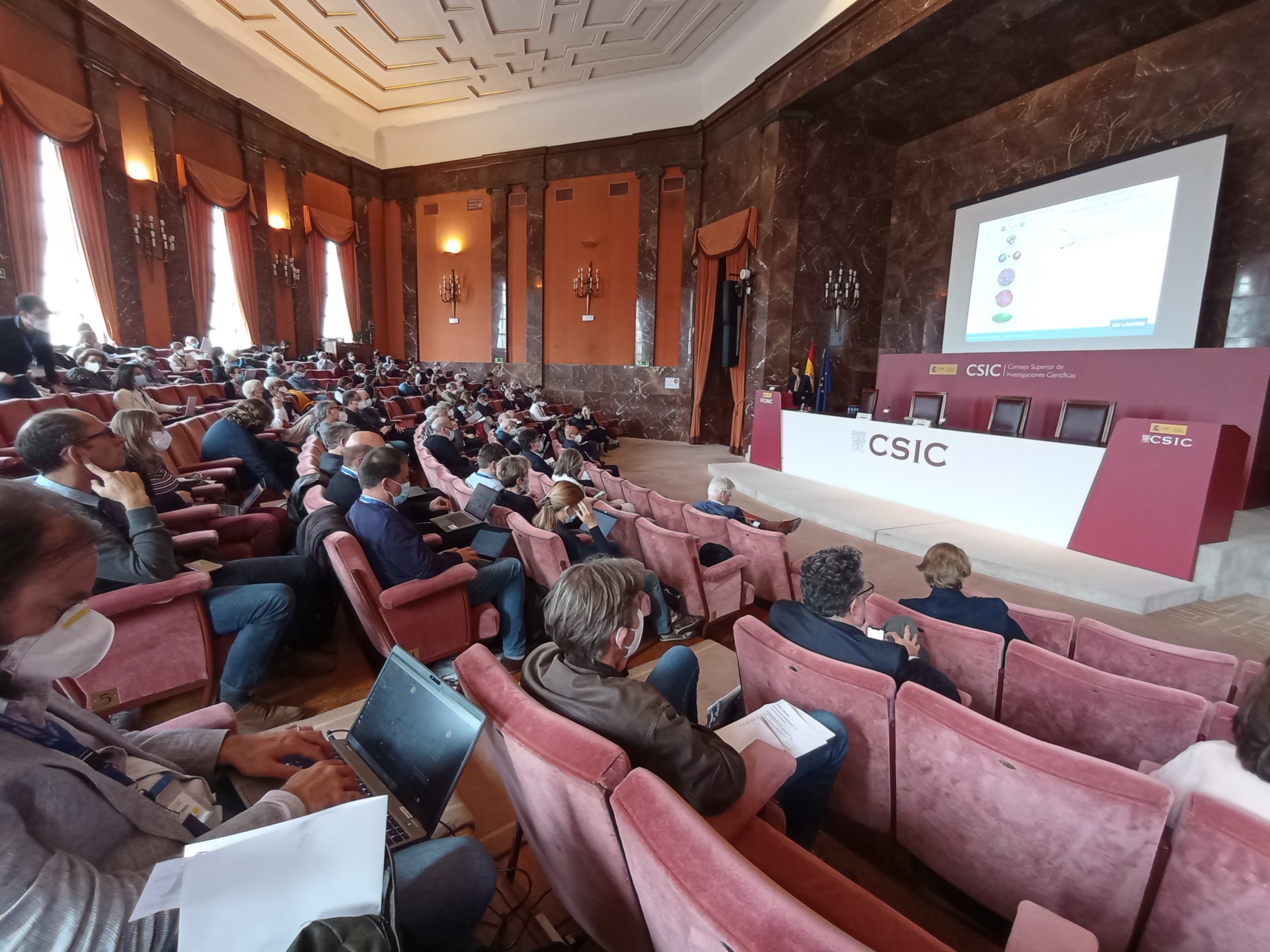
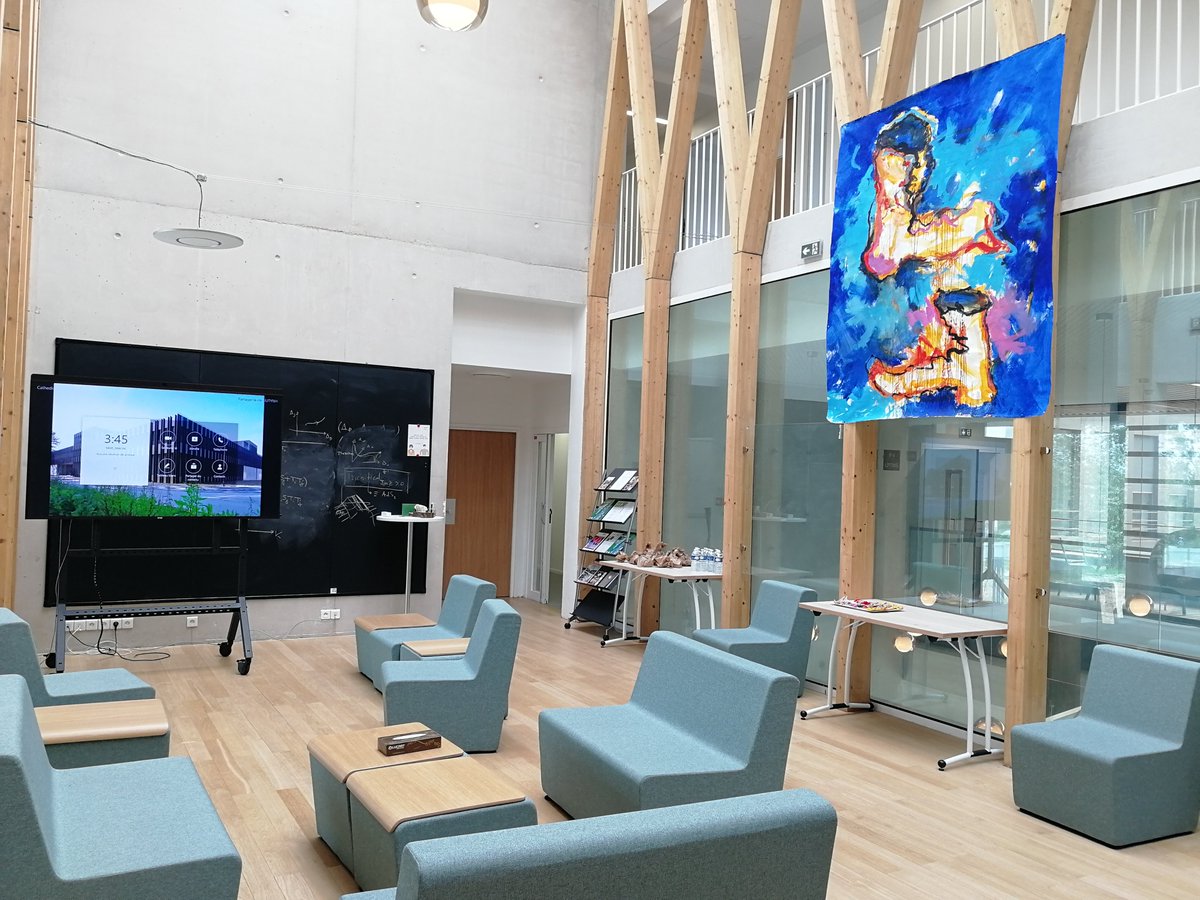
The "Learning to Discover" workshops and "AI and Physics" conference are taking place at Institut Pascal, a centre set on the top of a hill surrounded by woods near Orsay, France. The event focuses on new artificial intelligence techniques to improve the discovery potential of fundamental science experiments.
Below you can see a summary of the event agenda

- Apr 19-20 Representation learning workshop
- Apr 21-22 Dealing with uncertainties workshop
- Apr 25-26 Generative models workshop

- Apr 27-29 AI and Physics Conference
No.
... Ok, ok, I will elaborate. But first I feel the need to explain what we are talking about here, to anybody who does not have a Ph.D. in particle physics and is still reading this column.

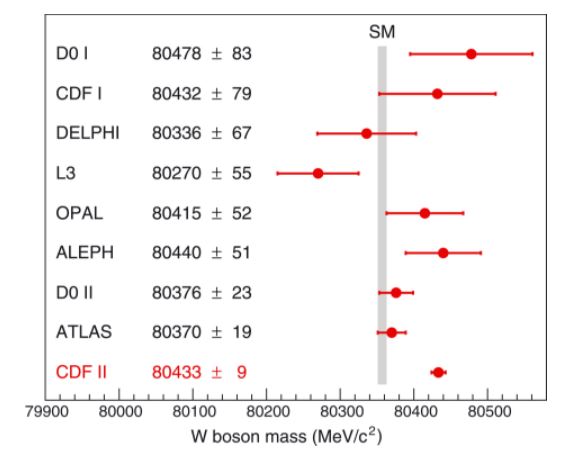
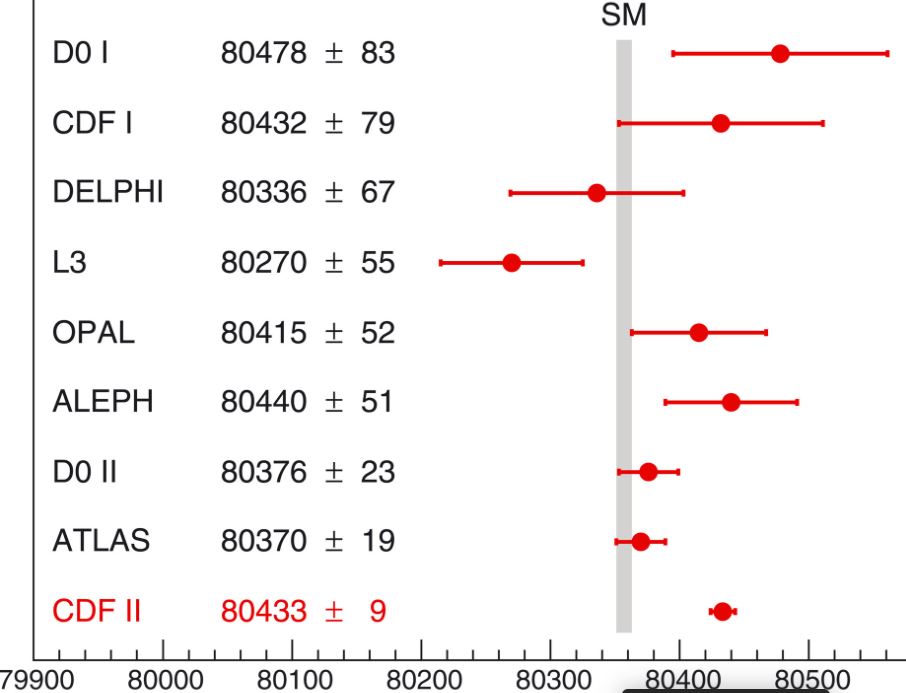
Background: The Tevatron, CDF, and the W boson
Ever since experimental physics was a thing, the worth of scientists could be appraised by how carefully they designed their experiments, making sure that their devices could answer as precisely as possible the questions that crowded their mind. Indeed, the success of their research depended on making the right choices on what apparatus to build, with what materials, what precise geometry, and how to operate it for best results.


(Above: Ramsay and Pierre Curie in their lab)
The late Martin Gardner held for many years a fantastic feature in the popular Scientific American magazine. It was called "Mathematical Games", and it was worth the whole magazine by itself, although SciAm always featured many interesting articles about scientific advancements. Upon picking the magazine up at a newsstand, "Mathematical Games" was the first article I would read as a teenager eager to learn about the endless tricks Gardner taught there, in his wonderful tale-telling style.
Chess is a wonderful game, one that contains in itself a universe of situations, choices to make, strategic concepts, tactical ideas. Through its study we realize how difficult it is to take the correct decision in a maze of opportunities, even when everything is under the sun and nothing is hidden from our view. By losing game after game with stronger opponents we get to learn the hard way -but still, within an imaginary world- that our actions have consequences. Even more: we understand that if we are sometimes powerless to choose correctly even when we have all the information available to us, we cannot possibly believe we can do that in the real world, when we have to deal with incomplete, faulty, or missing data.
Like the vast majority of readers of this column, I very strongly condemn the Russian invasion of Ukraine and the ensuing atrocities. War is never an answer to international controversies. And I would like to add: I am in favor of all sanctions that financially hit the aggressor, including cutting Russia from use of international banking circuits and similar impactful actions.

That said, I will say here what I think about this ongoing rush to find ways to hurt a country whose citizens are largely innocent of their leader's crimes. I think most of these creative initiatives are counter-productive, reaching the nonsensical, the irrational, and the plain nuts.