Fake Banner
Travel With Two Infants

The other day I traveled with Kalliopi and our two newborns to Padova from Lulea. After six full...

A Nice Little Combination

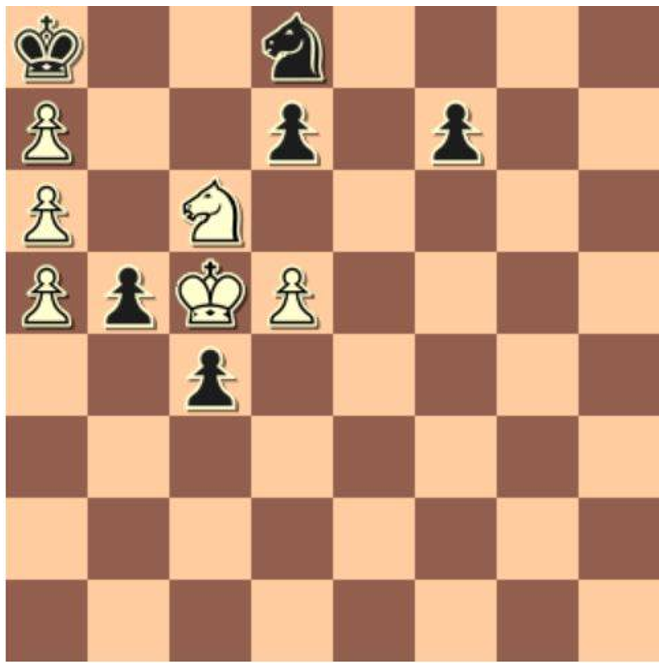
Although I have long retired from serious chess tournaments (they take too much time, a luxury...

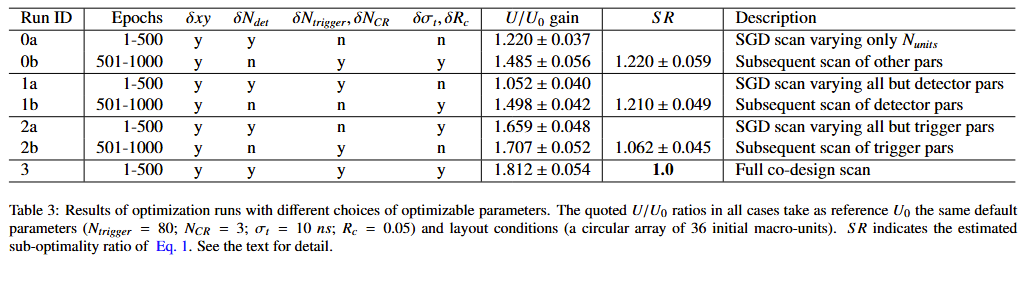
The Strange Case Of The Monotonous Running Average

These days I am putting the finishing touches on a hybrid algorithm that optimizes a system (a...

Turning 60

Strange how time goes by. And strange I would say that, since I know time does not flow, it is...

User picture.
picture for Hank Campbellpicture for Patrick Lockerbypicture for Heidi Hendersonpicture for Bente Lilja Byepicture for Sascha Vongehrpicture for Johannes Koelman
Tommaso DorigoRSS Feed of this column.

Tommaso Dorigo is an experimental particle physicist, who works for the INFN at the University of Padova, and collaborates with the CMS and the SWGO experiments. He is the president of the Read More »

Blogroll
Back from vacations, I found the usual pile of errands, tons of unattended emails, papers to review to take care of at work. I got home pretty tired tonight, and I was more than else looking for some relaxation when I logged on the Internet Chess Club for a couple of blitz chess games. Instead, I found some fulfilment by winning a short game with the black pieces. White was International Master Vladimir Barskij, Fide ELO 2419 in the current list, number 2273 in the world. Not a top chess player, but one of those I sometimes have a chance of beating.
The figure shown below represents the best measurement of the top quark mass ever obtained by a single experiment, and it is a determination with a less than 1% total uncertainty. It has been approved last week by the CDF experiment at Fermilab.

The CDF experiments collects proton-antiproton collisions delivered by the Tevatron collider, which imparts the projectiles with 1 TeV of energy each, for a center-of-mass energy of 2 TeV. This is still the highest energy ever achieved by a collider, although the record is going to be soon stripped off Fermilab by the Large Hadron Collider, which is due to start colliding protons with other protons at 7 TeV of energy this coming fall.
If you have never seen a fireball lighting up the night sky I bet you will appreciate the video below, which was taken by Ivaldo Cervini over Italian skies a few days ago. It is a Perseid meteor, which lit up at a visual magnitude of approximately -10 (for comparison, the brigthest Venus can get is -4.5, and the full moon is -12.5: -10 is roughly 200 times brighter than Venus, and a tenth of the full moon).
"We would dig a shaft near 'ground zero' about 10 feet in diameter and about 150 feet deep. We would put a tank, 10 feet in diameter and 75 feet long on end at the bottom of the shaft. We would then suspend our detector from the top of the tank, along with its recording apparatus, and back-fill the shaft above the tank.
The World Conference on Science Journalism held in London 2009 has its own web site, of course. Today they were so kind to let me know they had published there the recordings of all sessions, among which was the one where I gave my speech. The session title was "Blogs, Big Physics, and Breaking News", it featured Matin Durrani as chair, and Matthew Chalmers, myself, and James Gillies as speakers. The abstract ran as follows:

How are blogs changing the way science news develops and is reported?
The commissioning of the Large Hadron Collider at CERN will offer a
telling case study over the next few years. Who will be first with news
A couple of months ago I wrote here about the first observation of a process called "diboson production", a quite rare occurrence in hadronic collisions: for the first time, the CDF collaboration could observe that rare process in events containing hadronic jets, which are usually riddled by enormous backgrounds.