The
2009 World Conference on Science Journalism took place last week in heat-wave-struck London, at the convenient location of
Westminster Central Hall (see below). More than 900 delegates got together from 90 countries to discuss the future of science journalism, understand the challenges the field is facing, and finding strategies to face them. An impressive event, excellently organized.

As I promised a week ago, I am posting answers to a few of the 42 questions which constituted the
first part of an the exam selecting experimental particle physicists for the INFN (the italian institute of nuclear physics) four years ago. Next week, a similar exam will take place to "qualify" post-doctoral scientists which aspire at a temporary position with INFN.
In a few days, scores of Italian post-doctoral researchers in experimental particle physics will get tested on their knowledge of the matter, without any promise of a position, but just to get one further "stamp" on their curriculum, testifying that they are competent enough to be worth offering a temporary position by INFN, the Italian Institute for (sub)Nuclear Physics. So this is a national exam, with the sole purpose of giving a green light to be admitted to two-year positions , which are typically paid less than 1400 euros a month, and which are so far not available. Frankly, I feel ashamed, since I myself work for INFN, and I strongly disagree with its current recruitment policies.
If you have followed this blog for long enough, dear readers, the words "multi-muons", "anomalous muons", or even "lepton jets" are not foreign to you. They all refer to
a paper appeared on the ArXiv on the evening of Halloween last year. In the paper the CDF collaboration published the results of a detailed analysis which described how a component of collider data containing two or more muons
could not be explained by known Standard Model processes.
In a few days italian post-docs working in high-energy physics will be asked to gather for a nasty exam, held by the INFN -the italian institute for nuclear physics- to qualify valiant researchers for future hiring in the institute.
The exam generated a wave of outrage among the very pool of people at which it is aimed: the scores of "precari" (temporary workers) who are spending the best years of their life to try and make a career in particle physics. Let me explain why that is so.


 Choosing Your Bets: The Selection Bias
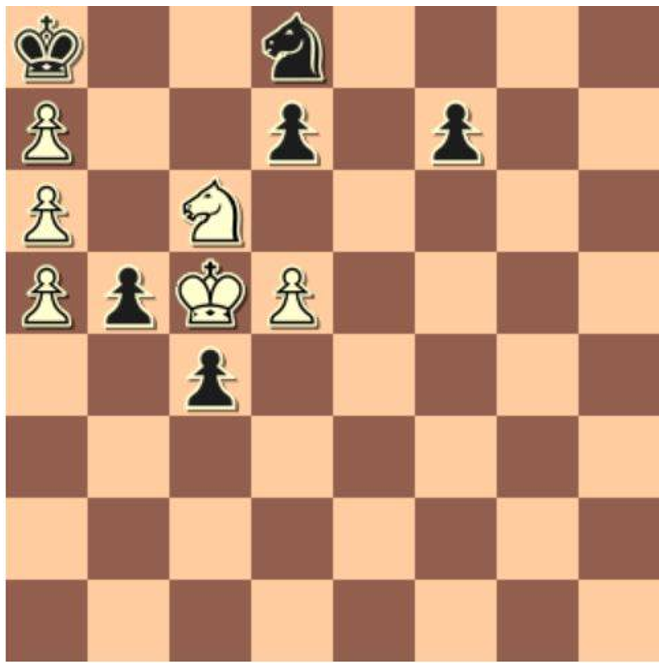 A Chess Study Requiring Backpropagation
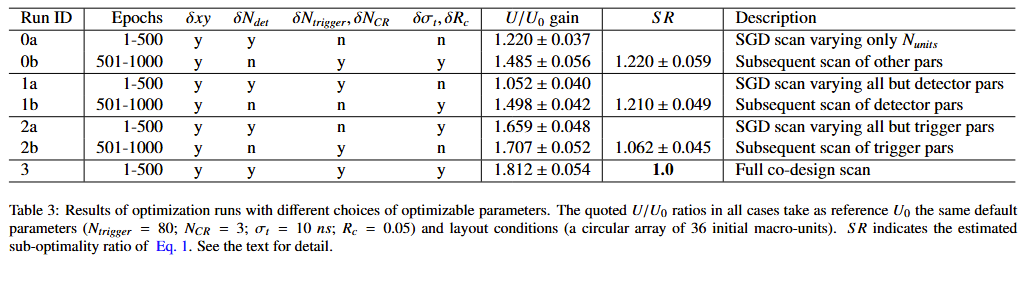 Co-Design Of Scientific Experiments