Fake Banner
Travel With Two Infants

The other day I traveled with Kalliopi and our two newborns to Padova from Lulea. After six full...

A Nice Little Combination

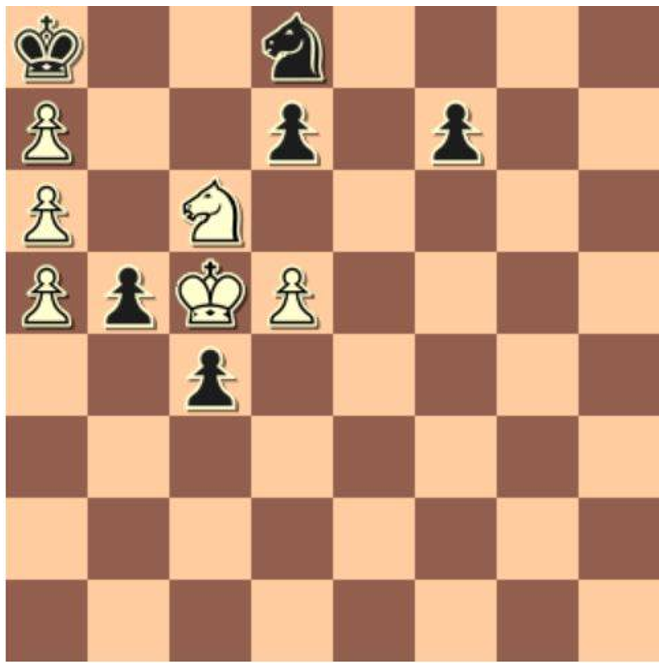
Although I have long retired from serious chess tournaments (they take too much time, a luxury...

The Strange Case Of The Monotonous Running Average

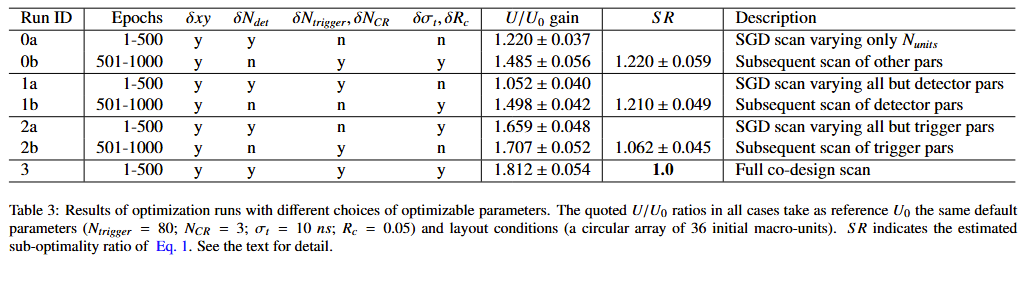
These days I am putting the finishing touches on a hybrid algorithm that optimizes a system (a...

Turning 60

Strange how time goes by. And strange I would say that, since I know time does not flow, it is...

User picture.
picture for Hank Campbellpicture for Patrick Lockerbypicture for Heidi Hendersonpicture for Bente Lilja Byepicture for Sascha Vongehrpicture for Johannes Koelman
Tommaso DorigoRSS Feed of this column.

Tommaso Dorigo is an experimental particle physicist, who works for the INFN at the University of Padova, and collaborates with the CMS and the SWGO experiments. He is the president of the Read More »

Blogroll
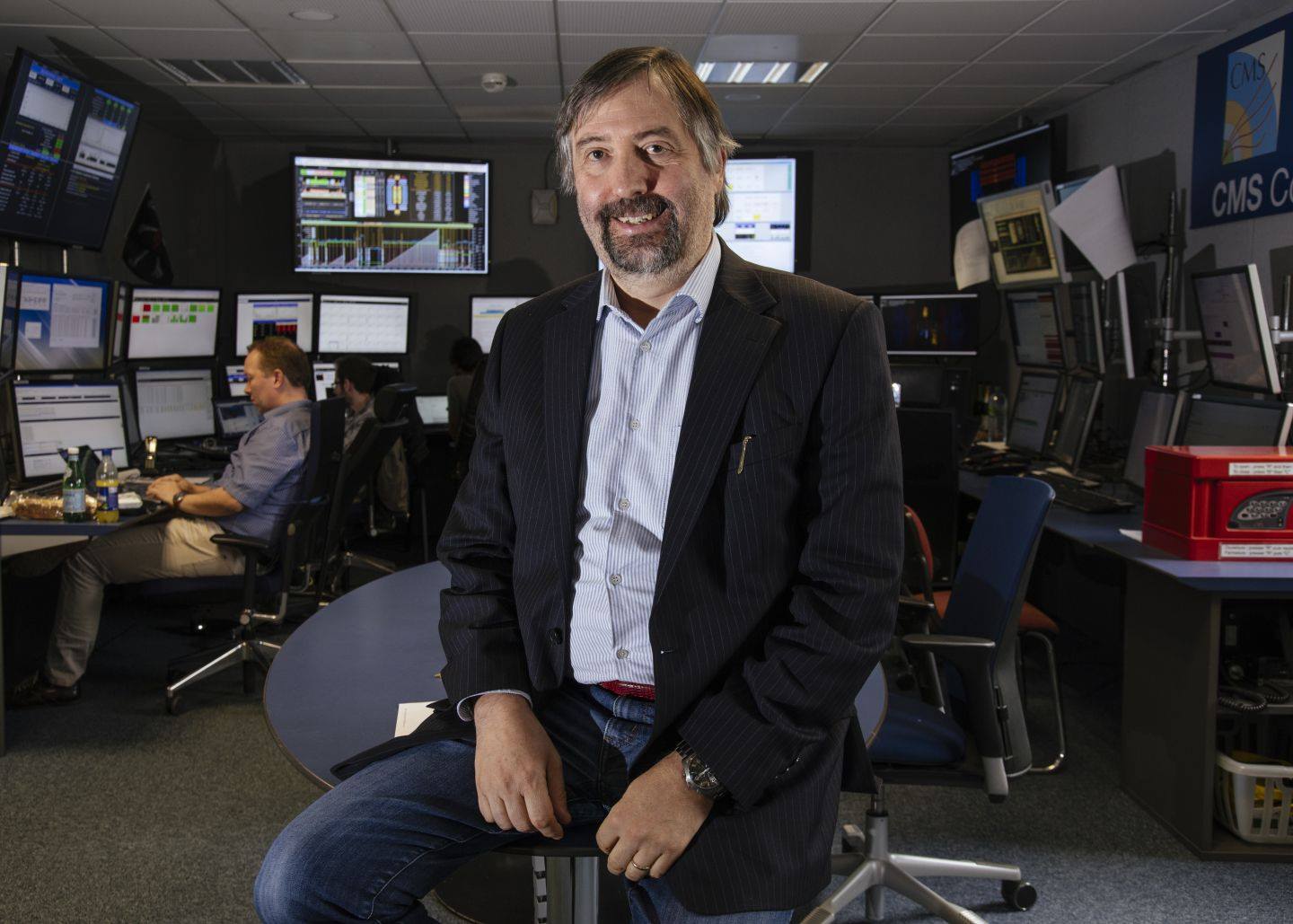
Great news for the CMS experiment - and for Italy, and for my institution, Padova, where I coordinate accelerator-based physics research for INFN. Professor Roberto Carlin, a longtime member of the CMS experiment, where he has taken many important roles in the construction and operations of the experiment, and recently was deputy spokesperson, has now been elected spokesperson. This consolidates a "rule" which sees Italian physicists at the lead of the experiment every other term, after Tonelli (2010-12) and Camporesi (2014-16). 


Some shameless self-promotion is in order today, as my review titled "Hadron Collider Searches for Diboson Resonances", meant for publication on the prestigious journal "Progress in Particle and Nuclear Physics", has been made available on the Cornell Arxiv.
My review covers quite extensively the topic, as it is not constrained in length as other reviews usually are. At 76 pages, and with 500 references, it aims to be the main reference on this type of physics for the next five years or so - at least, this is the stipulation with PPNP. Whether I managed to make it such, it is something to be judged by others.

The plan of the work is as follows:
The field of particle physics is populated with believers and skeptics. The believers will try to convince you that new physics is about to be discovered, or that is anyway at close reach. The skeptics will on the other hand look at the mass of confirmations of the current theory -the Standard Model- and claim that any speculation about the existence of discoverable new phenomena has no basis.
A search just posted on the Cornell arXiv by the ATLAS Collaboration caught my eye today, as it involves a signature which I have been interested on for quite a while. This is the final state of proton-proton collisions that includes an energetic photon and a recoiling dijet system, when the dijet system may be the result of the decay of a W or Z boson - or of a heavier partner of the Z, called Z'. 


The setting
I am currently spending the week in Leiden (Netherlands), attending to a very interesting workshop that brought together computer scientists, astronomers, astrophysicists, and particle physicists to discuss how to apply the most cutting-edge tools in machine learning to improve our chances of discovering dark matter, the unknown non-luminous substance that vastly overweights luminous matter in the Universe.
Peer review is the backbone of high quality scientific publications. Although the idea that only articles that are approved by a set of anonymous nitpickers can ever see the light of publication on "serious" journals is old and perfectible, there is currently no valid alternative to identify verified, rigorous scientific work, and to filter out unsubstantiated claims, and methodologically unsound results - the scientific analogue of "fake news".