Fake Banner
Travel With Two Infants

The other day I traveled with Kalliopi and our two newborns to Padova from Lulea. After six full...

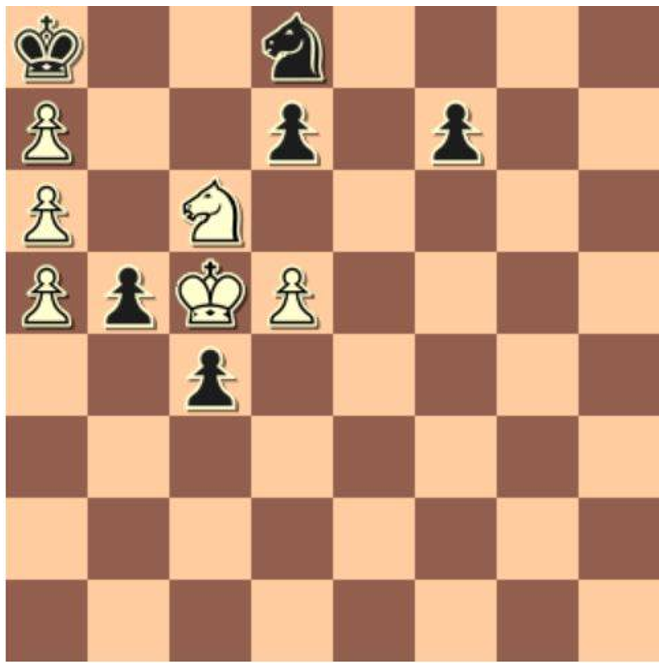
A Nice Little Combination

Although I have long retired from serious chess tournaments (they take too much time, a luxury...

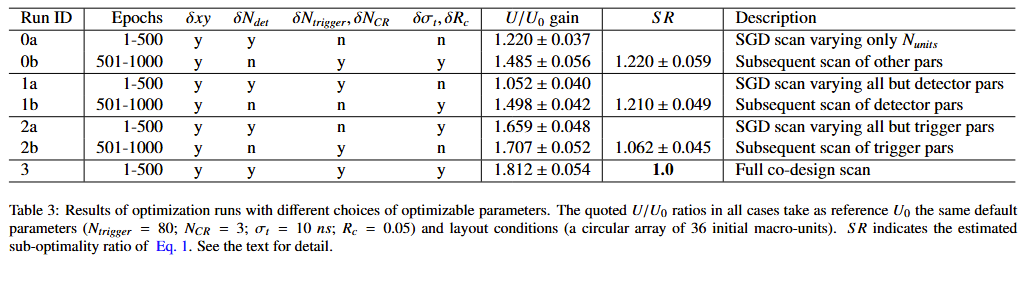
The Strange Case Of The Monotonous Running Average

These days I am putting the finishing touches on a hybrid algorithm that optimizes a system (a...

Turning 60

Strange how time goes by. And strange I would say that, since I know time does not flow, it is...

User picture.
picture for Hank Campbellpicture for Patrick Lockerbypicture for Heidi Hendersonpicture for Bente Lilja Byepicture for Sascha Vongehrpicture for Johannes Koelman
Tommaso DorigoRSS Feed of this column.

Tommaso Dorigo is an experimental particle physicist, who works for the INFN at the University of Padova, and collaborates with the CMS and the SWGO experiments. He is the president of the Read More »

Blogroll
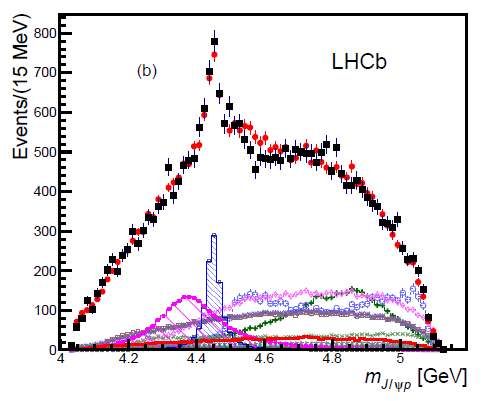
The reported observation of a resonant state of a J/psi meson and a proton in the decay of the Lambda_b baryon by the LHCb collaboration, broadcast by CERN today, is a very intriguing new piece of the puzzle of hadron spectroscopy - a topic on which many brilliant minds have spent their life in the course of the last half century.
The CERN Director General Rolf Heuer issued the following statement today, reporting the discovery of exotic pentaquark states by the LHCb collaboration:
Geneva, 14 July 2015. Today, the LHCb experiment at CERN’s Large Hadron Collider has reported the discovery of a class of particles known as pentaquarks. [...]
 
Working as an experimental particle physicist in a large scientific collaboration, such as the 3000-strong CMS experiment at the CERN LHC, is a (not too uncommon) privilege, for several reasons. 
One of those reasons is of purely numerical kind: the number of publications that bear your name grows by the day, and may reach four-figure values in the course of a couple of decades (I am about to cross that point with my publication list, in fact). But what value do those thousand articles have for the sake of assessing your value as a scientist ? Very little, indeed, and in fact all the selection to which I have participated in my career required one to specify one's specific contribution to all the papers one wished to boast about.
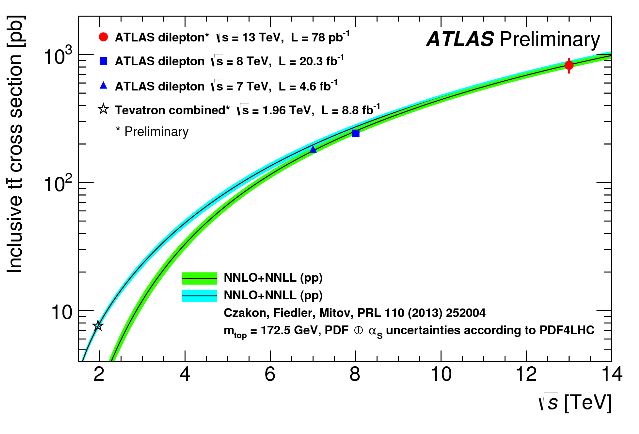
When you create an energetic collision between two protons, as the Large Hadron Collider does at large rates and very high energy, the question is what is the chance that a rare process is generated. In the quantum world, everything that is possible is also mandatory - but it happens with a probability that is sometimes very hard to calculate. 
Apologizing for a hiatus due to vacations, I am posting today a tentative logo of the Marie-Curie network I am coordinating, AMVA4NewPhysics. A brief explanation of the symbols at the basis of the logo is given below, in order for you to propose changes or even help by offering different ideas (and if you're a graphic designer, then maybe you consider producing a better one for us ?).
I was saddened today to hear of the death of David Cline. I do not have much to say here - I am not good with obituaries - but I do remember meeting him at a conference in Albuquerque in 2008, where we chatted on several topics, among them the history of the CDF experiment, a topic on which I had just started to write a book. 

Perhaps the best I can do here as a way to remember Cline, whose contributions to particle physics can and will certainly be better described by many others (for example,