Fake Banner
The Strange Case Of The Monotonous Running Average

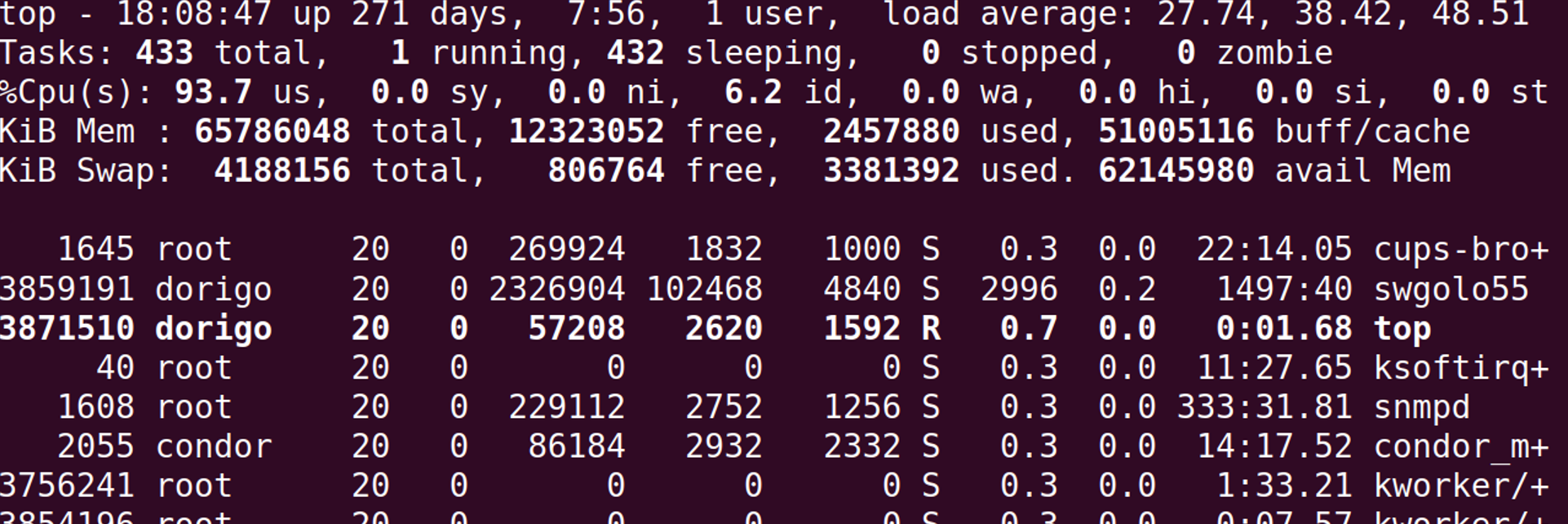
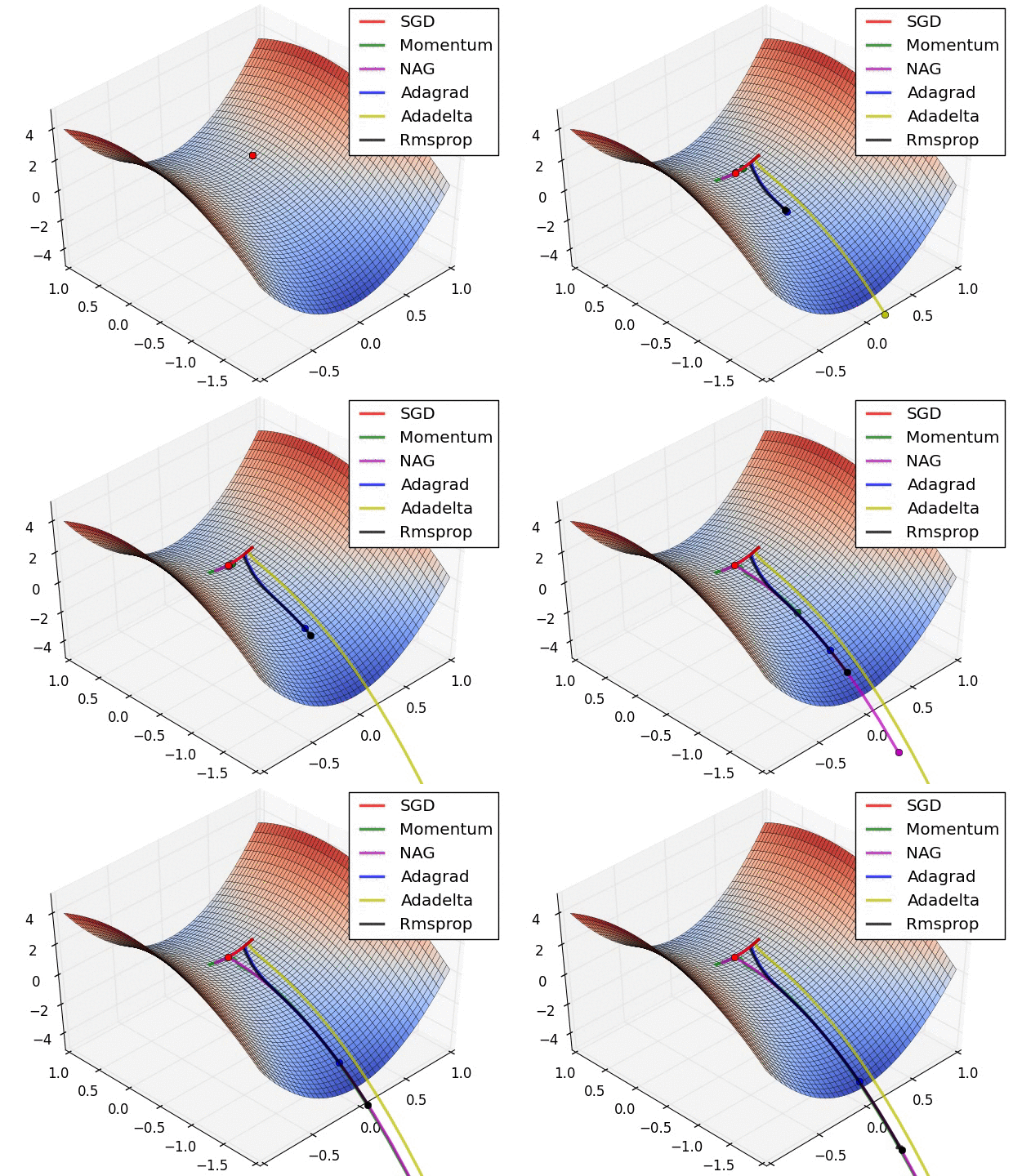
These days I am putting the finishing touches on a hybrid algorithm that optimizes a system (a...

Turning 60

Strange how time goes by. And strange I would say that, since I know time does not flow, it is...

On The Illusion Of Time And The Strange Economy Of Existence

I recently listened again to Richard Feynman explaining why the flowing of time is probably an...

RIP - Hans Jensen

Today I was saddened to hear of the passing of Hans Jensen, a physicist and former colleague in...

User picture.
picture for Hank Campbellpicture for Patrick Lockerbypicture for Heidi Hendersonpicture for Bente Lilja Byepicture for Sascha Vongehrpicture for Johannes Koelman
Tommaso DorigoRSS Feed of this column.

Tommaso Dorigo is an experimental particle physicist, who works for the INFN at the University of Padova, and collaborates with the CMS and the SWGO experiments. He is the president of the Read More »

Blogroll
The world of elementary particles has something in common with our own: there are large inequalities in the properties of particles, as in the properties of human beings. The heaviest particle, the top quark, with its estimated mass of 172 GeV is five orders of magnitude heavier than the most common matter constituents, the up and down quarks and the electron. Along with the top quark there are three other heavyweight particles that we currently call elementary -perhaps only a label we have to use because we haven't been able to split them further into smaller bits: the Higgs boson (125 GeV), the Z boson (91 GeV), and the W boson (80 GeV).
The recent developments in artificial intelligence, most notably the demonstration of the weird power of GPT4 and other large language models, have brought the scientific community to ponder on some very foundational questions - What is conscience? What is intelligence? Can machines really think? Can machines really become conscient? 
(Below, the answer of ChatGPT to my silly question on self-awareness.)


The call for applications to Ph.D. positions at the University of Padova opened yesterday, and it will remain active for less than one month (deadline is June 7th at 1PM CEST). 
The USERN organization (Universal Scientific Education and Research Network) will soon issue its next bulletin, to which I contribute with an opening message in the function of the president of the organization. I thought the contents of the message would be of some interest to some of my readers here, so I decided to attach below my original text. Before we go there, though, I would invite all of you to learn about USERN by visiting its web site, and consider becoming a member (it is free!) - or even better, if you share our views, support us!

A message from the USERN President
A revolution is taking place, but we seem to not yet realize it. 
Paradigm shifting technologies often produce an abrupt transition when they get adopted. However, that transition is not easy to recognize early on: the effects of an exponential trend appear linear at the begninning, so the explosive force of the transition that occurs a little later takes many by surprise.
Today I am traveling to Banff, a pleasant mountain resort in western Canada, to attend a workshop on systematic uncertainties. Yes, you heard that right - a bunch of physicists and statisticians will be gathering in a secluded location for a whole week, with the sole purpose of debating on that exotic topic. How weird is that? I bet most of you don't think much of systematic uncertainties. What are they, anyway?

Known unknowns