Banner
Not So Elementary (the Cosmos, That Is)

Recently there are appeared a paper showing how Physics - Iron–Helium Compounds Form Under...

Carbon — to capture or not to capture

This came up on 2nd November 2024 (give or take a day), a broadcaster objecting to a carbon capture...
Betelgeuse, Gamow, and a Big Red Horse

There has been a lot of talk recently of Betelgeuse possibly going supernova this century or not...

User picture.
picture for Hank Campbellpicture for Patrick Lockerbypicture for Hontas Farmerpicture for Helen Barrattpicture for Sascha Vongehrpicture for Sean Gibbons
Robert H OlleyRSS Feed of this column.

Until recently, I worked in the Polymer Physics Group of the Physics Department at the University of Reading.

I would describe myself as a Polymer Morphologist. I am not an astronaut,

... Read More »

Blogroll
I just now dug up this from the Science Codex:
 

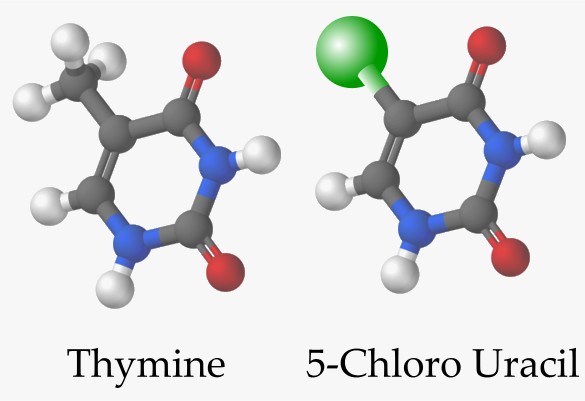
Milestone: A methane-metal marriage


relating how the group of Lucy Ziurys at the University of Arizona have found a promising new way of making methylzinc, and published it at the end of last year. 
Compounds like this have been known since the mid-nineteenth century, but it appears that the new method might require much smaller overheads for industrial scale use, as well as being exciting new chemistry.
Recently there appeared a Science 2.0 Article Algae-Based Polymer May Boost Li-Ion Battery Performance, and shortly afterwards I got an email drawing my attention to what I thought was the same work, but in fact is a different piece of work, from Leeds University,
 

Polymer Batteries for Next Generation Electronics

GM bacteria from Germany?  Don’t panic, Captain Mainwaring, we’ve got it all under control!

Yes, there is indeed a lot of worry in the air, about the potential for escape of Genetically Modified organisms into the environment.  Generally, this involves crop plants which have been modified to resist certain diseases, or to be immune to certain herbicides so that one can spray the crop and zap all weeds in one fell swoop.
My immediate feeling as Shuttle Atlantis touched down safely was one of relief.
 
But now that all the post-facto analysis have started, with maybe some recrimination, let me entertain you all with one way in which the Shuttle has entered British Culture.


Molluscs are Marvellous! — as regular readers of “Squid-a-Day” will know.

The recent presentation there of Celebrate Squid Babies brought to mind the following, from Darwin’s notebooks:

How far grander than idea from cramped imagination … that since the time of the Silurian, he has made a long succession of vile Molluscous animals — How beneath the dignity of him,  …. whom it has been declared "he said let there be light&there was light."

That has prompted some theological thoughts, but first a zoological one.
 
 
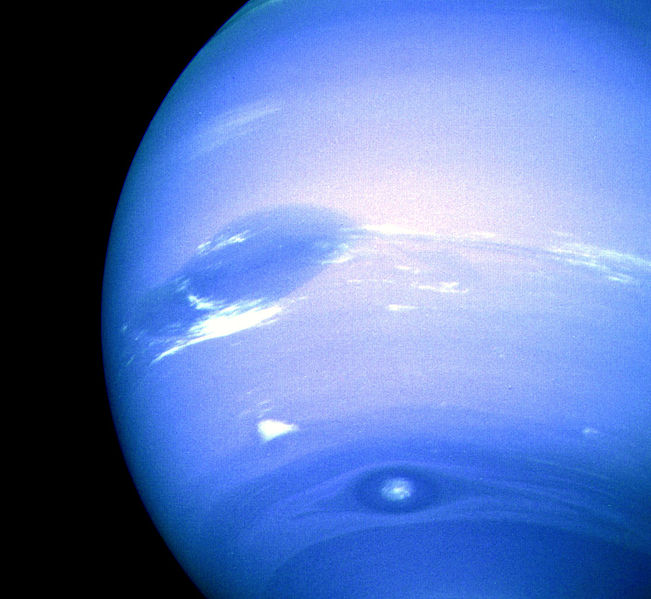
Tomorrow, that is.  On July 12th, 2011, Neptune will have completed exactly one orbit around the Sun since it was discovered on September 23rd, 1846.  So,
 

Happy Birthday, Neptune