Fake Banner
Environmentalists, What Are You Asking From Dedmoroz Lenin For Earth Day This Year?

Tomorrow is Earth Day. It is also Lenin's birthday. That's not coincidence. The leader of...

How Ancel Keys Went From MAHA Hero To MAHA Villain

If a lot of the food and health claims you read and hear today seem like things left over from...

Are Baseball Pitchers Faster Today?

On September 7, 1974, pitching for the California Angels, Nolan Ryan, known for his velocity, became...
Ground-Nesting Bee Populations Don't Get Publicity But They're Everywhere

Honeybees get attention in environmental fundraising campaigns because people don't understand...

User picture.
picture for Tommaso Dorigopicture for Heidi Hendersonpicture for Fred Phillipspicture for picture for Hontas Farmerpicture for Atreyee Bhattacharya
Hank CampbellRSS Feed of this column.

I founded Science 2.0® in 2006 and since then it has become the world's largest independent science communications site, with over 300,000,000 direct readers and reach approaching one billion. Read More »

Blogroll
Suidobashi Heavy Industry of Japan has finally found a way to make (a) work or (b) laser tag interesting to me; put me inside a giant robot. 

But to get the "Kuratas mecha" you will have to spend $1.35 million. You will want to, because they have a polite, hot Japanese girl in shorts in their video. 

Its diesel engine sends it at an elegant 10 KPH clip, basically a decent walking pace.  But these are too cool to run in.  No one looks cool running so until it can fly or turn into a motorcyle, a cool pace will do.

This thing is huge.  Granted, the girl in the video is probably only 4 feet tall but look at the scale of it:
If the legend is true, Aesop lived during the sixth century B.C. He was born a slave but was given his freedom as a reward for his wit and intelligence.  

He never wrote anything down but the stories people remembered were so intriguing virtually every moralistic fable before him (and after) got attributed to him.  Now Aesop's Fables number in the 600s.  

One of them, "The Crow and the Pitcher", highlights the 'necessity is the mother of invention' concept. A thirsty crow can't get his beak far enough down into a pitcher of water to drink, so he drops stones in until the water level rises.
Do you work in genetics? If so, you are out to ruin the brains of children, according to a claim at Alternet.org.
Crotchety old men seem to have won this argument.

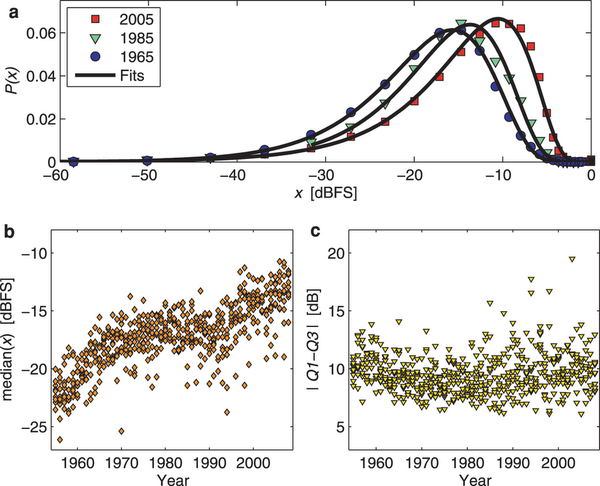
Modern pop music is too loud and does sound all the same, just like angry old types have been saying for 70 years. 

A team from Spain analyzed music from a 55 year period, using an archive known as the Million Song Dataset, and found that songs have indeed become both louder and more homogenized in terms of chords and melodies. 
Science journalism used to not have that 'science' qualifier.  It was journalism, like any other kind, but about science.

Last decade, though, science journalism lost its way, as we have discussed many times before. Too many science journalists became cheerleaders for science or, worse, advocates for aspects of controversial science topics. They were no longest trusted guides for the public and, as a result, people stopped reading them and corporate media no longer had need for something no one read. Science 2.0 and other sites filled the void nicely.
If only there were a field that examines the spiritual, therapeutic and psychological aspects of human-nature relationships, I'd abandon my graduate studies in Theoretical Phys Ed and embrace this new discipline instead.

Luckily, there is. For those of you dumb enough to have spent $80,000 for a two-year program in Environmental Journalism at Columbia but now can't (they closed it - even unlimited student loans reached a gullible student limit), Ecopsychology is here.