Fake Banner
Environmental Groups Back In Court To Help Fellow Rich White People

The Usual Suspects of the anti-science movement, Center for Biological Diversity(1), Environmental...

Batteries Are Stuck In The 1990s Because Solid-State Batteries Keep Short-Circuiting

The electric car industry is held back by reliance on conventional energy. Despite spending trillions...
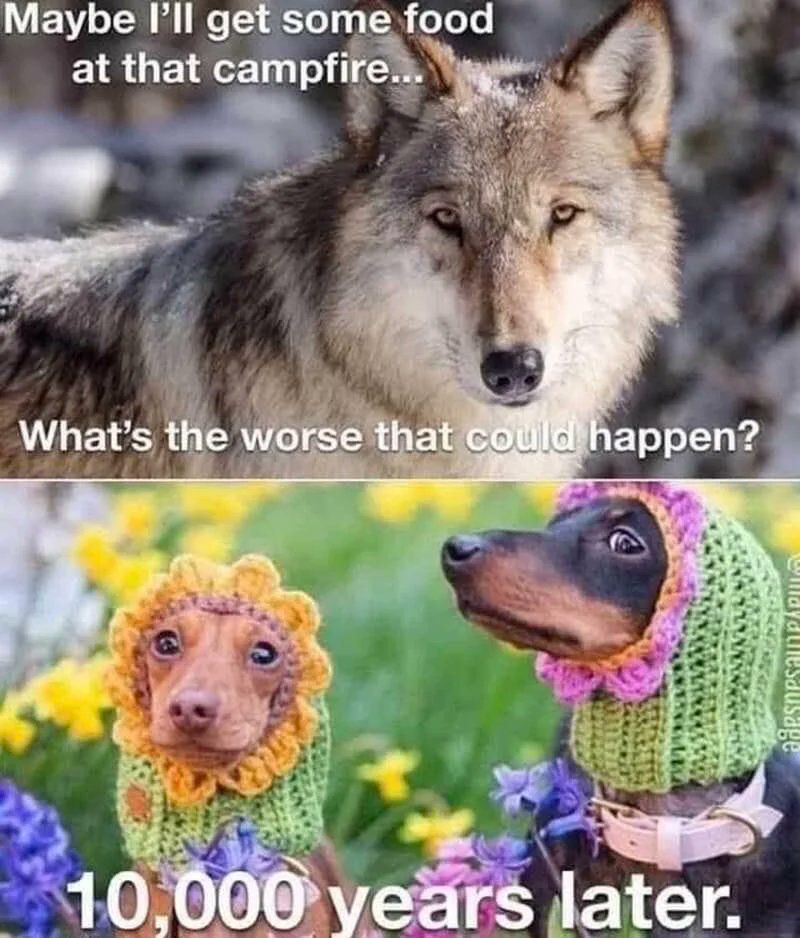
Dogs Have Been 'Man's Best Friend' For 14,000 Years

The bond between humans and dogs is one of the oldest stories in anthropology. It may also be a...

Is This The D'Artagnan Made Famous In 'The Three Musketeers' By Dumas?

“I have lost D’Artagnan, in whom I had every confidence,” wrote King Louis XIV to his Queen...

User picture.
picture for Fred Phillipspicture for Tommaso Dorigopicture for picture for Hontas Farmerpicture for Atreyee Bhattacharyapicture for Patrick Lockerby
Hank CampbellRSS Feed of this column.

I founded Science 2.0® in 2006 and since then it has become the world's largest independent science communications site, with over 300,000,000 direct readers and reach approaching one billion. Read More »

Blogroll

A recent review in the British Journal of Nutrition concluded that the nutritional quality and safety of organic food was higher than conventional food. Fruits, vegetables, and grains, organic versions were better in all ways than conventional farming, they determined.

Organic food had fewer pesticides, a much different result than other studies, and also had more important nutrients, also a much different result than other studies.


Not the JVC peer review ring, an actual
gambling ring. Credit: China Daily

It's something of a mild joke in science circles - you can figure out who is peer-reviewing your paper by looking for the common author in the citations you 'missed' in your submission.

It was only a matter of time before peer review cabals became an actual strategy somewhere.
They're data mining our children, notes Politico writer Stephanie Simon. She is talking about education technology startup Knewton and their use of data analytics to find out how kids think. They want to be able to predict who will struggle with fractions next week.

Exciting, right? Obviously this can be misused and the fact that its potential problems (if they can forecast it, they can manipulate it) are so obvious is why policymakers will address that. The brilliance will be what this sort of capability can do for science. 
PNAS has issued an expression of concern about a study it published where Facebook attempted to manipulate the emotions of members by controlling their news feed (10.1073/
pnas.1320040111). But they only bothered to notice and say anything after the outrage after the fact. 
So the USA lost to Belgium in the World Cup elimination round. I predicted a win for the US for a simple reason - Belgium, I said, does not know how good it is, whereas the US does. 

That's fuzzy logic, right? Well, that is what a lot of sports analysis is, because analysis at its heart relies on subjective scouting. Pundits can pretend to science it up all they want, but they are just doing a Bayes analysis based on real results after they happen. Something like a 68% chance of a victory is useless in the real world unless you are a bookie. It sounds science-y, but sports is a 0 or a 1. Anything in between is a waste of time.
IBM takes data seriously, as seriously as they took Business Machines back in their early days.

They want to be the resource for the blanket concept of The Internet Of Things. Someone will have to do it, because the amount of information available today is overwhelming. When you can produce 250 gigabytes of data an hour, you have too much data.

Or you are onto something big.