How deep is science writing these days? Pretty darn deep.
Way back when Science 2.0 started there were not a lot of great science writers. There were well-known ones, but not great ones. Journalism was in flux and mainstream media didn't respect it much, and scientists respected science journalism even less than media corporations did. The best writers just didn't go into science journalism. One of the reasons that a pillar of the Science 2.0 mission was revamping science 'communication' was because the public had stopped respecting journalists and scientists felt like they got a lot of things wrong. If science journalism couldn't win Pulitzer Prizes, at least it could be accurate and that meant making scientists the journalists.
Generally speaking, when a politician goes on television and says he is creating a special task force to look at a product, you know what happened; someone wrote about it in the New York Times and someone did a poll and someone else told him it would look presidential to be bold.
Want to scare people about a pesticide? Compare it to DDT. 40+ years after it was banned in a bit of scientization of politics, people have still heard of it. DDT may be the only pesticide many people have ever heard of. Environmental groups love to invoke it for that reason.
But if you are a fan of science, when you see a DDT comparison, you know evidence has left the building. DDT, when misapplied, was bad, just like every other compound, including water, can be bad. There was nothing exceptional about it other than the fact that it could have saved millions of kids from malaria if activists were forced to do studies before issuing press releases. But once you get a Joni Mitchell song written about your product, someone in Congress is going to take action.
If you haven't yet read that mothers who lived near farms have more kids with autism, you will. The reason, it is said, is because farms use pesticides. You're not off the hook, organic farmers. The results are from California and there are lots and lots of organic pesticides in use in the study area.
The United States of America hasn't been interested in building big new physics collaborations, such as the Large Hadron Collider, in the last 20 years, since the Clinton administration canceled the Superconducting Super Collider. The James Webb Space Telescope overruns and President Obama canceling NASA's Constellation program confirm why America has a crisis of confidence about building big and there is a belief that maybe we should stick to small experiments like cute robots on Mars.
If the world will have 9 billion people or more by 2050, we'll probably be okay.
The scare stories of food riots and mass famine once promoted by 1960s Doomsday Prophet Paul Ehrlich are today only promoted by, well, Paul Ehrlich. Even organic farmers say they can feed the world now.
In the last 30 years, America has led the world in science and nowhere has that been more evident than in food. American farmers have successfully dematerialized in a world of materialism - they grow more food on less land using fewer pesticides than ever thought possible. And the future looks even brighter.


 Environmental Groups Back In Court To Help Fellow Rich White People
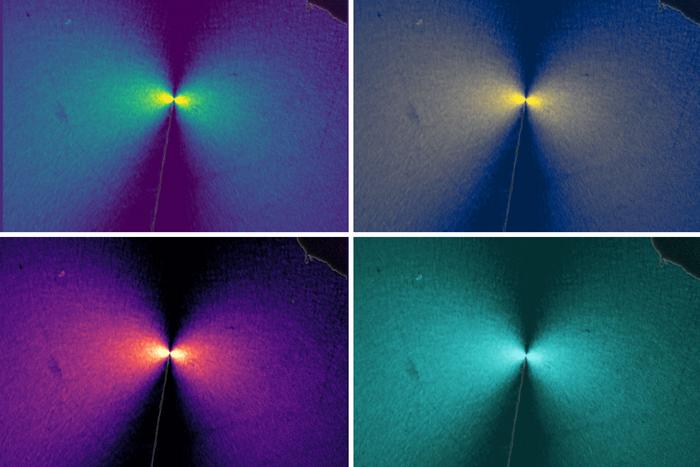 Batteries Are Stuck In The 1990s Because Solid-State Batteries Keep Short-Circuiting
 Dogs Have Been 'Man's Best Friend' For 14,000 Years
 Is This The D'Artagnan Made Famous In 'The Three Musketeers' By Dumas?