Fake Banner
Environmental Groups Back In Court To Help Fellow Rich White People

The Usual Suspects of the anti-science movement, Center for Biological Diversity(1), Environmental...
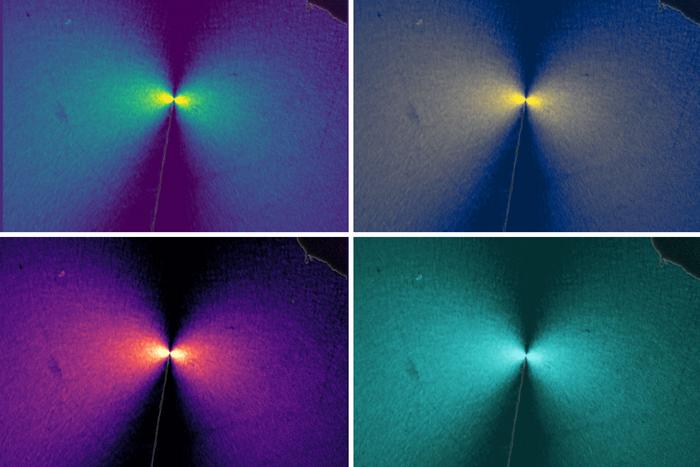
Batteries Are Stuck In The 1990s Because Solid-State Batteries Keep Short-Circuiting

The electric car industry is held back by reliance on conventional energy. Despite spending trillions...
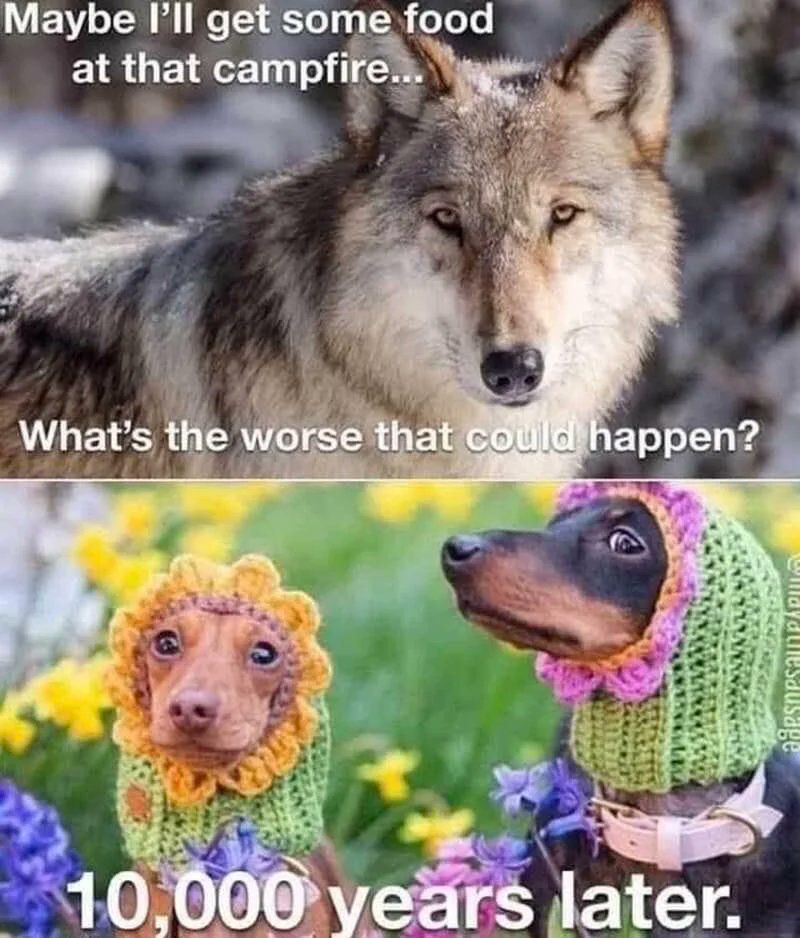
Dogs Have Been 'Man's Best Friend' For 14,000 Years

The bond between humans and dogs is one of the oldest stories in anthropology. It may also be a...

Is This The D'Artagnan Made Famous In 'The Three Musketeers' By Dumas?

“I have lost D’Artagnan, in whom I had every confidence,” wrote King Louis XIV to his Queen...

User picture.
picture for Tommaso Dorigopicture for Fred Phillipspicture for picture for Hontas Farmerpicture for Atreyee Bhattacharyapicture for Patrick Lockerby
Hank CampbellRSS Feed of this column.

I founded Science 2.0® in 2006 and since then it has become the world's largest independent science communications site, with over 300,000,000 direct readers and reach approaching one billion. Read More »

Blogroll
If there is a pleasant, chemically-induced but culturally acceptable pastime, someone at U.C. Davis is probably studying it. They have one of my favorite beer scholars, Prof. Charles Bamforth, and are even setting up a coffee science group. Their nutrition department has been generously funded by Mars candy company and, no surprise, a whole 'science of chocolate' panel appeared at an AAAS meeting as a result. 
The Rhynchohyalus natalensis in a recent paper was caught about 1000 meters under the Tasman Sea and it has two pairs of eyes, allowing it to spot danger from every angle. One pair is upward-facing tubular eyes, to spot danger from above, while another set is on the side of its head, to detect bioluminescence from deep sea creatures.

The second type of eye is typically associated with invertebrates. The authors write that this is only the second instance in a vertebrate, after Dolichopteryx longipes, with both reflective and refractive optics.  

I particularly liked the description of how they modeled the optics and image focusing. The authors have the same question I have; this is cool, so why isn't it more common?
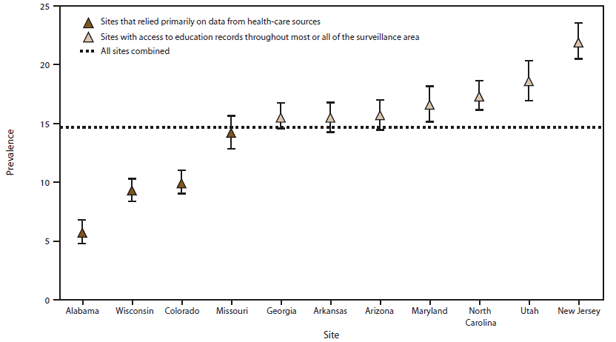
America has seen a 30 percent rise in autism since the last estimate in 2012, according to the Centers for Disease Control.

That's a big jump, an epidemic even. Mainstream media is going to have a field day and everyone will be looking for ways to demonize their favorite societal targets.

Before we start writing to Congress, we need to keep a few things in mind.

(1) It's an estimate based on diagnoses
Last week, the L.A. Times was able to post an article about an earthquake 3 minutes after it happened.

No human could write that fast. And no human did.
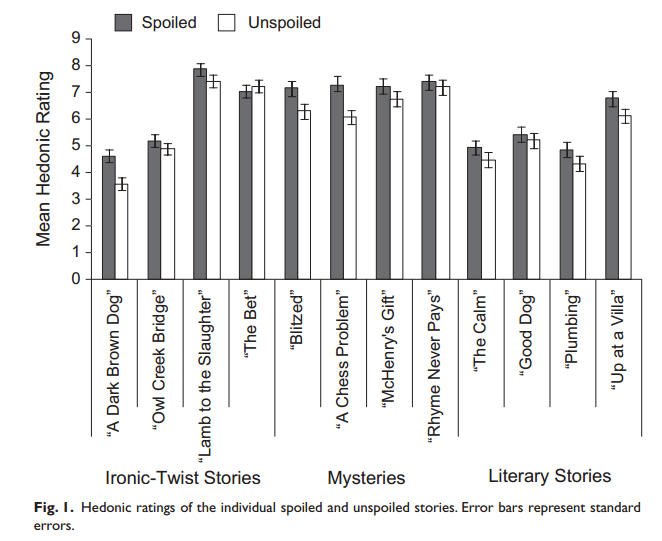
You want to know what movies are about - and that is why spoilers related to the upcoming "Star Wars" movie and "Avengers 2" and whatever else are so popular.

Hey, you knew how the RMS Titanic met its demise, and you still watched a movie about it, notes Rich Goldstein in The Daily Beast.  I didn't, but most of you did. And Shakespeare knew you wanted to know, that is why you read The Tragedy of Romeo and Juliet and not The Mystery Of Romeo and Juliet.

I know how The Grapes of Wrath is going to end, I still read it over and over again.

Who is to blame for the latest weekly decline in Cosmos ratings? The Walking Dead, NCAA basketball games, a mass exodus due to its opening effort to be culturally in-your-face?

There is always going to be competition on TV, just like there will always be competition for a government R01 grant. No point in whining about that. And Cosmos still takes shots at religion, but it isn't devoting 25 percent of episodes to it any more. Across the cultural spectrum, it's been much better during the last two weeks.